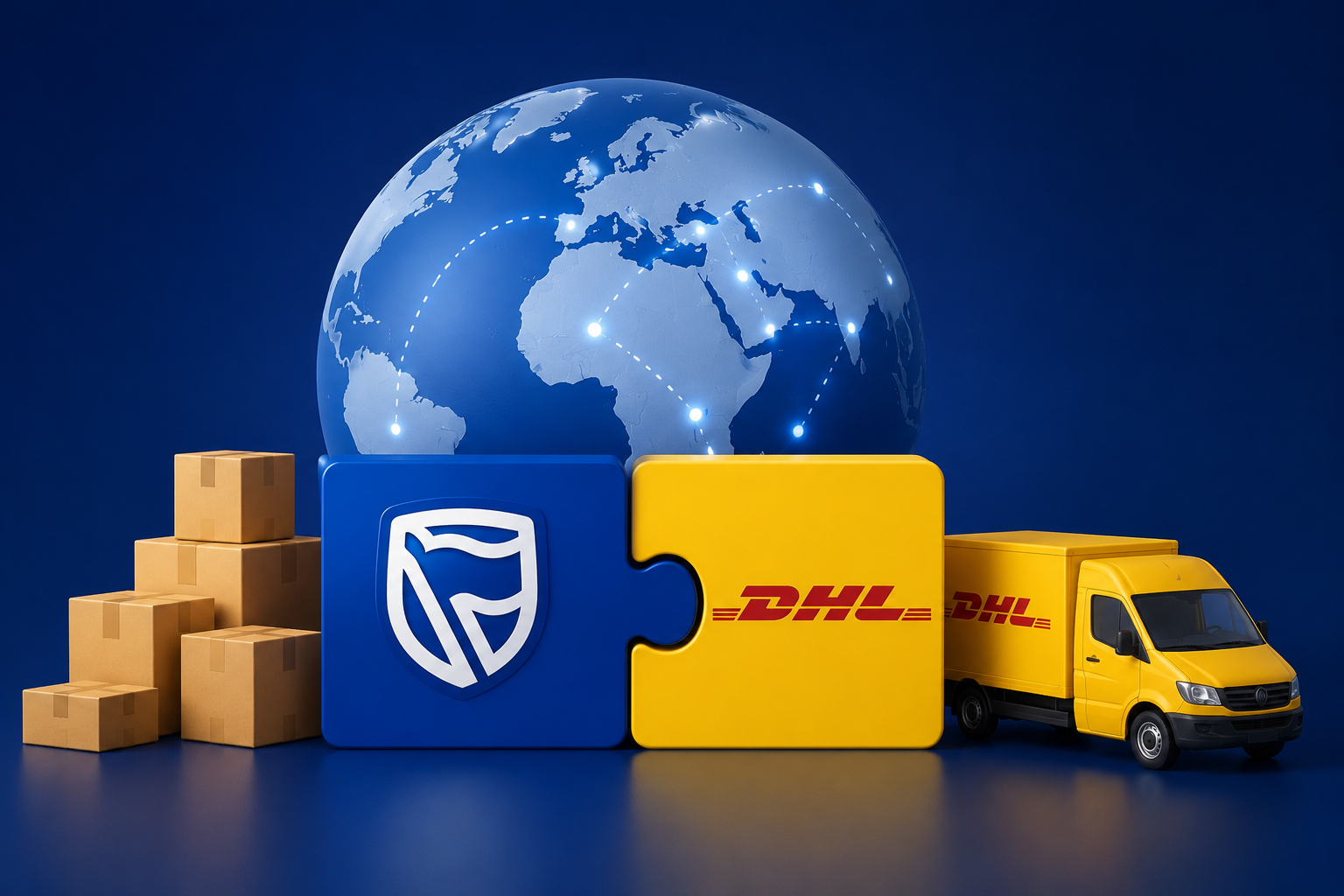
Standard Bank has partnered with DHL Express South Africa to extend its Export Readiness Programme into Gauteng and the Western Cape, building on a pilot run in KwaZulu-Natal over the past year that the bank now regards as successful enough to scale nationally.
The KZN pilot, launched on 30 June 2025 with the South African Chamber of Commerce and Industry, opened applications for a two-week window and selected 20 high-potential small and medium enterprises for hands-on training, market access support and export compliance guidance, delivered through Standard Bank’s enterprise and supplier development platform. That programme has now run its course, and DHL Express has stepped in as the new phase’s technical partner, replacing Sacci’s earlier trade-network role with logistics-specific expertise covering customs procedures, cross-border documentation and international market entry.
READ – South Africa to get a Share of the R6bn DHL Investment
Eligibility criteria have been carried over largely unchanged. Qualifying businesses must report annual turnover of between R1m and R50m, be at least 51% black-owned with a valid broad-based black economic empowerment certificate or affidavit, have operated for at least two years, and have a majority shareholder who is a South African citizen working full-time in the business. Applicants also need basic digital literacy and reliable internet access, reflecting the programme’s delivery model, which combines in-person training with online modules.
The geographic expansion is notable in scale rather than novelty. Gauteng and the Western Cape together account for a large share of South Africa’s manufacturing, agriculture, technology and business services activity, sectors with more immediate export potential than many of the small enterprises reached in the initial KZN cohort.
Standard Bank has run similar enterprise development schemes before with mixed but generally positive results. A 2023 programme for 22 participating suppliers produced an average turnover increase of 38% and created 593 jobs, according to figures the bank has previously disclosed, while a separate Free State pilot graduated 50 entrepreneurs and distributed R760,000 in grants, creating 44 jobs. Those precedents give some indication of what success in the new export-focused iteration might look like, though the bank has not yet published targets for job creation or export volumes under the current programme.
READ – How Standard Bank is Navigating the World’s Most Volatile Year
The broader problem the partnership is aimed at is well documented. Fewer than 20% of African small and medium enterprises have ever attempted to export, according to a 2024 survey by the African Trade Policy Centre, with regulatory complexity, financing gaps and lack of trade guidance cited as the principal deterrents. In South Africa specifically, small and medium enterprises make up around 95% of tax-registered businesses and roughly 38% of employment, yet contribute a disproportionately small share of export revenue relative to their numbers, underlining a persistent gap between the sector’s size and its integration into international trade.
The stakes attached to closing that gap are rising. The African Continental Free Trade Area, which aims to reduce tariffs and harmonise customs procedures across the continent, could lift African exports by as much as 32% by 2035 if implementation proceeds as planned, though economists have repeatedly noted that the agreement’s benefits will bypass smaller firms unless they receive targeted support to meet compliance and logistics requirements.
Programmes such as Standard Bank’s, pairing a lender’s balance sheet and enterprise development infrastructure with a logistics operator’s technical know-how, are one model being tested to bridge that gap, though the KZN pilot’s small initial cohort of 20 businesses suggests the current phase remains closer to proof of concept than mass-market rollout.
| Programme Snapshot | Detail |
|---|---|
| Original pilot | KwaZulu-Natal, launched 30 June 2025 with Sacci |
| New phase | Gauteng and Western Cape, with DHL Express SA as technical partner |
| Eligible turnover | R1m to R50m annually |
| Ownership requirement | At least 51% black-owned, B-BBEE certified |
| Minimum operating period | 24 months |
| Prior ESD programme results | 38% average turnover growth, 593 jobs created (2023 cohort) |
| African SME export participation | Fewer than 20% have ever exported (African Trade Policy Centre, 2024) |
| AfCFTA export potential | Up to 32% increase in African exports by 2035 |