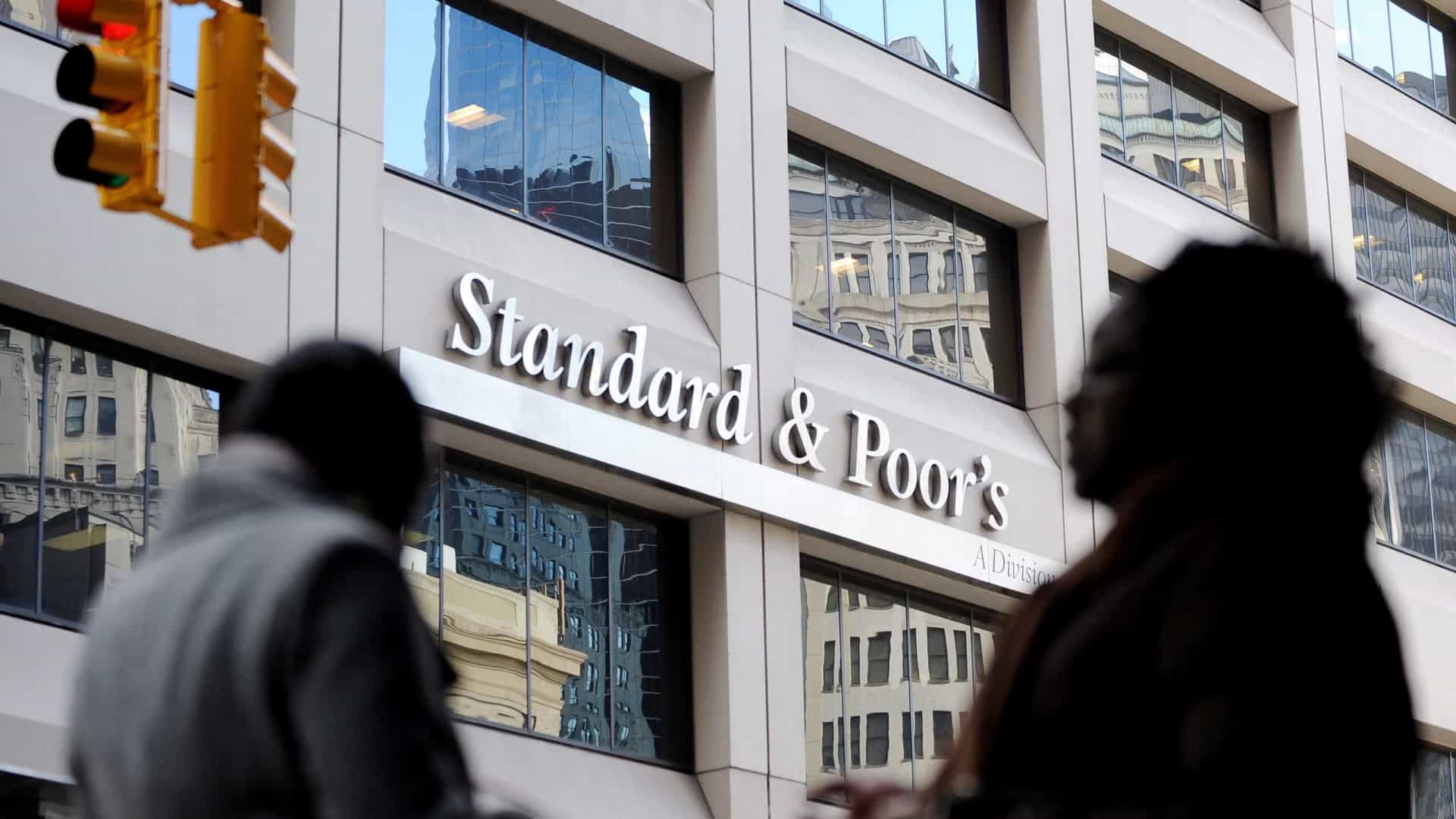
Standard & Poor’s (S&P) has elevated the credit ratings of South Africa’s major banks and insurers, aligning them with the recent sovereign upgrade and underscoring the sector’s enhanced resilience amid improving economic conditions. The move, announced on 20 November, follows the agency’s decision earlier in the month to raise the country’s foreign-currency long-term rating to BB from BB-, marking the first such improvement in nearly two decades. According to Reuters, this reflects stronger growth prospects, a stabilising fiscal outlook, and reduced state-owned enterprise liabilities, particularly from reforms at power utility Eskom, which have helped narrow the budget deficit to 4.7 per cent of GDP for 2025/26.
The upgrades encompass key players including FirstRand, Absa, Capitec, Investec, and Nedbank, whose ratings now match the sovereign level – a ceiling S&P typically imposes on domestic banks due to their vulnerability to national fiscal pressures. As reported by Business Day, the agency anticipates steady household lending growth, bolstered by anticipated interest rate cuts and the National Treasury’s revised inflation target of three per cent, which should anchor price pressures within a 3-4 per cent band through 2028. This comes against a backdrop of robust tax collections, with the South African Revenue Service reporting an R78.6 billion year-on-year revenue surge by September 2025, contributing to a primary surplus for the third consecutive year.
S&P projects healthy profitability for the banking sector, with an average return on equity of 16 per cent in 2026, driven by diversified revenue streams, a consistent non-interest income share, reduced loan-loss provisions, and moderate credit expansion. South African lenders stand out among emerging-market peers for their minimal reliance on international funding, shielding them from global refinancing volatility and currency fluctuations. The sector’s total assets exceeded R4.5 trillion in mid-2025, with non-performing loans holding steady at around 5.5 per cent, a testament to prudent risk management despite persistent unemployment challenges.
Insurers have also benefited, with Sanlam, Old Mutual, Santam, and Liberty seeing their ratings lifted. Old Mutual and Sanlam, in particular, earned a one-notch premium over the sovereign rating, reflecting S&P’s assessment of their robust, loss-absorbing capital structures that could buffer against a potential foreign-currency default. The insurance industry has demonstrated steadfastness through economic headwinds, maintaining solvency margins above 150 per cent under the risk-based regime introduced in 2018, which emphasises stress-testing for underwriting risks and market downturns.
However, S&P cautions that long-term premium growth and earnings remain tempered by South Africa’s subdued economic trajectory, with GDP expansion forecast at 1.1 per cent in 2025 – up from 0.5 per cent in 2024 – and averaging 1.5 per cent through 2028, supported by energy sector stabilisations and infrastructure investments. The sector’s heavy domestic focus exposes it to local vulnerabilities, including inequality-driven credit risks and regulatory shifts towards sustainable finance.
Economists have welcomed the upgrades as a vote of confidence in ongoing reforms, though they urge vigilance to avoid complacency. The positive outlook, one of only three such S&P revisions globally in 2025, could lower borrowing costs and attract foreign inflows, potentially easing the rand’s pressure and supporting job creation in a nation where youth unemployment lingers above 40 per cent. As Moody’s prepares its review on 5 December, these developments position South Africa’s financial institutions for a more stable, if gradual, recovery path.