

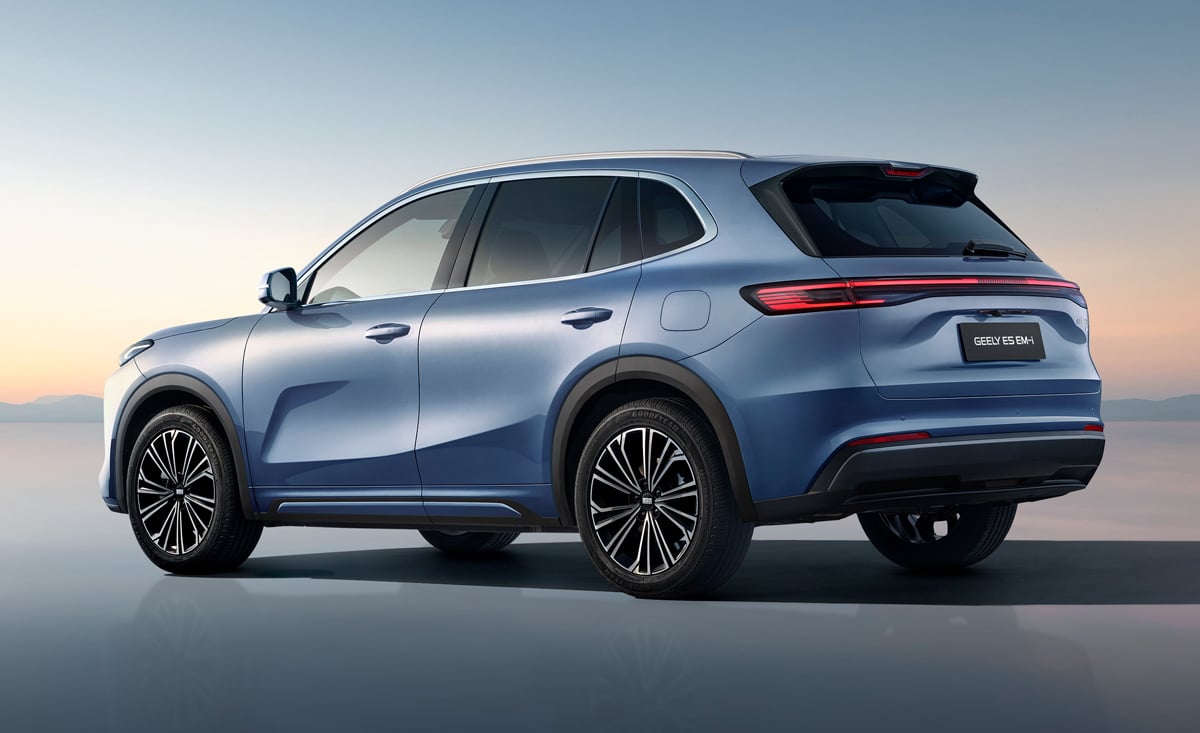
After a decade away from the South African market, Chinese automaker Geely has made a triumphant return, unveiling its E5 battery-electric SUV and E5 EM-i plug-in hybrid at a high-profile event in Gauteng this week. The launch signals Geely’s renewed ambition to capture a slice of the burgeoning new-energy vehicle segment, where Chinese brands already command nearly 12 per cent of sales in the first quarter of 2025, up from just two per cent five years earlier. According to BusinessTech, this resurgence aligns with a broader influx of 13 Chinese marques, including Chery and Great Wall Motors, which together sold over 17,000 units in early 2025 alone, reshaping the competitive landscape dominated by traditional players.
The E5 EM-i plug-in hybrid leads the initial lineup, available in Aspire and Apex trims starting at R599,999 – positioning it as the second most accessible PHEV on offer, undercutting the Chery Tiggo 7 CSH at R619,900 but trailing the incoming BYD Sealion 5, expected from R499,900. As reported by Cars.co.za, Geely’s strategy emphasises value-driven electrification, with plans to introduce sub-brands like premium EV maker Zeekr, commercial-focused Farizon, and alternative-energy specialist Riddara in the coming years, though specific models and pricing remain under wraps. The company aims for 13,000 sales in 2026, scaling to 20,000 by 2028 via a network of 80 dealerships, starting with 40 in key hubs like Gauteng, Cape Town, and Durban.
At the core of the E5 EM-i is a 1.5-litre naturally aspirated petrol engine producing 73kW and 125Nm, paired with a front electric motor delivering 160kW and 320Nm for a combined 193kW output. This setup propels the SUV from standstill to 100km/h in about eight seconds, supported by an 18.4kWh lithium-iron phosphate battery offering up to 83km of electric-only range and a total WLTP figure of 943km. Charging is versatile, with 6.6kW AC for home use and rapid 36kW DC that replenishes from 30 to 80 per cent in roughly 20 minutes – a nod to Geely’s global push, where exports surged 53 per cent to 403,923 units in 2024, contributing to overall sales of 2.17 million.
Measuring 4,740mm long, 1,905mm wide, and 1,685mm tall – dimensions that eclipse the Volkswagen Tiguan in length – the E5 EM-i blends midsize practicality with premium touches. The entry-level Aspire trim includes LED lighting across headlights, daytime running lamps, and taillights; roof rails; 18-inch alloys; keyless access; a leather-wrapped multifunction steering wheel; dual-zone climate control; a 10.2-inch digital instrument cluster; and a 15.4-inch infotainment touchscreen with over-the-air updates. Safety is comprehensive, featuring adaptive cruise control, lane-keep assist, anti-lock brakes, hill-hold and descent aids, parking sensors, and a reversing camera.
Opting for the Apex variant at R679,999 unlocks further luxuries, such as 19-inch wheels, a panoramic sunroof, hands-free tailgate, 256-colour ambient illumination, a heads-up display, ventilated power front seats, wireless charging, rear cross-traffic warning, lane-change assistance, and blind-spot monitoring. Buyers benefit from a robust ownership package: a six-year or 150,000km warranty, five-year unlimited-kilometre roadside assistance, and an eight-year or 200,000km battery guarantee, plus a complimentary wallbox charger and R5,000 in public charging credits for the hybrid.
Geely’s re-entry underscores China’s automotive export dominance, with the group – parent to Volvo, Lotus, and Polestar – revising its 2025 global sales target upward to three million units after a 47 per cent first-half surge to 1.4 million, half from new-energy models. In South Africa, where 66 per cent of 2023 vehicle sales fell below R500,000, the E5 duo arrives amid a shift towards affordable, tech-laden SUVs, challenging incumbents while supporting the government’s electrification incentives. With Geely’s vertically integrated approach, including satellite-enabled autonomy via 41 Geespace units, the brand is poised to accelerate its African footprint, starting from its recent CKD assembly plant in Egypt.