
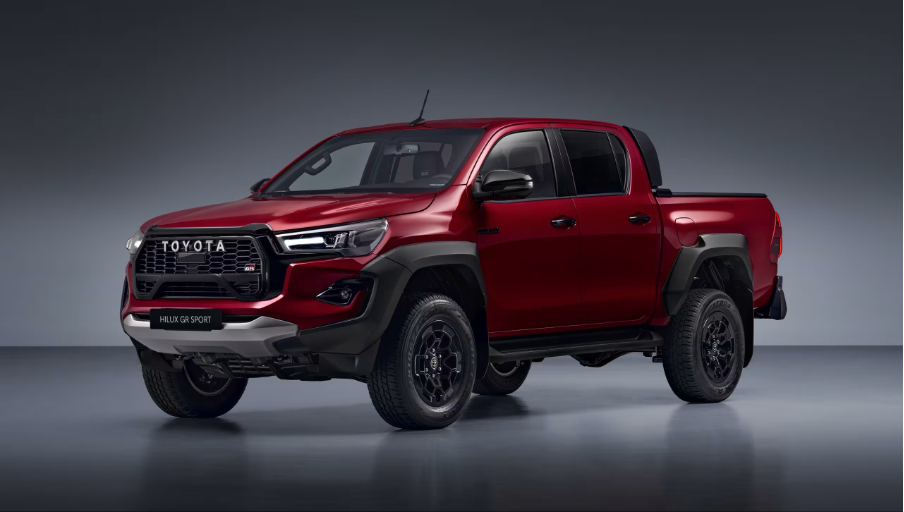
Toyota emerged as the best-performing brand in Namibia’s vehicle market in 2025, supported by strong sales of the Hilux, Corolla Cross and Fortuner.
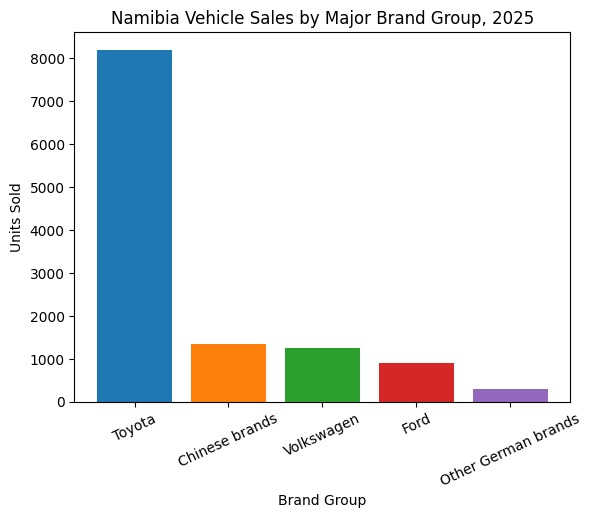
According to Simonis Storm, the brand sold 8,226 units during the year, accounting for 56.7% of total market share and reinforcing its dominance across both passenger and light commercial vehicle segments.
Total vehicle sales reached 14,498 units in 2025, a sharp increase from the 8,451 units recorded in 2024.
Simonis Economist Almandro Jansen said the 71.6% year-on-year growth reflected improved credit conditions and better vehicle availability, which translated into sustained demand across most segments of the market.
“Toyota once again stood out as the clear market leader, with volumes doubling year on year and market share rising to nearly 57%. This was supported by models that remain well aligned with local conditions and resale dynamics,” Jansen said.
Despite Toyota’s strong performance, signs of market maturation began to emerge towards the end of the year. Monthly growth moderated after peaking in March 2025, while competitive pressure intensified, particularly from rapidly expanding Chinese brands offering feature-rich vehicles at competitive prices.
Jansen said Chinese manufacturers recorded strong gains during 2025, with total sales rising to 1,320 units and market share increasing to 9.1% from 7.5% in 2024.
New entrants such as Jetour, Omoda and Jaecoo contributed to this growth, while Haval entered the top five best-selling brands for the first time, with 394 units sold.
“The rise of Chinese brands highlights a structural shift in consumer preferences towards value, technology and aggressive pricing, which is reshaping competitive dynamics in the Namibian market,” Jansen said.
Meanwhile, American brands recorded higher unit sales but experienced a marginal decline in overall market share. Ford remained the leading American brand, selling 870 units and ranking as the third-best-selling manufacturer in 2025, supported mainly by the Ranger and Territory models.
German brands, by contrast, saw a sharp contraction, with total sales falling to 294 units from 1,040 units in 2024. Market share declined to around 2.0%, reflecting a shift away from higher-priced premium brands.
Volkswagen was a notable exception, doubling unit sales to 1,229 vehicles and increasing its market share to 8.5%.
“The divergence between Volkswagen and other German brands underlines the importance of pricing, product positioning and local relevance in a market increasingly focused on affordability and value for money,” Jansen said.
Vehicle sales ended the year on a softer note, with December volumes easing to 1,138 units, an 8.5% decline from November. However, Jansen said full-year performance marked the strongest outcome since 2015, reinforcing 2025 as a cyclical recovery year rather than a temporary rebound.