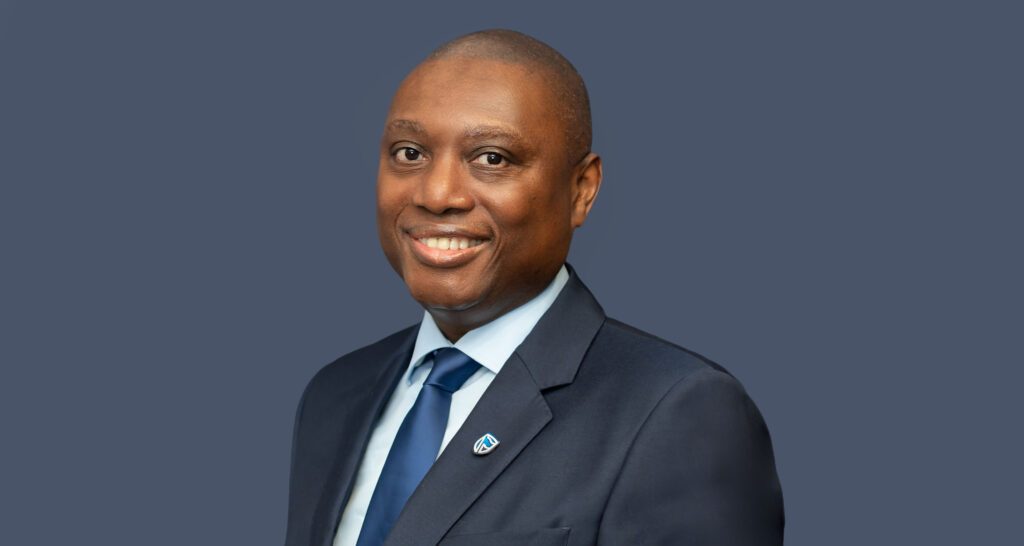
Standard Bank is conducting an internal search for its next chief executive, with current CEO Sim Tshabalala confirming that his replacement will be drawn from within the group’s own ranks ahead of his planned retirement at the end of 2027.
Tshabalala, speaking after the release of the group’s full-year results, described succession planning as the single most consequential task facing both the board and the outgoing chief executive. His comments signal that Africa’s largest bank by assets has no intention of looking outside its walls to fill the role — a decision that reflects both confidence in the depth of its internal talent pipeline and a deliberate continuity strategy at a moment of significant macroeconomic opportunity on the continent.
According to Business Times, the bank has already made a series of senior appointments that point to a deepening leadership bench. David Hodnett was named chief executive of Standard Bank South Africa late last year, replacing Kenny Fihla, who departed to lead rival Absa in June 2025. Thabani Ndwandwe was brought in as group chief risk officer, and Lungisa Fuzile was confirmed as permanent chief executive for Africa Regions and Offshore. Taken together, the changes amount to a considered reshaping of the tier just below Tshabalala — the pool from which his successor is likely to emerge.
The formal announcement of a new CEO will be made by Standard Bank’s board chair rather than Tshabalala himself, in keeping with standard governance practice. Tshabalala has described the incoming executive as someone capable of running a large, multinational organisation with complexity across multiple jurisdictions. He also addressed the departure of talent to competitors, framing it as a feature rather than a fault of operating at the top of a competitive global industry, noting that executive movement between institutions is a pattern observed across banking worldwide.
READ – Standard Bank Hits the Top of its Earnings Target
On the question of retirement age, the bank revised its executive retirement threshold from 60 to 63 for most senior leaders last year, though Tshabalala and chief finance and value management officer Arno Daehnke remain subject to the original 60-year threshold. Both are expected to exit by end-2027 and September 2027 respectively, giving the board a defined window to complete the transition cleanly.
The succession announcement comes against a backdrop of strong financial performance. Standard Bank reported a 13% rise in headline earnings to R56.6 billion for the year ended December 2025, up from R50 billion a year earlier, with return on equity climbing to 19.3%. The group declared a final dividend of R8.78 per share, bringing the full-year payout to R16.95 per share at a payout ratio of 56%. These numbers reinforce the bank’s position as the most profitable financial institution on the African continent.
South Africa’s improving economic conditions add further context. Inflation has fallen to a 21-year low, prompting a shift to a new 3% inflation target, whilst the country’s recent removal from the Financial Action Task Force greylist and a sovereign credit rating upgrade have lifted business and investor sentiment meaningfully. South Africa’s economy is projected to grow by 1.5% in 2026, with expectations of reaching 2% by 2028. Tshabalala has suggested that faster progress on structural reform under the government’s Operation Vulindlela programme — particularly around water and municipal infrastructure — could push growth above 3%.
The bank’s broader Africa strategy also looms large in the succession calculation. Tshabalala has pointed to the continent’s endowment of rare earth and critical minerals as a structural growth driver, arguing that the infrastructure build-out required to extract and export those resources — roads, ports, bridges — will generate sustained demand for the financing, payments, and risk management services that Standard Bank provides across more than 20 African markets. Intra-African trade, increasingly supported by regional payment systems, adds a further layer of long-term opportunity. Whoever takes the helm in 2028 will inherit both a well-capitalised institution and a continent in the early stages of a significant investment cycle.
ALSO READ – Standard Bank Raises R2bn in Crisis Shield Sale