
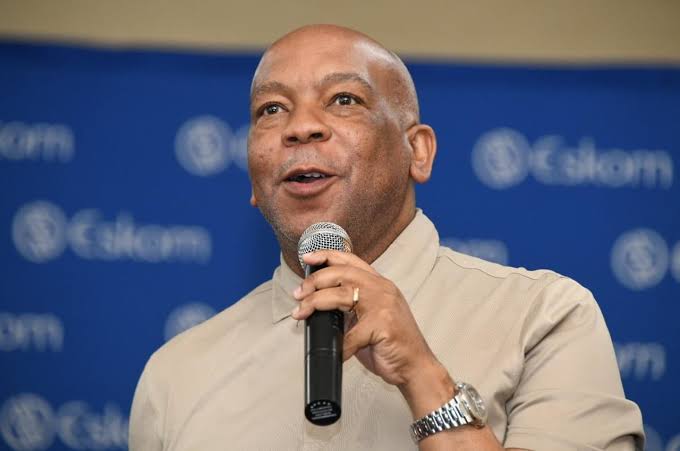
The government will procure 4,600MW of battery energy storage and 5,000MW of gas-to-power capacity under a new ministerial determination that, for the first time in years, makes no allowance for new wind or solar capacity.
Electricity and Energy Minister Kgosientsho Ramokgopa announced the Section 34 Determination at a briefing on Wednesday. It covers additional generation capacity over the 2026 to 2037 planning period. He said a later determination would cover new variable renewables, hybrid renewables-and-storage projects and pumped storage. Much of the country’s new wind and solar capacity is now being built by private companies under bilateral power purchase agreements.
The shift is a response to surplus power. Ramokgopa said Eskom’s Generation Recovery Plan has left the system with excess electricity at times, which itself creates risk. Rising curtailment, where the System Operator cuts renewable output that the grid cannot absorb, is driving up the compensation the National Transmission Company South Africa pays to independent power producers. Ramokgopa warned this could make future private projects more expensive to finance.
| Section 34 Determination at a glance | Detail |
|---|---|
| Battery energy storage | 4,600MW |
| Gas-to-power | 5,000MW |
| New wind and solar | None (later determination promised) |
| Planning horizon | 2026–2037 |
| Procuring agency | Independent Power Producer Office |
| Battery storage procured to date | 1,744MW / 6,976MWh |
| Bid Window 1 investment | R15.4bn (513MW / 2,052MWh) |
| Bid Window 3 investment | R9.5bn (616MW / 2,464MWh) |
Batteries are central to the plan. The department said storage can charge with electricity that would otherwise be curtailed and release it during evening peaks. Projects will be sited where they can draw on surplus power without moving the grid bottleneck elsewhere, and they will face enforceable availability and performance obligations. Three earlier bid windows, based on substation sites chosen by the transmission company, have procured 1,744MW of storage so far. All five projects from the first round are under construction, with R15.4bn in investment. In the third round, Mulilo and Scatec were named preferred bidders for 616MW worth R9.5bn in the Free State. The new allocation is several times larger than all three rounds combined.
The government says gas will complement storage by supplying dispatchable power when renewable output falls or demand rises, since gas plants cannot absorb surplus electricity. Bids will be assessed on start-up times, ramping ability and minimum operating levels. Fuel availability, delivered gas prices, port and pipeline infrastructure, grid connections and commissioning schedules will be weighed together. The evaluation of the first gas-to-power bid round has not yet been concluded.
In a notable change, the Independent Power Producer Office will run both programmes and open them to all market participants, including Eskom, which has previously been excluded from public bidding rounds. Eskom is setting up Eskom Green as a subsidiary and is prequalifying partners for a 6GW pipeline that includes 1,000MW/4,000MWh of battery storage.
The determination did not specify how many hours of storage the batteries must provide, or the expected capacity factor of the gas plants. Both programmes will include local manufacturing commitments and measurable targets for broadening black ownership of energy infrastructure.
Industry welcomed the move. Joanne Dean, chairperson of the South African Energy Storage Association, said batteries can strengthen grid stability, delay costly network upgrades and support higher levels of renewable generation. She added that storage should be treated as a strategic sector in its own right rather than an add-on to wind and solar.
The department acknowledged that batteries alone cannot solve curtailment. Lasting progress, it said, depends on building the transmission lines needed to get electricity to consumers.