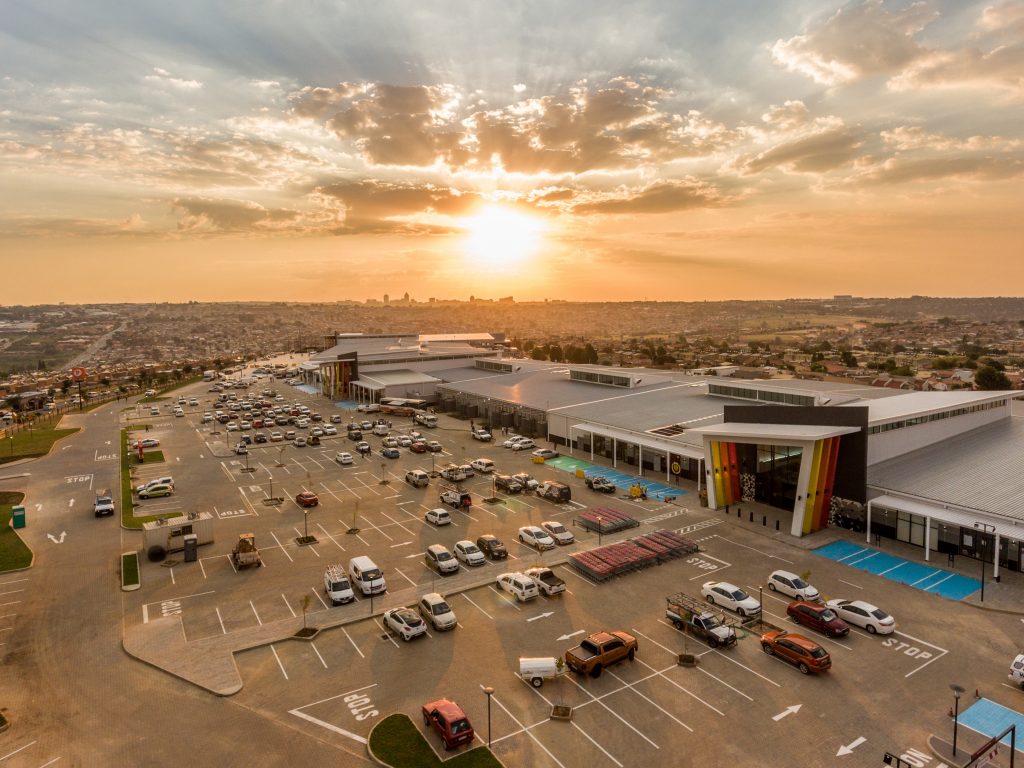
The Competition Commission has raised the prospect of market conduct investigations into malls and shopping centres operating in township and rural areas, in a research report finding that smaller businesses are kept out of formal retail space by cost and lease terms rather than by choice.
The Rural and Township Economy Project report, dated March 2026 and written by Qhawe Mahlalela, Tessa Bleazard and Zintle Siyo, draws on business and consumer surveys commissioned from Redflank Solutions. It states that follow-up work may include investigations where malls in these areas have not implemented the recommendations of the Grocery Retail Market Inquiry, or where practices such as exclusionary access to formal retail channels, unequal procurement conditions or discriminatory supply arrangements disadvantage small and historically disadvantaged firms.
The survey evidence on cost is direct. Asked what had prevented them from relocating to a formal setting, 76% of township businesses and 69% of rural town businesses cited rental costs. Among those not interested in moving, 61% of independent and 67% of informal township businesses said they could not afford formal rentals, with 55% and 69% respectively in rural towns. Separately, 54% of independent and informal township firms had never attempted a move but said they would be interested in one.
| Survey finding | Townships | Rural towns |
|---|---|---|
| Households earning under R3,500 a month | 47% large, 39% metro | 53% |
| Businesses trading three years or less | 70% | 68% |
| Rental cost cited as barrier to relocating | 76% | 69% |
| Sell through own physical store | 51% | 48% |
| Sell through major retailers | 6% | 10% |
| Sell through online marketplaces | 11% | 9% |
| Depend mainly on local customers | 70% | 78% |
The Commission treats that as latent demand rather than disinterest. Larger firms, particularly national chains, more often cited satisfaction with existing foot traffic when explaining why they had not moved, which the report frames as a distinction between exclusion by cost and strategic choice between viable locations.
Routes to market are narrow. About half of businesses sell through their own physical store, while 6% in townships and 10% in rural towns reach major retailers. Online marketplaces are used by 11% and 9% respectively. Seven in ten township businesses depend mainly on local residents, rising to 78% in rural towns, against 94% for national chains in townships.
Procurement compounds the disadvantage. Two-thirds of surveyed businesses said they are unable to negotiate with suppliers, and 49% believe they are charged more because of their size, rising to 61% among independents. Township national chains procure 65% of inputs through large formal retailers and wholesalers, while independents in rural towns rely most heavily on small formal suppliers at 41%, and chains draw 58% through corporate distributors.
The businesses concerned are young and very small. Seven in ten township firms have traded for three years or less, 28% for under a year, with 68% in rural towns in the same position. Among independents, 83% employ four people or fewer, rising to 94% of informal businesses. On the demand side, 53% of rural town respondents, 47% in large townships and 39% in metro townships reported household income below R3,500 a month.
The finding with the most direct bearing on merger analysis concerns substitutability. More than 60% of consumers across all three settlement types said independent and informal stores were good substitutes for chain stores, rising to between 80% and 81% for food. When asked why they would not prefer them, however, the same respondents cited lower quality, narrower variety and the fact that local outlets serve convenience or top-up shopping. The Commission concludes that actual substitution is weaker than the headline figure suggests, consistent with the Grocery Retail Market Inquiry and its assessment in the Cashbuild and The Building Company merger.
Regulatory burdens fall unevenly. In townships 43% of businesses reported electricity disruption, rising to 75% among franchises, while in rural towns 33% cited electricity and 17% water infrastructure. On health and safety requirements, 82% of national chains reported no difficulties against 37% of informal businesses. Zoning restrictions constrained a third of automotive businesses in townships.
The Commission proposes engagement with municipalities, SALGA, provincial local economic development departments, the trade and small business departments, CIPC and SARS, alongside follow-up on implementation of the Grocery Retail and Online Intermediation Platforms market inquiries.