
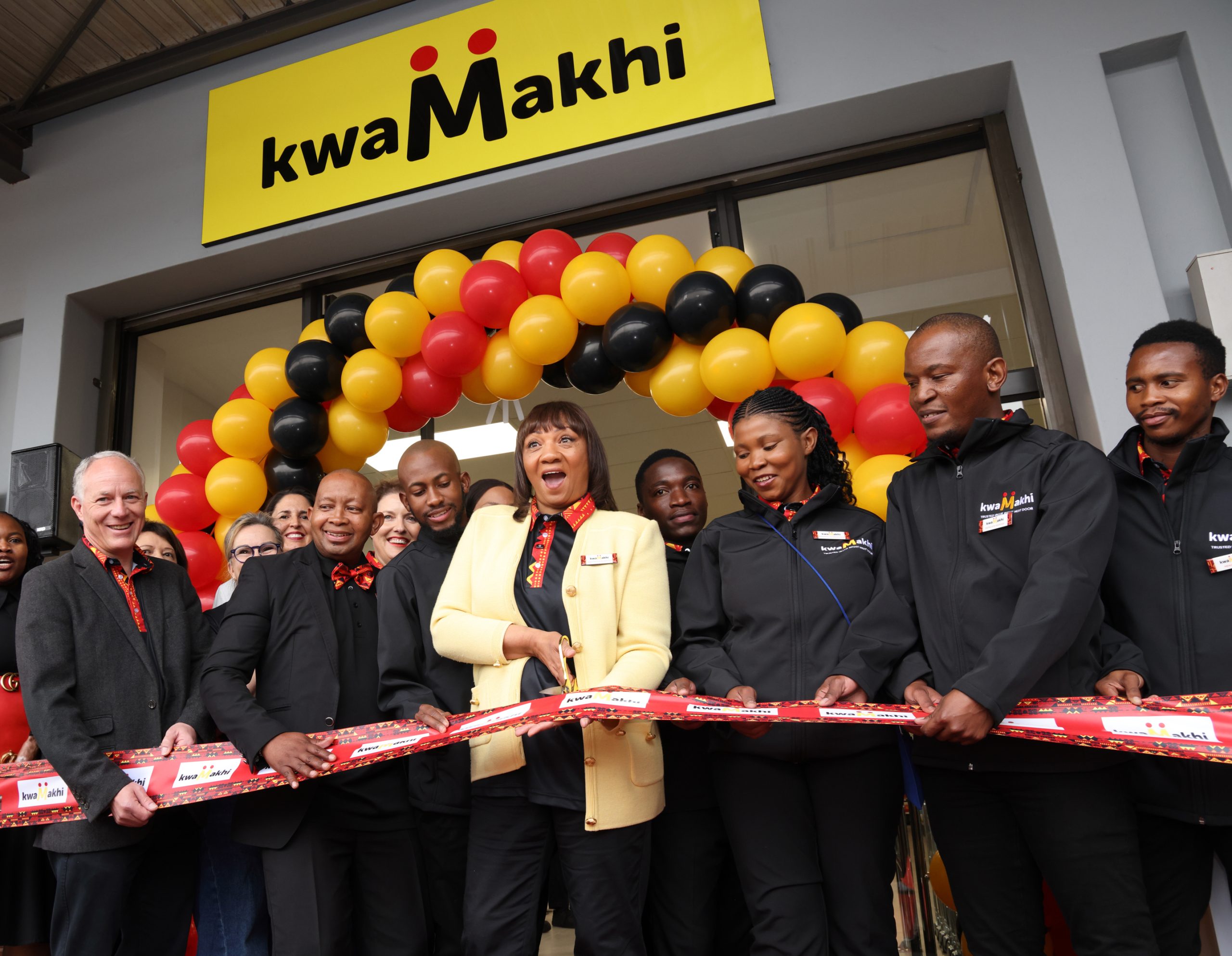
Clicks Group today launched KwaMakhi, a new neighbourhood convenience retail brand focused on South Africa’s township market, marking the Group’s entry into a new retail segment and significantly expanding its addressable market. The first KwaMakhi store opened in Tembisa, Gauteng, today, with two further stores opening in Khayelitsha and Cravenby in the Western Cape on 28 August.
Clicks Group CEO Bertina Engelbrecht said KwaMakhi – with its own distinct retail brand, dedicated product range, private label offering and neighbourhood-focused format – represents one of the most significant growth opportunities in the Group’s history.
“KwaMakhi was created because we recognised that the traditional Clicks format cannot reach every community we want to serve. Clicks is a health and beauty destination that requires a significantly larger format to deliver the customer experience that people know and trust. KwaMakhi stores are considerably smaller, allowing us to bring a differentiated customer proposition, store format and merchandise mix tailored to a very specific customer,” said Engelbrecht.
At approximately 350m², KwaMakhi is designed for high-density neighbourhoods, whereas traditional format Clicks stores can be anything from 550m² to 1,500m². “In areas like Alexandra or Soweto, for example, Clicks is limited to perhaps four or five stores. With KwaMakhi, we could open around 10 stores in the same area. In other words, we can go faster with the KwaMakhi brand simply due to the many more geographical areas open to us,” said Engelbrecht.
The launch comes as township economies continue to demonstrate strong growth. The market is estimated to be worth approximately R900 billion annually, with spending in lower LSM markets growing significantly faster than the broader South African retail market.
“We see significant long-term potential in this segment, and KwaMakhi positions us to participate meaningfully in that growth,” said Engelbrecht.
KwaMakhi has been designed as a true neighbourhood convenience retailer that offers customers access to trusted products within walking distance of their homes, reducing the need to travel to regional shopping centres.
“The concept is rooted in community. Customers can walk to a KwaMakhi store just as they would walk to a neighbour to borrow a cup of milk or sugar,” said Engelbrecht.
“Beyond convenience, KwaMakhi keeps more consumer spending within local communities while creating employment opportunities, with each store employing approximately six people from the surrounding area. Our aim is to make everyday shopping easier, safer and more accessible.”
Engelbrecht added that the new format has also been well received by property owners. “Landlords have embraced the concept and are willing to work with us to create the right spaces for KwaMakhi, which gives us confidence in the brand’s growth potential.”
The stores offer a carefully curated product range spanning baby, front-shop healthcare, beauty, personal care and household essentials, some of which would also be found at Clicks, alongside selected categories not traditionally found in Clicks stores.
“What we bring in from the Clicks experience is a focus on trusted quality and value,” said Engelbrecht. “At the same time, we have developed a dedicated private label range and are working with leading supplier brands to offer products at prices customers can rely on.”
KwaMakhi’s pricing strategy focuses on everyday low prices rather than discounts and is complemented by selected promotional campaigns that make essential products even more accessible and affordable.
While customers’ average basket sizes are expected to be smaller than those of Clicks, the Group anticipates significantly higher transaction volumes.
Engelbrecht said the Group believes the concept has the potential to grow substantially over the medium to long term, with opportunities to extend beyond South Africa over time.
“We believe KwaMakhi has the potential to become far more than a South African retail concept. While our immediate focus is on building a successful business locally, we see long-term opportunities for the model to expand into Africa.”