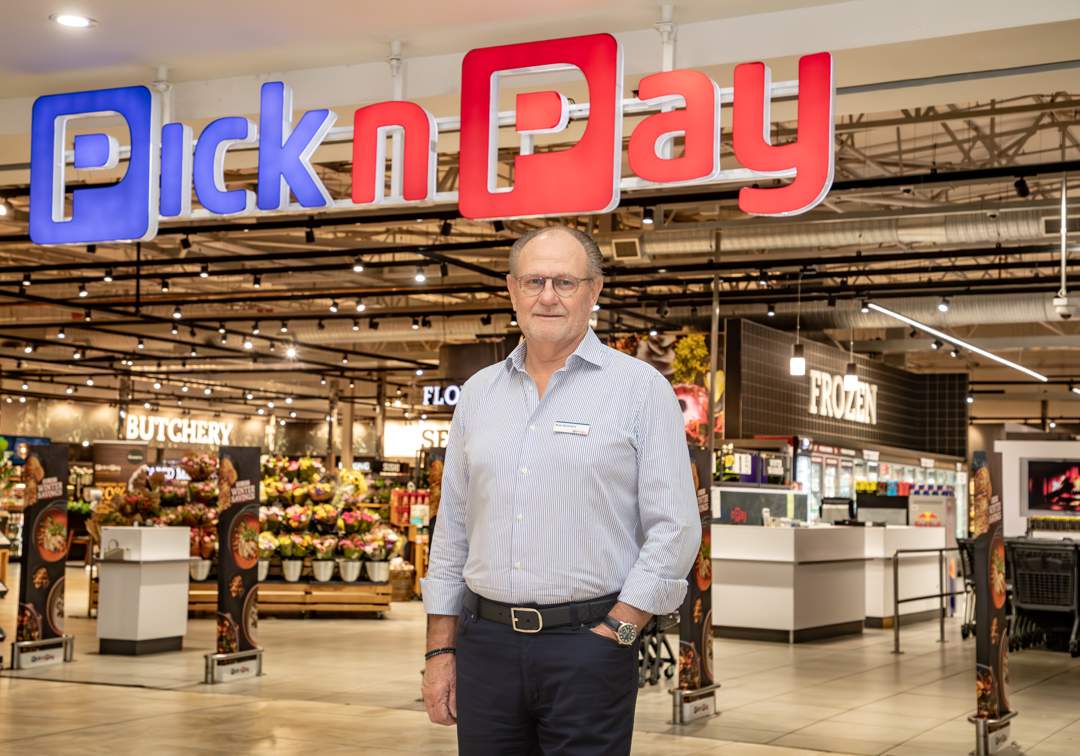
The South African Commercial Catering and Allied Workers Union (Saccawu) has fiercely criticised Pick n Pay’s decision to initiate a large-scale labour restructuring process, accusing the retailer of forcing its lowest-paid workers to bear the brunt of a corporate turnaround necessitated by years of executive mismanagement. The dispute marks a critical juncture in the supermarket chain’s efforts to stabilise its operations following its first annual loss in 57 years.
The conflict centres on Pick n Pay’s initiation of a Section 189A process under the Labour Relations Act, a legal mechanism that mandates consultations when large-scale retrenchments or significant alterations to employment conditions are proposed. According to the union, this process threatens the job security and negotiated benefits of approximately 22,000 store-based employees within the non-management bargaining unit.
Saccawu maintains that the retailer is attempting to drastically reduce its wage bill through sweeping unilateral changes. The proposed adjustments include cutting guaranteed monthly working hours from 196 to 176, which the union equates to a R2,000 reduction in monthly wages per employee. Furthermore, the company is allegedly seeking to eliminate the 13th cheque, alter Sunday pay rates, and withdraw transport provisions for staff working late or night shifts outside normal public transport operating hours.
The union has expressed profound dissatisfaction with Pick n Pay’s approach, specifically its decision to refer the matter directly to the Commission for Conciliation, Mediation and Arbitration (CCMA) rather than tabling the proposals through established internal national negotiating committees . Saccawu views this move as an act of bad faith and an attempt to bypass collective bargaining agreements. With the backing of the Congress of South African Trade Unions (Cosatu), Saccawu has warned that it is prepared to mobilise its members for industrial and mass action should the retailer proceed with the proposed downward variations in employment conditions.
For its part, Pick n Pay asserts that the restructuring is not intended to permanently reduce overall headcount, but rather to align a bloated and inflexible store labour model with modern retail trends and customer shopping behaviours. Chief Executive Officer Sean Summers, who was brought out of retirement in late 2023 to rescue the ailing company, has stated that the current labour structures are materially above market norms and cannot be sustained while the business attempts to return to profitability. The review applies exclusively to certain store-based staff, exempting support office employees and management, who have already faced salary freezes and structural reorganisations.
The labour dispute unfolds against the backdrop of a severe financial crisis at Pick n Pay. The retailer recently reported a R3.2 billion net loss for the year ending March 2024, becoming technically insolvent as liabilities exceeded assets by R183 million. The company’s debt burden has also surged, costing R2.4 billion annually in interest and resulting in the breach of debt covenants.
Saccawu has pointedly blamed the company’s current predicament on the strategic failures of previous leadership. The union noted that the past two chief executives drove the retailer from a position of healthy profitability into a “shell of its former glory”. Much of the recent value destruction occurred under former CEO Pieter Boone, whose ‘Ekuseni’ strategy—which included the disastrous launch of the lower-income Qualisave brand—failed to resonate with consumers and accelerated market share losses to rivals like Shoprite. Despite presiding over this decline, Boone received a R15.8 million termination settlement as part of a R25.3 million remuneration package for his final year.
Under Summers, Pick n Pay is executing a multi-year turnaround strategy that involves closing or converting underperforming supermarkets, expanding the highly successful Boxer discount brand, and raising capital through a rights offer and Boxer’s separate listing on the JSE. While the group managed to reduce its group-level loss before tax and capital items by 69.9% to R317 million in the first half of the 2025 financial year, it recently cautioned shareholders that its headline loss for the full 2026 financial year is expected to be more than 20% worse than the previous year due to softer-than-expected turnover in its core supermarket division.
| Key Figures in Pick n Pay Restructuring | Detail |
| Employees Affected | Approximately 22,000 non-management store staff |
| Proposed Hour Reduction | From 196 hours to 176 hours per month |
| Estimated Wage Impact | R2,000 reduction per employee per month (Union estimate) |
| Company Financial Status | R3.2bn net loss (FY24); expected deeper headline loss in FY26 |
| Former CEO Payout | R25.3m total remuneration (including R15.8m termination fee) for Pieter Boone |
As consultations proceed under the auspices of the CCMA, the outcome will test the delicate balance between corporate survival and the protection of vulnerable retail workers in an increasingly constrained South African economy.
References
Bowmans Law: Section 189: A holistic retrenchment playbook for employers
Supermarket & Retailer: Pick n Pay braces for deeper loss in 2026