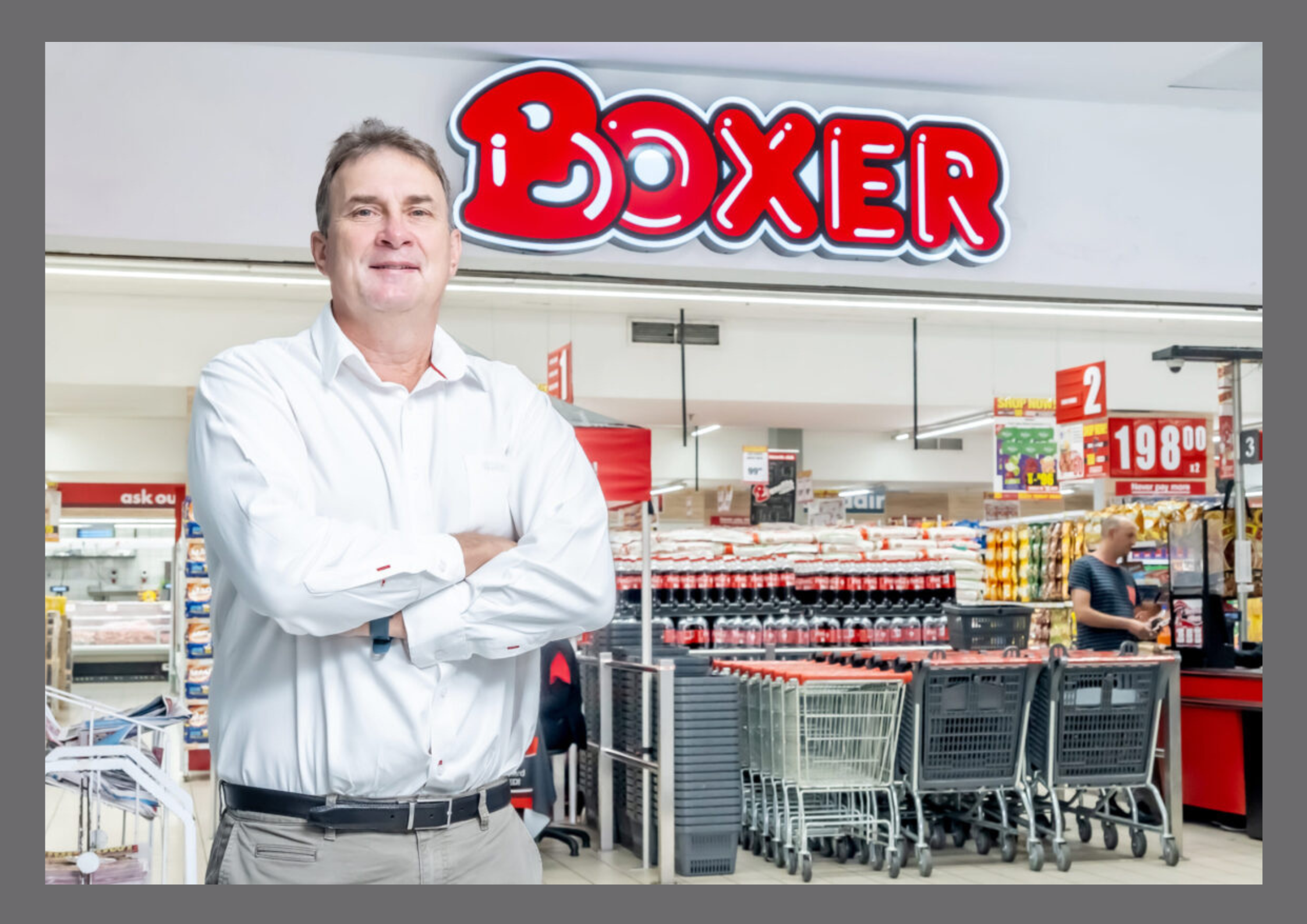
South African discount grocer Boxer has declared its maiden annual dividend following its high-profile listing on the Johannesburg Stock Exchange in November 2024. The payout underscores a successful post-IPO restructuring that transformed the retailer’s balance sheet, moving it from a net debt position of R180 million a year ago to a net cash reserve of R709 million for the financial year ending 1 March 2026.
The group announced a final shareholder payout of 95.37 cents per share, bringing the total dividend for the year to 140.67 cents. This financial milestone arrives as Boxer cements its position as a critical growth engine within the South African retail landscape, even as its parent company, Pick n Pay, navigates a complex and protracted turnaround strategy . Pick n Pay retained a 65.59% stake in Boxer after the unbundling, leveraging the R8.5 billion raised during the IPO to recapitalise its struggling core operations.
Despite the strong cash generation, Boxer reported a 15% decline in headline earnings per share (HEPS). Management attributed this contraction directly to the structural mechanics of the IPO, which resulted in a 33.2% increase in the weighted average number of ordinary shares in issue .
At the operational level, Boxer demonstrated robust momentum. Turnover increased by 12.3% to R46.7 billion on a comparable 52-week basis, while trading profit climbed 14.3% to R2.6 billion . The retailer achieved a trading profit margin of 5.7%, an improvement from the previous year, despite absorbing elevated costs associated with its aggressive expansion and the administrative burden of operating as a newly listed entity.
This performance translates to roughly R128 million in daily sales and R7.3 million in daily trading profit. However, Boxer’s operating model remains tightly calibrated; the group retains just R5.70 in profit for every R100 spent by consumers, highlighting the structural realities of the discount grocery sector.
Central to Boxer’s strategy has been its aggressive pricing model in a heavily constrained consumer environment. The retailer reported internal selling price deflation of 1.2% for the year, a figure that deepened to 1.6% in the second half . By comparison, official food and non-alcoholic beverage inflation in South Africa stood at 4.4% over a similar period . This disparity indicates that Boxer actively absorbed supply chain cost pressures, effectively shielding lower- and middle-income shoppers from broader macroeconomic volatility.
Market share gains were supported by a significant physical expansion. Boxer opened 51 net new stores during the financial year, expanding its footprint to 576 locations across South Africa and Eswatini . This rollout, which created 3,400 new jobs, was weighted heavily towards the group’s liquor format, alongside new superstores .
| Financial Metric | FY2026 (52 weeks to 1 March) | FY2025 | Year-on-Year Change |
| Turnover | R46.7 billion | R41.6 billion | +12.3% |
| Trading Profit | R2.6 billion | R2.3 billion | +14.3% |
| Trading Profit Margin | 5.7% | 5.4% | +30 bps |
| Net Cash / (Debt) | R709 million | (R180 million) | N/A |
| Total Dividend | 140.67 cents | N/A | N/A |
| Internal Price Inflation | -1.2% | N/A | N/A |
Looking forward, Boxer faces a complex trading environment. Management has cautioned that elevated global oil and diesel prices could stoke food inflation, inflate logistics costs, and further suppress consumer discretionary spending . Trading data for the first nine weeks of the 2027 financial year showed turnover growth slightly below the trajectory of the preceding six months, with internal deflation persisting .
The retailer expects its selling prices to adjust upward gradually as geopolitical tensions and supply chain disruptions filter through to the shelf . Nevertheless, Boxer’s leadership maintains that the business is structurally equipped to navigate these short-term disruptions, pointing to a historical track record of operational resilience and a continued focus on long-term market share acquisition.