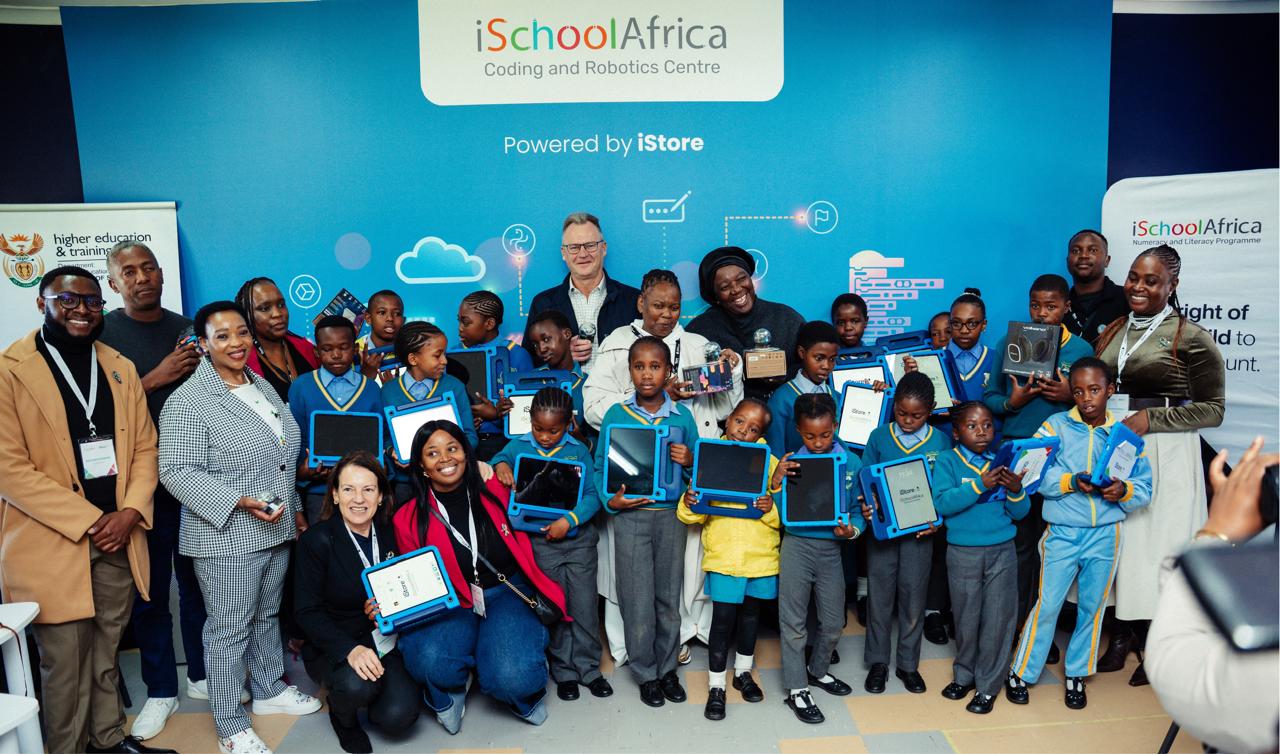
In a significant move to bridge South Africa’s persistent educational digital divide, the Department of Higher Education and Training, in partnership with iStore Education and iSchoolAfrica, officially launched a new Coding and Robotics Centre at Igugu Primary School in Mofolo South, Soweto, on 12 May 2026.
The launch event, attended by Deputy Minister Dr Nomusa Dube-Ncube, marks a critical milestone in the government’s broader vision to equip township communities with Fourth Industrial Revolution (4IR) skills. The initiative aims to democratise access to global technologies and bring digital education to under-resourced schools, ensuring that South African students are adequately prepared for a rapidly evolving, technology-driven job market.
The new facility at Igugu Primary is not merely a cosmetic upgrade. According to Michelle Lissoos, Director of iStore Education and iSchoolAfrica, the programme represents a long-term, sustainable commitment to the school. The partnership with Igugu began in 2020 with the installation of a digital library, which educators successfully integrated into their daily literacy and numeracy teaching .
“This is not a once-off installation, but a sustainable programme that will continue to grow year after year,” Lissoos stated during her address. The upgraded centre features refurbished learning spaces equipped with flexible tables repurposed from Apple retail stores, iPad technology, and comprehensive coding and robotics hardware and software.
Crucially, the programme introduces Apple’s Everyone Can Code curriculum to the students. This curriculum provides a structured pathway from basic block-based coding to advanced app development using Swift – the same programming language utilised by professional Apple developers worldwide. The initiative also includes specialised training for teachers in digital pedagogy, ensuring that educators gain the confidence required to teach critical Science, Technology, Engineering, and Mathematics (STEM) skills effectively.
The launch of the Igugu centre arrives at a complex moment for South African education. In July 2025, the national Department of Basic Education announced a delay in making coding and robotics mandatory subjects across all schools, citing severe infrastructural deficits and the urgent need to prioritise foundational literacy and numeracy in the early grades. With approximately 81% of Grade 4 learners unable to read for meaning, the government has been forced to balance the demands of the digital age with foundational learning crises.
Initiatives like the iSchoolAfrica programme aim to fill this gap, proving that digital skills and foundational learning can be developed concurrently when supported by private sector partnerships. iSchoolAfrica, established in 2009, focuses on bringing the world’s best educational technology practices to schools that would otherwise lack access, aligning with the United Nations Sustainable Development Goal 4 for inclusive and equitable quality education.