
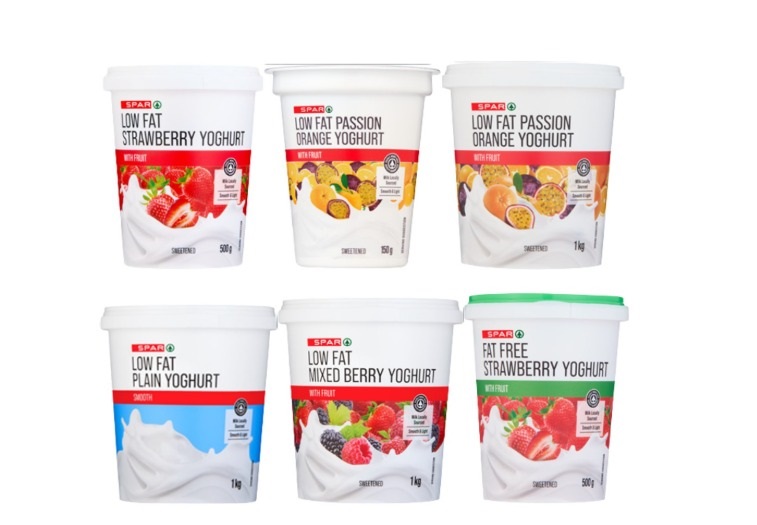
South Africa’s National Consumer Commission has ordered a recall of a range of SPAR yoghurt and drinking yoghurt products after a production fault raised the risk of spoiled goods reaching supermarket shelves nationwide.
The commission announced on Thursday that the affected batches carry a sell-by date of 9 August 2026 and a use-by date of 12 August 2026, covering SPAR’s fat-free, low-fat, double cream and indulge double cream yoghurt lines, along with its active drinking yoghurt range.
READ – SPAR Just Reinvented the Supermarket
According to the NCC, a malfunction on a production line caused product blowing, a defect that can alter the taste, smell and appearance of yoghurt and, in some cases, trigger gastrointestinal upset if consumed. The regulator’s Pheto Ntaba advised affected consumers to return the products to their nearest SPAR store for a full refund or exchange, noting that barcodes for the recalled lines are published on the commission’s website.
| Affected brand | SPAR fat-free, low-fat, double cream and indulge double cream yoghurt; SPAR active drinking yoghurt |
| Units recalled | 3,987 |
| Product varieties | 11 flavours across the yoghurt and drinking yoghurt range |
| Sell-by date | 9 August 2026 |
| Use-by date | 12 August 2026 |
| Cause | Machine malfunction during production causing product blowing |
| Consumer action | Return to nearest SPAR store for a full refund or exchange |
| Regulator contact | ProductRecall@thencc.org.za |
This is at least the second time SPAR-branded goods have featured in an NCC recall inside two years, after Namib Mills pulled its Top Score instant porridge, distributed through SPAR stores, in September 2024 following contamination concerns. That episode followed a separate case in which Shoprite recalled a Deli Hummus range after Listeria monocytogenes was detected, underlining how often South African retailers now find themselves managing supplier-driven safety failures rather than in-house production errors.
Recalls of this kind have become markedly more common. NCC figures show the commission administered 21 product recalls in the third quarter of 2025 alone, though the majority, sixteen, involved motor vehicles rather than food. Legal specialists tracking the trend attribute the rise partly to tighter enforcement under the Consumer Protection Act and partly to social media’s capacity to amplify defects long before they might otherwise reach regulators. Analysts at insurer iTOO Special Risks have separately noted that South Africa now records a higher recall frequency than many peer developing markets, a pattern they link to stronger transparency requirements rather than weaker manufacturing standards.
The financial consequences of a mishandled recall can be severe. Ford Motor Company of Southern Africa was fined R35 million over its delayed disclosure of the Kuga fire defect, while peanut butter maker ButtaNutt lost most of its retail contracts and paid a R500,000 fine after an aflatoxin contamination scare. By contrast, promptly executed recalls, of the kind SPAR has now initiated, are generally treated by regulators as evidence that internal safety monitoring is functioning rather than failing.
READ – From Kitchen Dream to SPAR Shelf Success
The recall lands in a dairy category worth close to R25 billion in gross production value nationally, within a broader South African dairy market estimated at more than US$23 billion in 2024 and forecast to keep expanding at above 6 percent annually to 2032. Yoghurt remains one of the sector’s fastest-growing segments, driven by health-conscious buying habits and a shift toward drinkable formats. For SPAR, South Africa’s second-largest grocery chain by revenue with group turnover of R132.4 billion in its last financial year, the episode is a reputational test at a moment when the retailer is already defending market share against Shoprite and Woolworths in a cost-sensitive trading environment. Whether the swift, transparent handling of this recall protects consumer trust, or feeds broader unease about food safety oversight, is likely to shape how the incident is remembered.