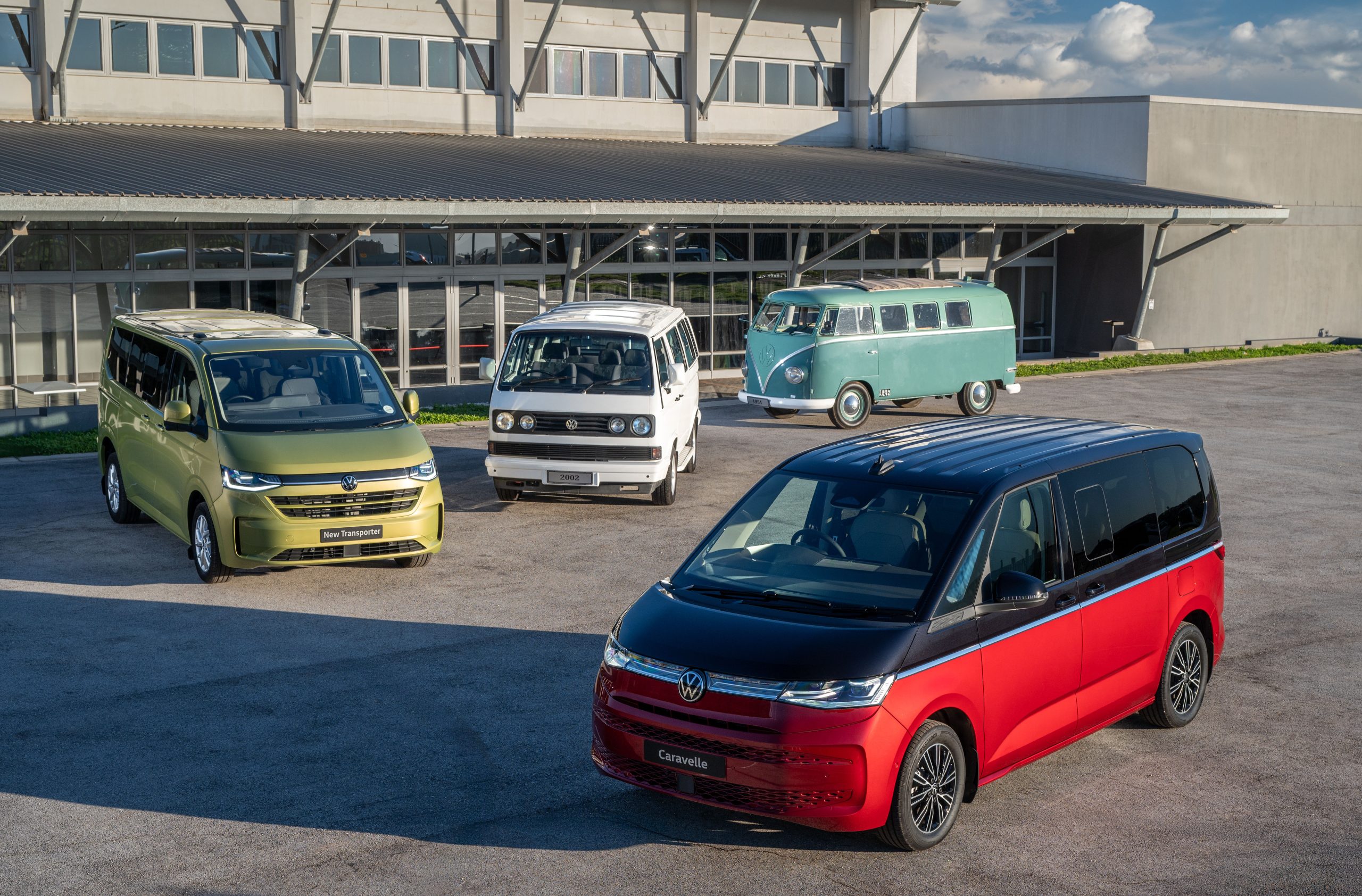
The Volkswagen Caravelle eHybrid is now on sale in South Africa, marking the most significant chapter yet in a story that stretches back more than seven decades. From the original Type 2 Kombi in 1950 through the Transporter, Caravelle and Multivan, the Volkswagen Bus has remained a symbol of freedom, family and enterprise, evolving with each generation while keeping its defining traits: versatility, durability and reliability.
In South Africa, the Kombi introduced generations of families to road travel, ferried children to school, supported small businesses and served emergency services and tourism operators. The Transporter built a reputation as one of the world’s most dependable commercial vehicles, while the Caravelle brought executive comfort to that same practicality. The eHybrid now extends that legacy into electrification.
EXPLAINER – Iconic Kombi Gets A Luxury Makeover
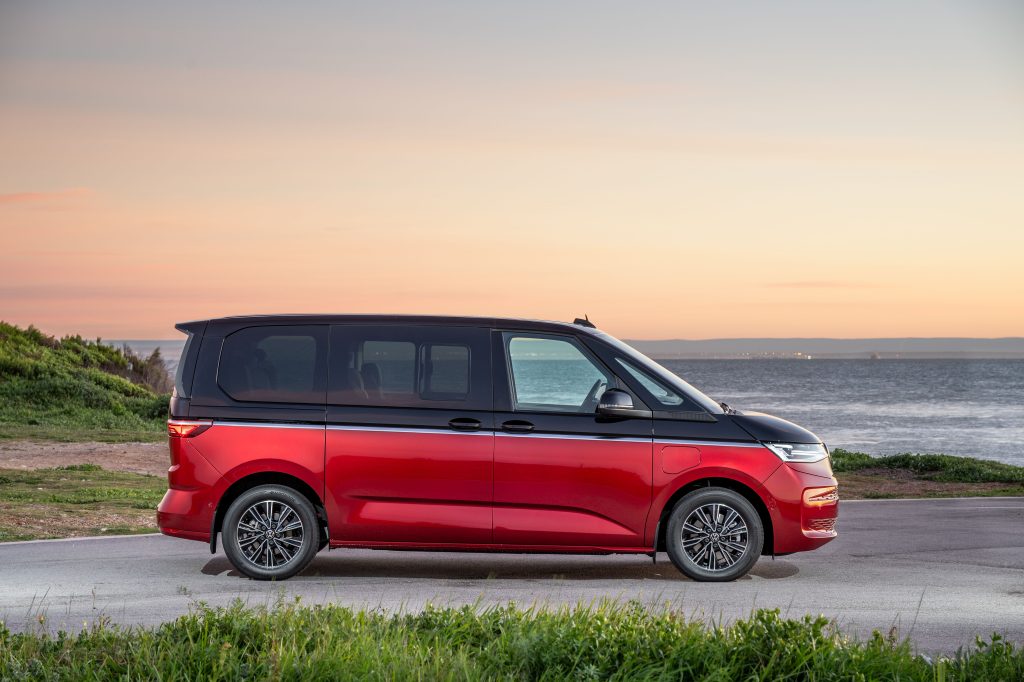
Volkswagen Group Africa frames the launch as more than a new model addition. It reflects the company’s broader commitment to South Africa’s transition to New Energy Vehicles, one built on the belief that the country’s path to electrification will require a mix of technologies rather than a single approach. The Caravelle eHybrid embodies that philosophy, offering the efficiency of electric driving for everyday trips while retaining a turbocharged petrol engine for longer journeys, removing many of the barriers that typically slow EV adoption.
This launch builds on groundwork Volkswagen has already laid locally. A customer evaluation programme for the ID.4 provided insight into charging behaviour and ownership expectations, while a pilot of the ID. Buzz Cargo tested battery-electric commercial vehicles in real fleet conditions. Both informed the company’s New Energy Vehicle roadmap and reinforced its view that successful electrification depends as much on customer trust as on the technology itself. The Caravelle eHybrid is positioned as a bridge between conventional combustion vehicles and a fully electric future.
Charging is designed around flexibility rather than dependence on public infrastructure. Owners can charge at home, at work or via South Africa’s growing public charging network, while always having the petrol engine as backup. The Caravelle eHybrid ships with a 7.4 kW AC Wallbox home charger, giving a five-and-a-half-hour charge time, and supports 11 kW AC charging for residential or destination charging. It also supports 40 kW DC fast charging, taking the battery from 10% to 80% in around 26 minutes.
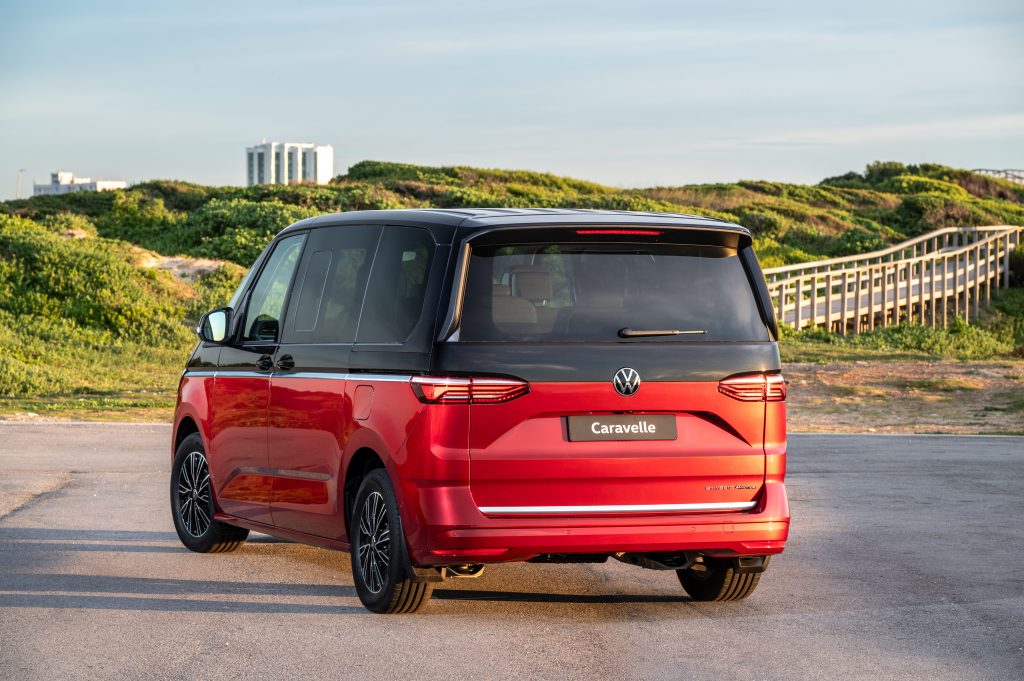
At the centre of the vehicle is a 19.7 kWh lithium-ion battery made up of 96 prismatic cells, enabling up to 95 kilometres of all-electric range, enough for most South African households’ daily driving. Beyond that, the hybrid system automatically balances electric and petrol power, or a combination of both, for a combined range of up to 700 kilometres. A regenerative braking system also recovers energy during deceleration to feed back into the battery.
The Caravelle eHybrid represents a third category of New Energy Vehicle alongside battery-electric vehicles, which run solely on stored electrical energy, and conventional hybrids, which cannot travel far on electric power alone. As a plug-in hybrid, it allows external charging while keeping the range flexibility of a petrol engine, suited to commuting and school runs without sacrificing long-distance travel.
Powering the vehicle is a newly developed 1.5-litre TSI evo2 turbocharged petrol engine producing 130 kW and 250 Nm, paired with an electric motor integrated into a six-speed DSG transmission. Combined output reaches 180 kW and 350 Nm, making it the most powerful production Caravelle sold in South Africa. The two power sources can operate independently or together, with software continuously assessing speed, battery charge, driver input and road conditions to select the most efficient mode.
The eHybrid 4MOTION all-wheel-drive system distributes power electronically between the axles rather than through a mechanical propshaft, allowing up to 100% of drive force to shift to either axle depending on conditions. The rear axle can operate on electric power even when the battery is depleted, with the petrol engine and front motor generating the required energy, and remains engaged up to 130 km/h in Sport mode.
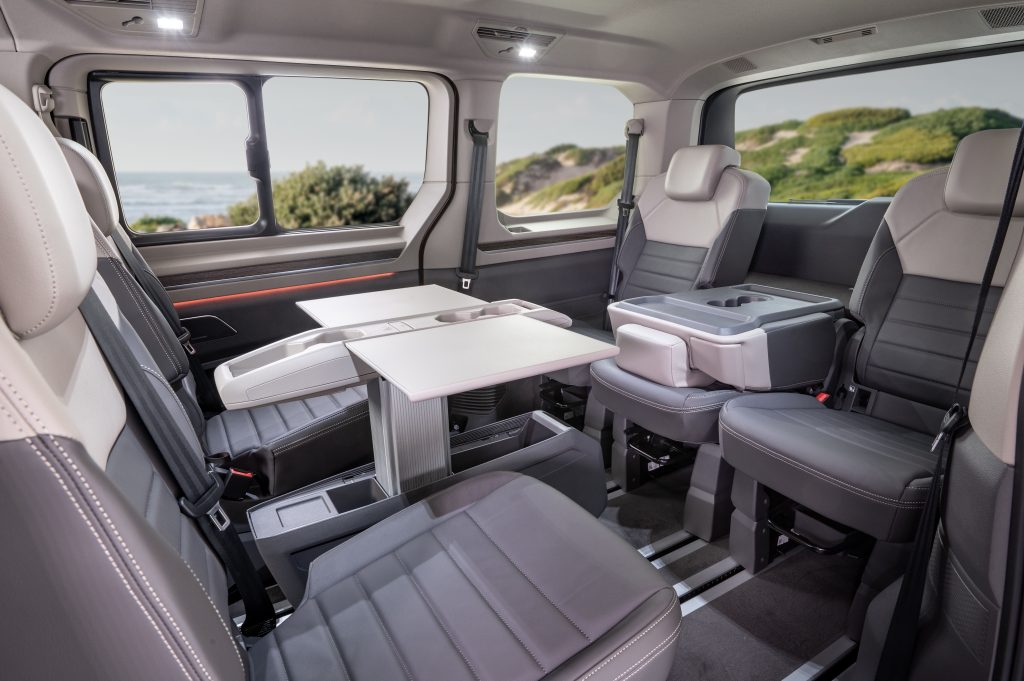
Standard features include three-zone climate control, a 13-speaker Harman Kardon sound system with 840 watts of output, a leather-wrapped multifunction steering wheel, and 30-colour ambient lighting. Safety and convenience technology includes Adaptive Cruise Control, IQ. LIGHT LED Matrix headlamps, Park Assist, Side Assist with Blind Spot Monitoring, electrically operated sliding doors, a power tailgate, keyless entry and start, and 17-inch Dundrod alloy wheels.
The Volkswagen Caravelle eHybrid is priced at R1,794,000, including VAT and emissions tax. It comes with a 3-year/120,000km manufacturer warranty, a 5-year/100,000km Easy Drive maintenance plan, a 12-year anti-corrosion warranty and a battery warranty of 2 years unlimited or 8 years/160,000km, with service intervals set at 15,000km.