
Binance Research has published a full-year report summarizing what defined crypto markets in 2025 and outlining themes for 2026. The below is a summary of the report’s most decision-useful takeaways, with emphasis on the structural signals: clearer regulatory frameworks, expanding institutional access, stablecoins scaling as settlement infrastructure, DeFi maturing into a cash-flow sector, and tokenization moving from pilot programs to production workflows. Read the full report here.
2025: Structural Progress, Macro-driven Markets
2025 delivered milestone achievements alongside a choppy market. Total crypto market capitalization surpassed $4 trillion for the first time, and Bitcoin reached a new all-time high of $126,000. At the same time, macro uncertainty – monetary policy, trade tensions, and geopolitical risk – dominated market behavior. Binance Research describes a year defined by “data fog,” including a new U.S. administration, the Liberation Day tariff shock, and a government shutdown that obscured economic signals. Crypto traded in a wide range, with total market value swinging between about $2.4 trillion and $4.2 trillion, and ended the year down about 7.9%.
The optimistic reading is that structural progress continued even when price action did not cooperate – and that is one of the clearest maturity signals in the report. Access, settlement rails, and regulation moved forward, and many of the strongest growth areas were tied to practical usage rather than speculation.
Crypto is Industrializing
A useful theme for 2025 is industrialization: the market increasingly rewarded infrastructure and credible access routes. Regulatory clarity, particularly around stablecoins, as well as the expansion of regulated investment products increased the number of ways institutions and sophisticated investors could participate. At the same time, the ecosystem’s economic center of gravity continued shifting toward compliance-friendly building blocks: stablecoins for settlement, tokenized treasuries for on-chain cash management, and applications that can monetize recurring flows rather than one-off hype cycles.
This is one reason “activity” alone became a weaker signal. The report repeatedly distinguishes between raw usage metrics and economic relevance: what matters is whether a network or protocol can capture recurring value, produce durable fees or revenue, and support reliable settlement and trading.
Bitcoin as a Macro Asset
Bitcoin in 2025 showed a divergence between market demand and base-layer activity. BTC maintained roughly 58% to 60% market dominance and a capitalization near $1.8 trillion, while liquidity and demand increasingly flowed through off-chain financial channels.
Two numbers in the report anchor that shift:
- U.S. spot BTC ETFs accumulated over $21 billion in net inflows.
- Corporate holdings surpassed 1.1 million BTC, equivalent to about 5.5% of total supply.
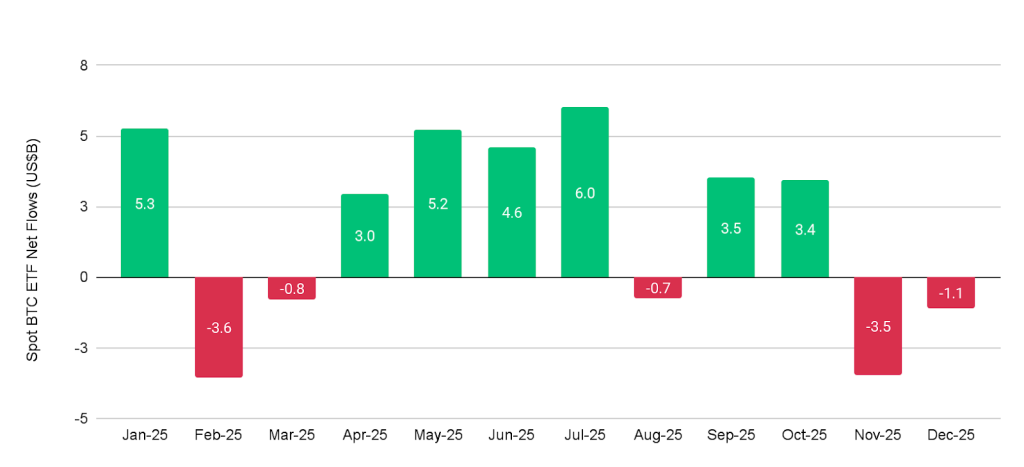
Figure 1: Spot BTC ETFs attracted over US$21.3B in net inflows
At the same time, active addresses declined about 16% year over year, and transaction counts stayed below prior cycle peaks. The point is not that the base layer is irrelevant, but that Bitcoin’s market role is increasingly defined by how it trades and is held within macro portfolios and regulated channels. Network security continued strengthening – hash rate exceeded 1 zettahash per second and mining difficulty rose about 36% year over year – reinforcing the idea of sustained investment into Bitcoin’s security budget even as usage metrics normalized.
In sum, Bitcoin is moving toward the status of a liquid, institutional-grade macro asset rather than a purely transaction-led network.
DeFi’s “Blue Chip” Moment
DeFi in 2025 moved further away from incentives-first growth and closer to capital efficiency and compliance. Total value locked stabilized at about $124.4 billion, but the composition of capital shifted meaningfully toward stablecoins and yield-bearing assets rather than inflationary tokens. In parallel, DeFi’s economic output strengthened: protocol revenue reached $16.2 billion, which the report frames as comparable to major traditional financial institutions.
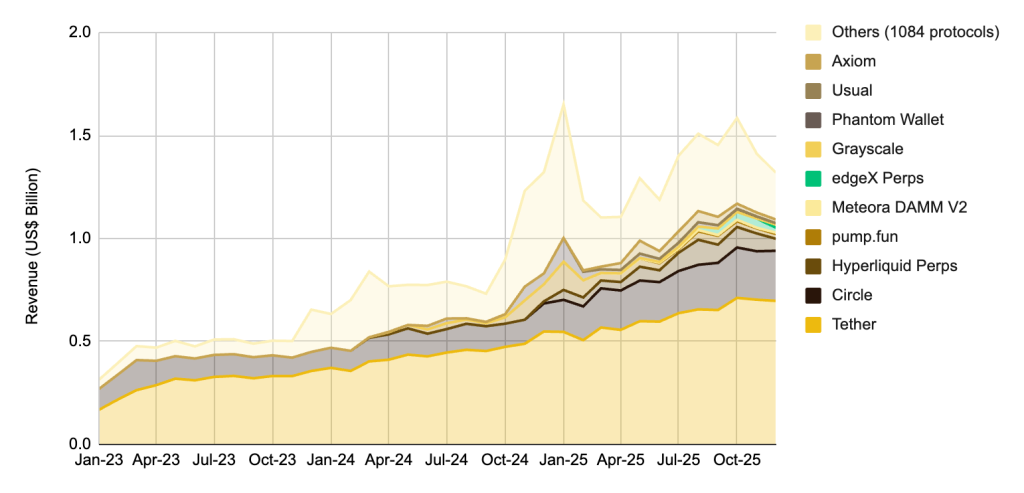
Figure 2: DeFi monthly revenue in reached a record high of US$1.65B. Source: DefiLlama, Binance Research, as of Dec 31, 2025
A major trend was tokenization’s move from narrative to collateral. RWA total value locked reached $17 billion and surpassed DEXs, driven by tokenized treasuries and equities. This dynamic essentially changes what backs on-chain finance. When collateral shifts toward yield-bearing, real-world instruments, it makes DeFi more tied to repeatable financial demand.
The report also notes that on-chain execution continued gaining relevance, with DEX-to-CEX spot trading ratios peaking near 20%. While ratios fluctuate, the broader trend is that decentralized execution is becoming a meaningful venue for certain flows, especially as stablecoins grow and RWA collateral becomes more liquid and usable.
Stablecoins Enter the “Internet Fiat” Era
If one part of crypto clearly went mainstream in 2025, it was stablecoins, which have reliably become settlement infrastructure.
Key stablecoin takeaways from the report include:
- Total stablecoin market capitalization rose nearly 50% to over $305 billion.
- Daily transaction volumes averaged about $3.54 trillion.
- Annual transaction volume reached $33 trillion, compared to Visa’s approximately $16 trillion.
- Regulatory clarity accelerated, led by the U.S. GENIUS Act.
- New competition expanded beyond a duopoly: BUIDL, PYUSD, RLUSD, USD1, USDf, and USDtB each crossed $1 billion market cap.
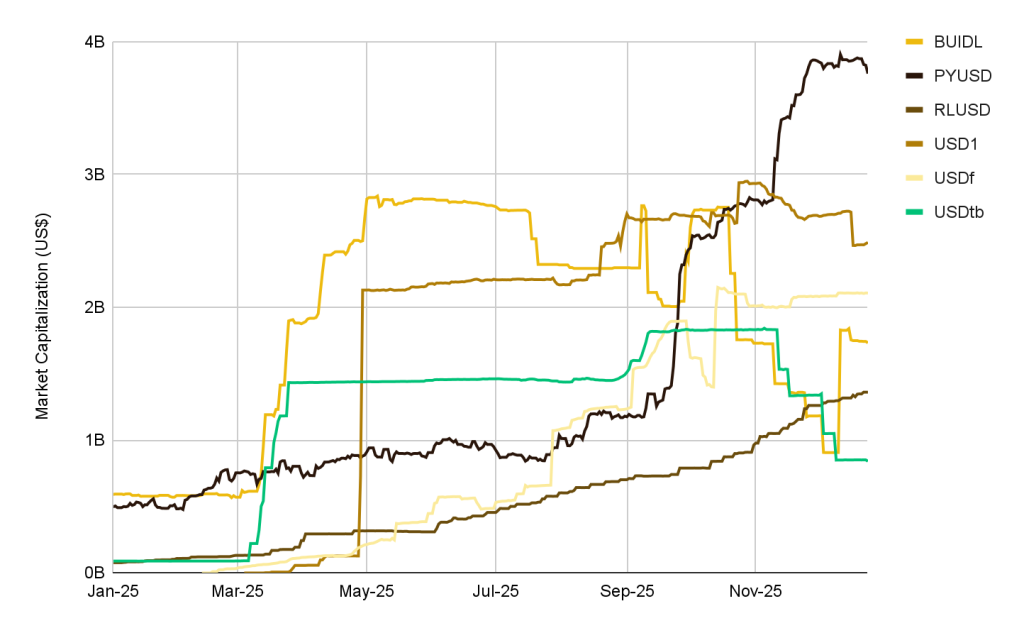
Figure 3: Six new stablecoins crossed the US$1B market cap mark. Source: Artemis, Binance Research, as of 31 December, 2025.
The optimistic narrative is straightforward: stablecoins are increasingly a default medium of exchange inside crypto markets and an increasingly practical rail for cross-border settlement, payments, and fintech applications. In many cases, stablecoins allow users and businesses to access crypto rails while abstracting the volatility that makes newcomers hesitant.
Layer-1s: Monetization is King
Across layer-1 networks, 2025 reinforced that transaction counts are not enough. Many networks failed to convert activity into fees, value capture, or sustained token performance. Meanwhile, differentiation increasingly came from recurring monetizable flows such as trading, payments, and institutional settlement.
- Ethereum remained dominant by developer activity, DeFi liquidity, and aggregate value, but fee compression from rollup execution weighed on ETH relative performance versus BTC.
- Solana maintained high usage, expanded stablecoin supply, generated meaningful protocol revenue even after speculative waves faded, and secured U.S. spot ETF approval, improving institutional accessibility.
- BNB Chain benefited from strong retail transaction demand and market narratives, supporting large stablecoin settlement flows and RWA deployments. The report also frames BNB as the best-performing major crypto asset in 2025.
Layer-2 networks accounted for more than 90% of Ethereum-related execution in 2025, supported by upgrades that lowered data availability costs. Activity and fees concentrated among a small number of rollups such as Base and Arbitrum, while many others faded as incentives declined. Fragmentation across more than 100 rollups and uneven sequencer decentralization remain constraints, reinforcing another 2026 theme: value capture may move “upstream” to the application layer that owns the user relationship rather than remaining at the blockspace layer.
2026 Outlook: Risk Reboot and Adoption-led Growth
The report’s 2026 outlook is framed around a more constructive policy environment and a shift toward adoption-led growth.
On macro, a “policy triumvirate” could support a reset in risk appetite: monetary easing, fiscal stimulus via cash and tax refunds, and deregulation. When financial conditions ease, risk assets often benefit, and crypto has historically been highly sensitive to global liquidity impulses. The report also notes the potential for a U.S. Strategic BTC Reserve as a policy catalyst.
On product and market structure, the themes are less about a single narrative and more about where durable usage may concentrate:
- PayFi: neobanks and wallets converging, with yield-bearing stablecoins supporting new consumer financial apps.
- Institutionalization: on-chain money markets, treasuries, and RWA settlement embedded into workflows.
- Value capture: as blockspace becomes cheaper, applications such as wallets, aggregators, DEXs, and prediction markets may capture more value.
- Intelligent and agentic finance: AI-driven execution, automated workflows, and trust tooling.
- Prediction markets: information pricing as an alternative to opinion-driven narratives.
In other words, 2026 is likely to reward systems that are verifiable, compliant, and built around recurring utility.
Final Thoughts
In 2025, crypto kept progressing even against macro headwinds. Bitcoin’s demand increasingly flowed through regulated channels, stablecoins scaled as settlement infrastructure, DeFi matured into a revenue-generating sector, and tokenization moved closer to production-grade finance. The 2026 outlook in the Binance Research report builds on those foundations: more institutional integration, more application-layer adoption, and a macro setup that may become less restrictive. For the detailed charts, methodology, and the full list of 2026 themes, read the complete report here.