
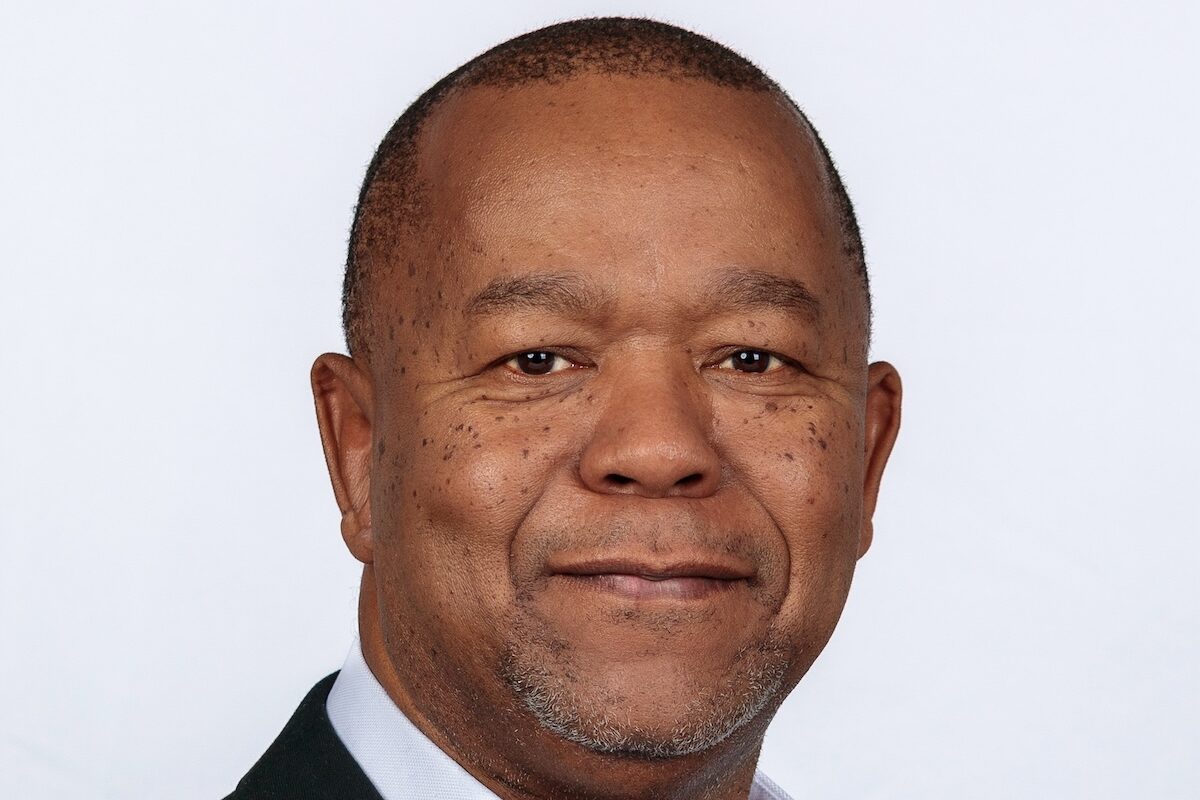
Woolworths Holdings has structured one of the most demanding executive incentive packages in recent South African retail history for its incoming chief executive, tying a potential R100 million share award to targets that would require the group to reverse a decade of share price stagnation and deliver sustained double-digit earnings growth.
Sam Ngumeni, who takes over as group chief executive on 1 June 2026 following the retirement of Roy Bagattini, has been granted 995,715 shares in the company under a special once-off outperformance share award. The shares were acquired on the open market by the Woolworths Holdings Share Trust at a volume-weighted average price of approximately R51.44 each, placing the current face value of the award at R51 million. All dividends accruing over the vesting period will be reinvested to acquire additional shares, subject to the same performance conditions, with any unvested shares and dividends forfeited if targets are missed.
The full award vests only if three interlocking targets are met by June 2031: the group’s share price must reach R100, adjusted diluted headline earnings per share must grow at 15% per annum, and return on capital employed must exceed the weighted average cost of capital by eight percentage points. Each target carries a different weighting — 50% for the share price, 30% for earnings growth and 20% for capital returns. A threshold award of 50% vests if the share price reaches R80, earnings grow at 10% per annum and return on capital employed exceeds the cost of capital by five percentage points. Linear vesting applies between the threshold and target levels.
The difficulty of the task becomes clear when set against Woolworths’ recent financial trajectory. The group’s share price has traded at around R51 for much of the past five years, is down 21% over three years and has lost 42% of its value over the past decade. Reaching R100 per share would take Ngumeni back to the group’s all-time high, last touched in October 2015 — a level the stock has not approached since. On the earnings side, the challenge is equally steep. In the most recent financial year to June 2025, the group reported a 19% decline in adjusted diluted headline earnings per share, with a return on capital employed of 16.4% against a weighted average cost of capital of 12.4% — a spread of four percentage points, well below the eight required for full vesting.
READ – R115 Million Payout for Woolworths Executives
The five-year cliff vesting structure — tested entirely at the end of the period rather than in annual tranches — is unusual by the standards of South African listed company practice. Woolworths said the board deliberately chose this structure to support longer-term value creation, and noted that Ngumeni accepted the award on 23 March 2026. The board expressed full confidence in Ngumeni’s capacity to execute against the group’s strategic priorities. Ngumeni brings approximately 30 years of experience within the Woolworths business, having served as chief operating officer and, most recently, chief executive of the highly profitable Woolworths Food division before being appointed to the group role. He has held executive director status since 2014 and already holds shares in the group exceeding the minimum shareholding requirement of 200% of guaranteed remuneration that will apply once he assumes the group CEO position.
The structure contrasts with the arrangement given to outgoing chief executive Roy Bagattini when he joined in 2020. Bagattini received a sign-on restricted share award with a face value of R54 million, structured with staggered vesting of 25% in year three, 25% in year four and 50% in year five, and assessed against board-mandated non-financial performance measures rather than financial metrics — an approach widely regarded as atypical for awards of that nature.
Subsequent share allocations to Bagattini in years three and four totalled nearly R100 million, with a final tranche worth R39 million vesting last year. The sign-on award was justified at the time by the need to compensate Bagattini for equity forfeited upon his departure from Levi Strauss, where he had been based in the United States on a dollar-denominated package, and to secure comprehensive restraints of trade in both South Africa and Australia. By contrast, Ngumeni’s award is entirely performance-contingent and subject to rigorous financial benchmarks — a signal that the board intends the next five years to be defined by measurable financial recovery rather than strategic repositioning.
ALSO READ – Woolworths Expands Food Dominance Through Supplier Buyout