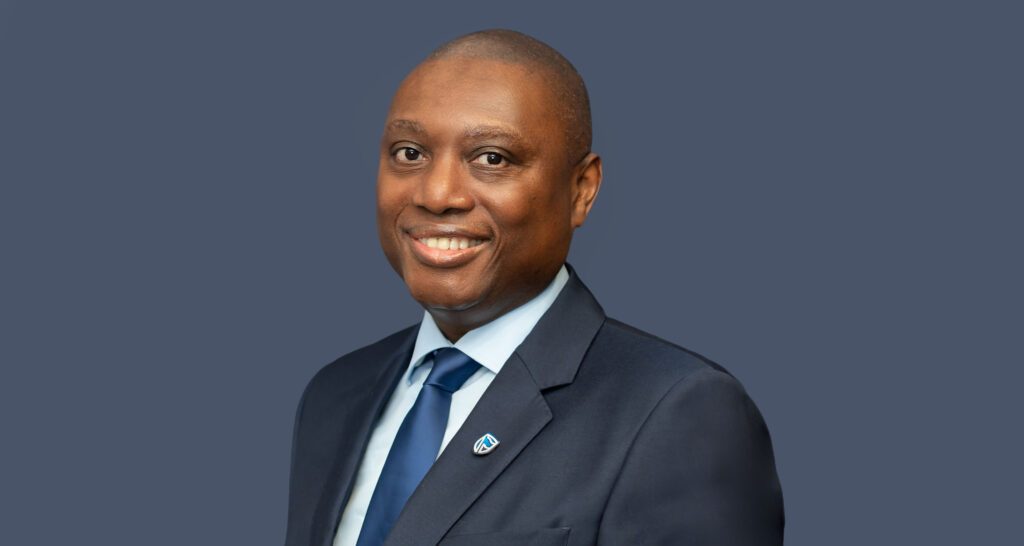
Africa’s largest bank by assets has laid out its most ambitious continental growth strategy to date, targeting double-digit earnings expansion by 2028 by positioning itself at the intersection of Africa’s energy deficit, surging intra-continental trade and an accelerating digital banking transition.
Standard Bank chief executive Sim Tshabalala told investors at the group’s Capital Markets Day in Johannesburg on Thursday that the bank, which operates across 21 countries, is targeting headline earnings per share growth of 8% to 12% per year through to 2028, alongside a return on equity of between 18% and 22% and revenue growth of 7% to 10% annually. The group enters this strategic cycle from a position of operational strength, having delivered 11% compound annual revenue growth over the past five years, a credit loss ratio of 73 basis points, and a return on equity of 19.3% in 2025 — meeting or exceeding all core targets set in 2021.
The group’s 2026–2028 targets include a cost-to-income ratio sustainably below 50%, a credit loss ratio within a target range of 70 to 100 basis points, a CET1 ratio above 12.5%, and a dividend payout ratio of between 45% and 60%. The targets reflect both the bank’s confidence in continued execution and what it described as a favourable structural backdrop on the continent, with the International Monetary Fund projecting sub-Saharan African economic growth to accelerate from 4.4% in 2025 to 4.6% in both 2026 and 2027.
READ – Standard Bank Hits the Top of its Earnings Target
The centrepiece of the strategy is the group’s corporate and investment banking division, its largest revenue generator. According to Standard Bank’s Capital Markets Day materials, Africa currently invests only around $75 billion of the $150 billion it needs annually in infrastructure — a gap that the bank regards as one of the defining commercial opportunities of the decade. The CIB unit’s chief, Luvuyo Masinda, said the division is targeting revenue of R100 billion by 2028, up from R74.4 billion in 2025, driven by financing and advisory activity in energy, infrastructure and critical minerals. Annual investment needs in African energy alone are estimated at between $130 billion and $170 billion, with infrastructure requiring a further $170 billion per year. Masinda specifically identified copper and cobalt as offering significant near-term financing and advisory opportunities, positioning the bank to benefit from rising demand for minerals central to the global energy transition.
Capital allocation decisions will tilt deliberately towards markets where the group does not yet hold a top-three position. Chief Financial Officer Arno Daehnke said the group will direct incremental capital towards East and West Africa, where profit pools are deepening and macroeconomic fundamentals are improving, with both organic growth and acquisitions on the table. Egypt, where Standard Bank opened an office in November 2025, has been identified as a significant expansion target, given the country’s scale, its position as a regional trade hub and its growing infrastructure investment pipeline. The African portfolio excluding South Africa contributed 40% of group earnings in 2025, and Daehnke indicated the bank expects that figure to reach approximately 45% by 2028.
The strategy is structured around four themes: deepening the bank’s leadership in corporate lending, investment banking, markets activities and transactional solutions; intensifying support for Africa’s expanding SME and mid-corporate sectors through improved credit models and digitally enabled platforms; capturing demand arising from the expansion of intra-African and global trade flows driven by regional integration under the African Continental Free Trade Area; and accelerating digital adoption as it transforms consumer banking, enterprise transactions and financial ecosystems across the continent. Tshabalala described technology, artificial intelligence and payments as foundational to the group’s growth model, noting that cloud migration and core systems modernisation have already improved resilience and reduced the time taken to bring new products to market.
Geopolitical risk was not absent from the discussion. Tshabalala acknowledged that the group is monitoring the Middle East conflict and has taken risk management measures in response, but said the bank sees no reason at this stage to revise its commitments or targets. As reported by, share buybacks may supplement the group’s dividend payout should valuation conditions permit, signalling that management regards the current share price as a factor in capital return decisions. The broader strategic logic, however, rests on Standard Bank’s assessment that the retreat of European banks from African markets, combined with rising commodity investment flows into mining, oil and gas, has created a structural opportunity that a pan-African lender with deep local knowledge is uniquely placed to capture.
ALSO READ – Standard Bank Raises R2bn in Crisis Shield Sale