
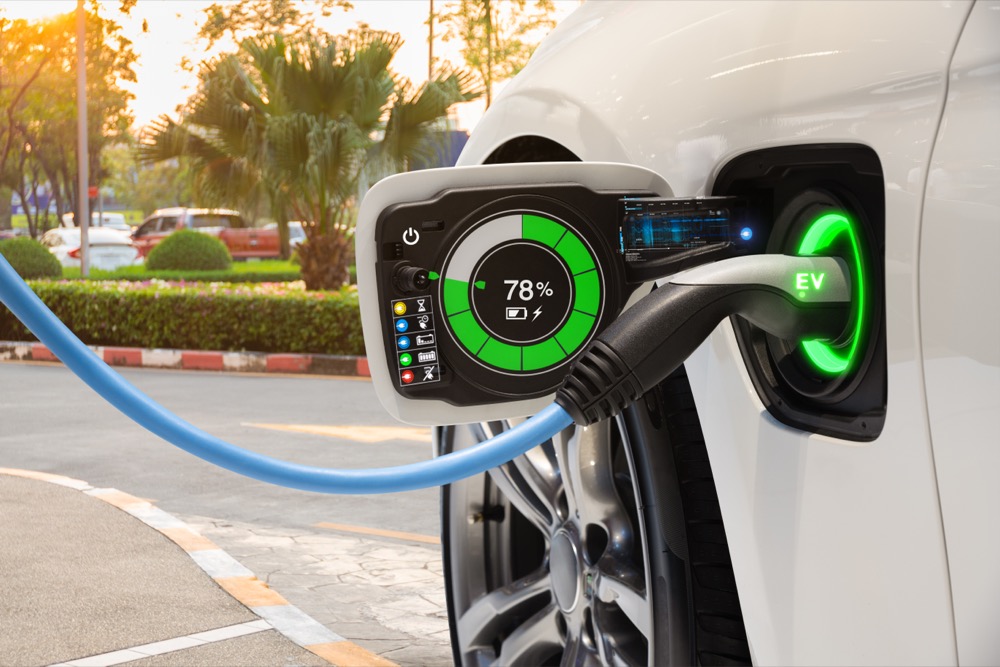
Despite the prospect of easing fuel prices, the unprecedented pressure felt by South Africans at the pumps has triggered a significant shift in car buying patterns locally, with motorists actively seeking options that future-proof their mobility choice.
This is reflected in data from naamsa | The Automotive Business Council, which reports that battery-electric vehicle (BEV) sales nearly doubled in the first quarter of 2026 compared to last year, while plug-in hybrid (PHEV) sales surged by a staggering 430% – an encouraging sign of organic growth, spurred by consumer choice despite the absence of government incentives.
As demand intensifies, many local dealerships are working around the clock to secure stock and keep up with a sudden influx of highly motivated buyers. Yet, behind this boom lies what might seem to be a paradox. It’s no secret that the traditional automotive retail model has relied on the service department to augment sales revenue. However, New Energy Vehicles (NEVs) have significantly fewer moving parts and require drastically less maintenance than Internal Combustion Engine (ICE) cars.
Far from being sidelined by the electric transition, however, South Africa’s car dealerships are proving to be one of its most critical proponents, because the transition is not happening autonomously. It’s being aided by those charged with ensuring the shift remains frictionless.
“The true value of a dealership has fundamentally shifted from grease and spanners to guidance, trust, and advanced technical intelligence,” says National Automobile Dealers’ Association (NADA) Executive Ryan Seele. “Buyers are not just choosing a new powertrain; they are adopting an entirely new lifestyle. They need to understand home charging setups, public infrastructure networks, battery degradation, and complex trade-in values. Without the dealership network acting as trusted conduits, the wheels of this transition would turn a lot slower.”
While almost all customers do their research online prior to making the final purchase decision, the dealership remain the ultimate place of trust where they seek final reassurance. It is at this critical point of contact that the role of the dealer shifts from salesperson to educator.
“Demystifying the differences between NEV alternatives such as BEVs, PHEVs, and traditional hybrids is always a key requirement,” says Seele. “However, customer education at the dealership level goes far beyond that. Dealers play a crucial role in helping buyers understand how to accurately calculate the expected cost of owning the vehicle they are eyeing, given South Africa’s variable electricity tariffs, home solar integration, and even the impact of seasonal ambient temperatures on real-world battery consumption and range.”
This guidance extends beyond just the cost-per-kilometre breakdown based on energy consumption. To empower buyers to choose a vehicle that genuinely fits their needs, dealerships are educating consumers on the Total Cost of Ownership (TCO), taking into account variables such as the initial purchase price, projected residual values, interest-linked holding costs, insurance premiums, and specialised maintenance.
While fewer oil changes may reduce traditional service bay visits, the rise of smarter, software-driven vehicles has also resulted in a massive, parallel evolution in the workshop. Dealerships are aggressively investing in upskilling and training their technical workforces to transition from traditional mechanical servicing to advanced software diagnostics and system intelligence.
Crucially, this specialised capability has transformed into a core customer experience touchpoint. Modern vehicles require a level of technical expertise where customer satisfaction is now directly linked to diagnostic quality. If a workshop lacks the sophisticated skills to pinpoint a software or electronic issue accurately, the ownership experience may quickly deteriorate.
Furthermore, dealing with high-voltage NEV batteries introduces strict safety considerations. Dealerships are investing heavily in specialised training to ensure technicians fully understand battery chemistry and know exactly how to mitigate and manage related risks. Ensuring workshop safety and absolute vehicle integrity before a car goes back on the road is a non-negotiable standard that only an adequately staffed and equipped dealership can meet.
The modern South African car buying journey is no longer a simple transactional handover. It has evolved into an ongoing partnership focused on helping buyers navigate wall-box installations and solar integration, over-the-air updates and vehicle optimisation to ensure peak efficiency, as well as battery health diagnostics and bespoke consumer education.
The current scramble for new energy vehicles highlights just how quickly local perceptions have shifted. The initial consumer hesitation around range anxiety and grid capacity has rapidly been replaced by sharp mathematical calculations around monthly running costs.
Dealerships are currently acting as vital shock absorbers in the supply chain, advocating for more stock allocations from manufacturers, managing waiting lists, and ensuring that eager buyers are matched with vehicles that genuinely fit their driving profiles.
“Ultimately, the reduction in mechanical maintenance is a win for the consumer’s pocket, but it does not come as an existential threat for the auto retail sector. By elevating both workshop capability and the customer experience to meet this new wave of demand, South Africa’s automotive retail sector is proving that while the cars are changing, the human relationship and technical expertise at the heart of ownership remain completely irreplaceable,” concludes Seele.