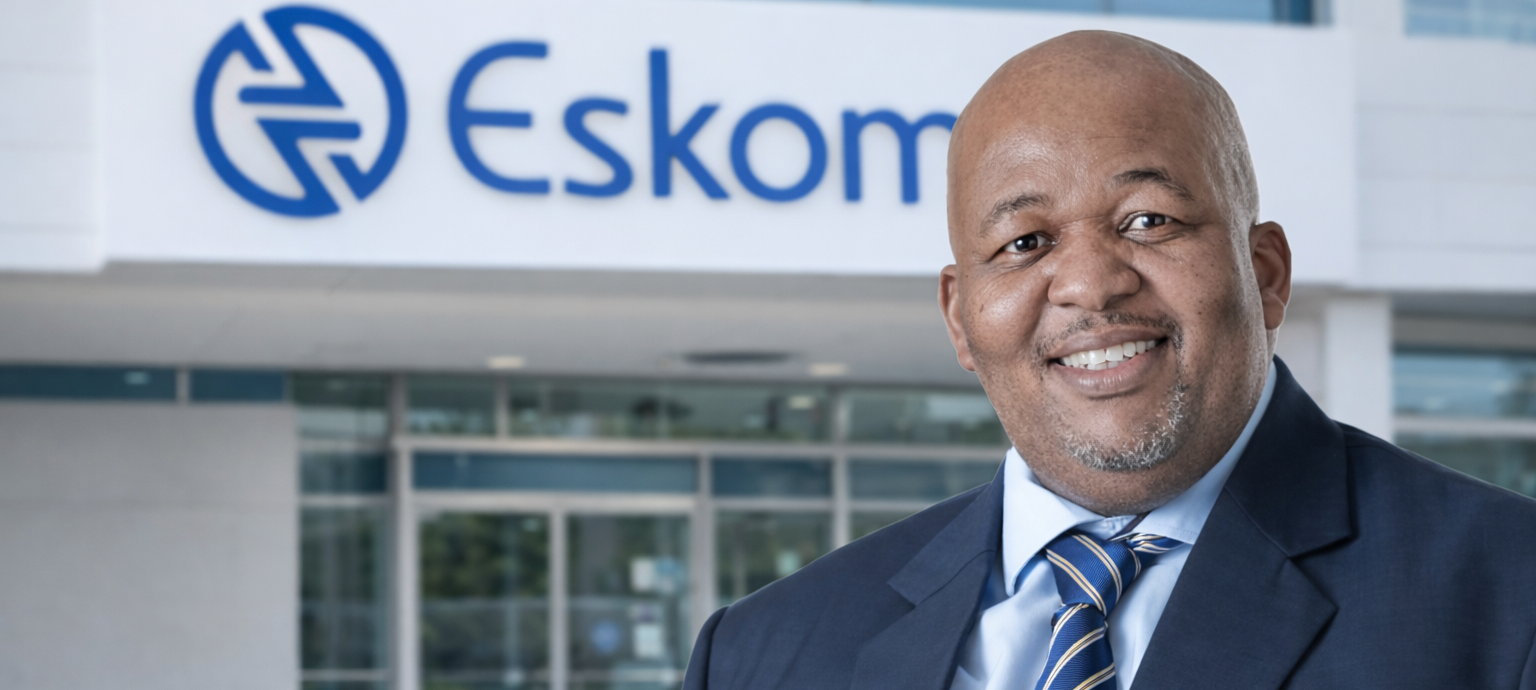
Eskom has finalised its 2026 wage negotiations, securing agreement from the National Union of Mineworkers and Solidarity, which together represent the majority of employees within the central bargaining forum. The settlement introduces a three-year pay arrangement with annual increases of 7% from July, effectively binding all workers in the bargaining unit, including members of the National Union of Metalworkers of South Africa, which has rejected the terms and declared a dispute.
The agreement marks a continuation of the utility’s preference for multi-year settlements, a structure intended to limit the uncertainty associated with annual wage talks.
With consumer inflation currently near 3%, the settlement represents a real increase in earnings, though it falls short of earlier union demands that had reached as high as 15% before being revised downwards during negotiations. Eskom has framed the outcome as a mechanism to anchor cost predictability and maintain operational continuity at a time when the utility is attempting to consolidate recent gains in performance.
The conclusion of the wage process is being positioned internally as a critical step in stabilising Eskom’s operating environment. Management has linked the agreement to broader strategic objectives, including improving reliability of supply, sustaining reductions in load-shedding and strengthening the utility’s financial position to attract future investment. The emphasis on labour stability reflects Eskom’s experience over the past decade, where wage disputes have at times intersected with operational disruptions.
The settlement comes against a markedly improved financial backdrop. Eskom reported a return to profitability in 2025, posting R16bn in after-tax earnings, supported by a combination of government intervention, tariff increases approved by the regulator and lower diesel expenditure as load-shedding eased. The turnaround follows years of financial distress, during which the utility relied heavily on state support, including a R254bn debt relief package announced in 2023. That intervention was coupled with efforts to enforce municipal payment discipline, although arrears from municipalities still exceed R100bn, continuing to weigh on Eskom’s cash flow.
Despite these gains, the agreement has exposed divisions within organised labour. Numsa has rejected the terms, arguing that the increase does not adequately reflect Eskom’s improved financial outlook or the sacrifices made by workers during years of operational and economic strain. The union has pointed to historical wage settlements, noting that employees accepted similar increases even when the utility was loss-making and during periods when the broader economy was heavily impacted by sustained power cuts.
The dispute also highlights tensions over wage inequality within the organisation. Numsa has raised concerns about executive remuneration, citing substantial increases and bonus payments at senior levels, and contrasting these with the offer extended to the broader workforce. This line of argument reflects a wider trend in South Africa’s labour landscape, where disparities between executive pay and worker wages have become an increasingly prominent issue in collective bargaining.
Eskom’s forward projections further complicate the dispute. The utility has indicated expectations of sustained profitability over the medium term, with forecasts pointing to continued earnings growth and relatively strong cash balances. These projections are underpinned by ongoing cost containment measures and revenue enhancement initiatives, including a programme targeting R112bn in savings over five years. For unions, these forecasts reinforce the case for higher wage adjustments, while for management they underscore the need to maintain financial discipline after years of instability.
The breakdown with Numsa introduces the possibility of further industrial action, although the binding nature of the agreement limits immediate changes to the wage structure. Eskom has signalled that it will continue engaging with all recognised unions, suggesting that while the core wage issue may be settled for now, broader labour relations dynamics remain unresolved.
The outcome reflects the complex balancing act facing Eskom as it seeks to rebuild credibility with investors and the public while managing internal pressures from its workforce. The move towards longer-term wage agreements aligns with practices in other capital-intensive sectors, where stability in labour costs is seen as essential for planning and investment. However, the current dispute indicates that consensus on this approach is not universal, and that tensions between financial recovery and wage expectations are likely to persist.