

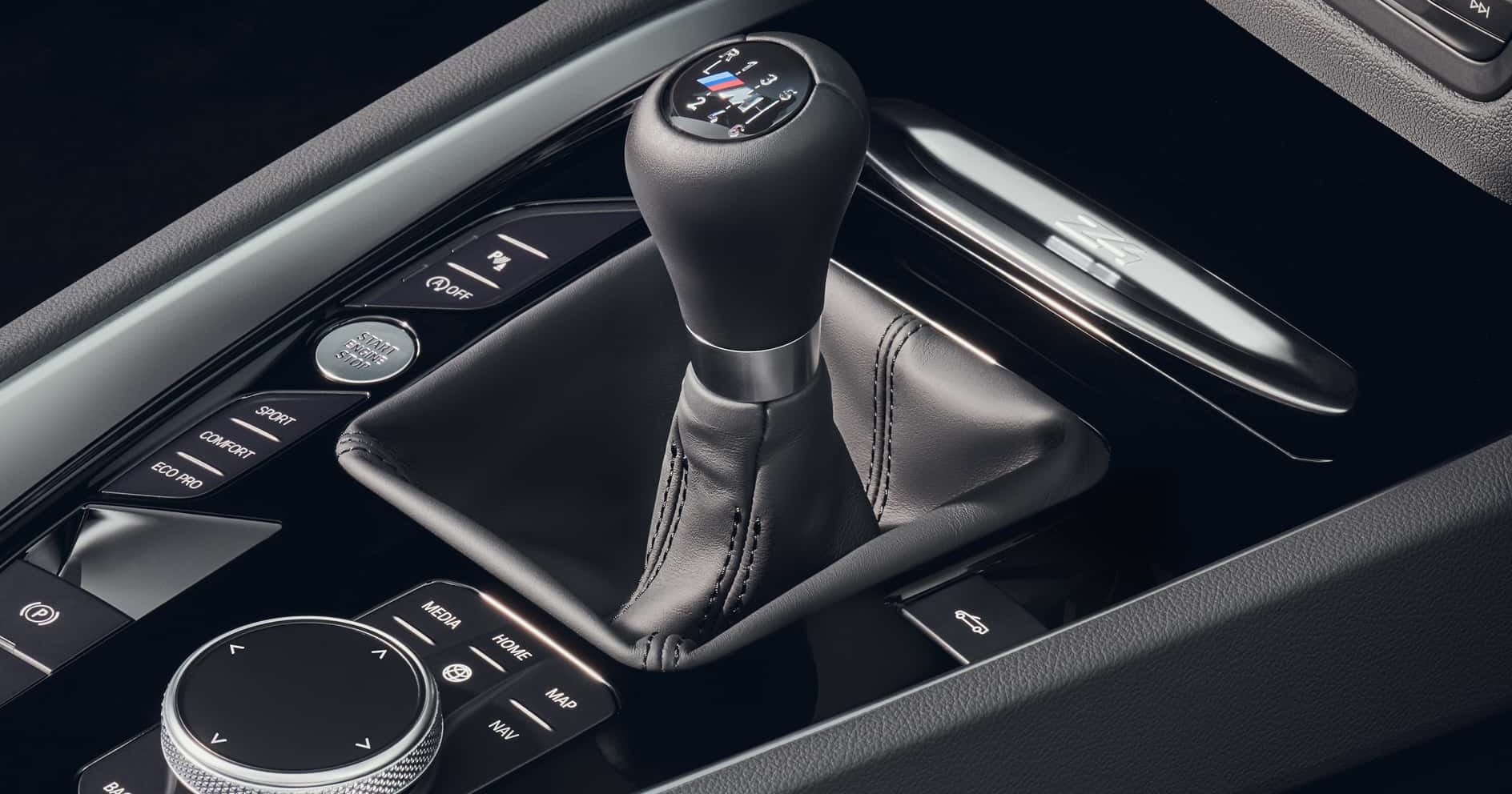
BMW is continuing efforts to retain manual transmissions in its high-performance vehicles, despite mounting engineering and regulatory pressures that increasingly favour automatic gearboxes.
The company’s M division is actively exploring technical solutions to keep manual gearboxes viable alongside more powerful engines.
The challenge stems from the fact that manual transmissions typically handle less torque than automatics, limiting the performance potential of BMW’s inline-six engines unless significant engineering investment is made.
The issue is compounded by declining global demand for manual vehicles. While enthusiast interest remains, take-up rates have dropped sharply over the past decade, making it difficult for manufacturers to justify the cost of developing new manual systems. The company continues to prioritise performance innovation and electrification, areas that require substantial capital allocation and compete directly with niche drivetrain development.
BMW’s approach may involve adapting engine outputs to align with the mechanical limits of manual gearboxes, a strategy already visible in certain models where automatic variants produce higher torque figures than their manual counterparts. This reflects a broader industry compromise between preserving driving engagement and maintaining mechanical durability.
The timeline for manual transmissions within BMW’s M portfolio appears finite but not immediate. Current projections suggest that manual options could remain available until the latter part of the decade, supported by existing models such as the M2, M3 and M4. However, product rationalisation is already underway, with some models being phased out or discontinued in manual form.
Regulatory dynamics are also accelerating the shift away from manuals. Tightening emissions standards across Europe are pushing manufacturers towards technologies that optimise fuel efficiency and reduce CO₂ output. Automatic transmissions, often paired with advanced driver-assistance systems and hybrid technologies, are better positioned to meet these requirements.
In parallel, supply chain considerations are limiting the long-term viability of manuals. Transmission suppliers face reduced economies of scale as volumes decline, increasing production costs for low-demand components. This creates additional pressure on automakers to streamline offerings and focus on higher-volume, compliance-friendly technologies.
Despite these constraints, BMW continues to position manual transmissions as part of its brand identity, particularly within its performance-focused M division. The company has also confirmed that internal combustion engine models will remain in its lineup into the next decade, including a next-generation M3 expected later this decade, even as electrified M vehicles expand.
The outcome suggests a transitional phase rather than an abrupt end. While manuals are unlikely to play a central role in BMW’s long-term strategy, ongoing engineering efforts indicate that the company is seeking to extend their lifespan where commercially and technically feasible.