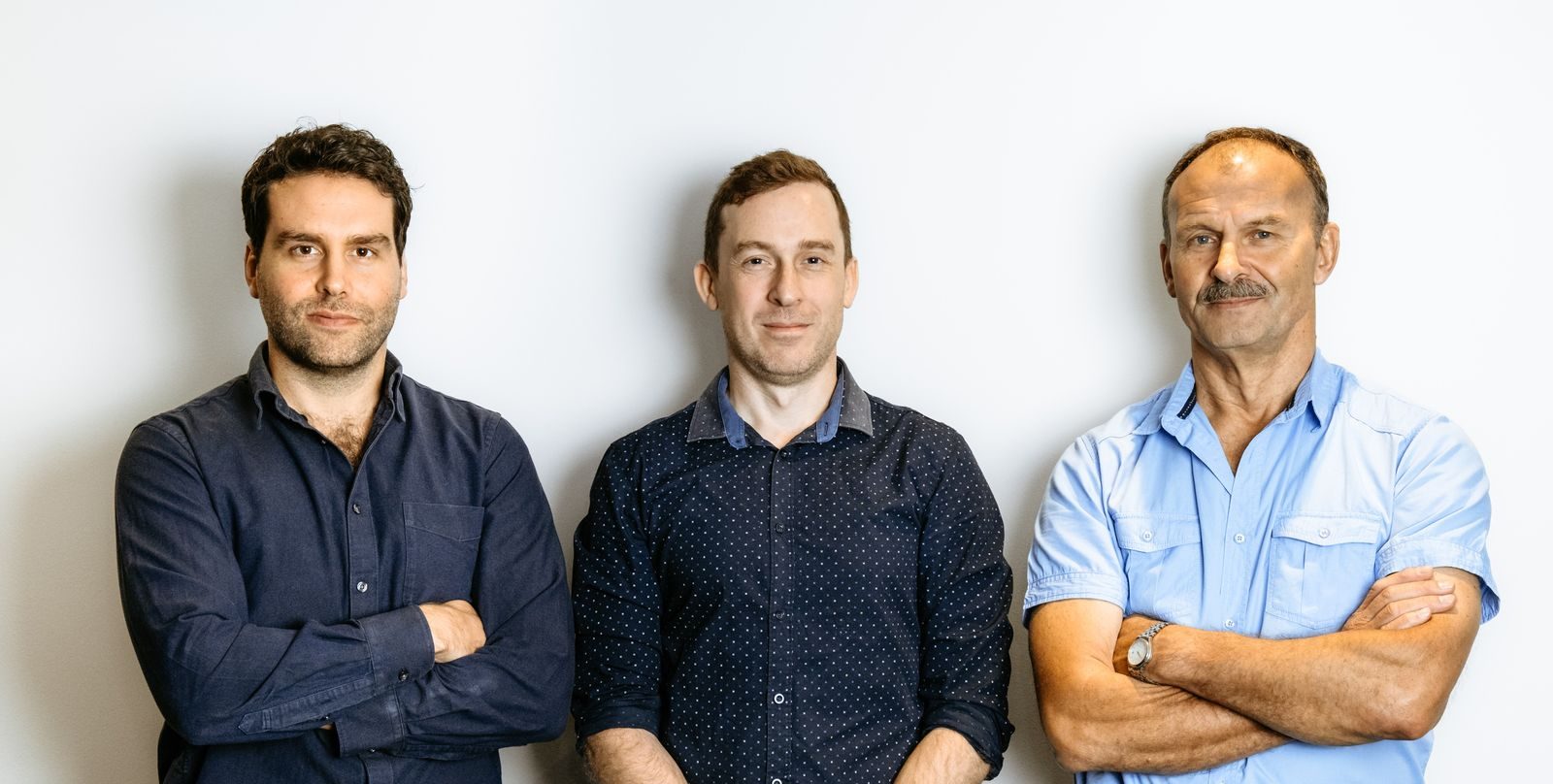
AI Diagnostics, a South African medtech company, has raised R85 million in a pre-Series A funding round to accelerate deployment of its AI-powered Ostium digital stethoscope, enabling early tuberculosis (TB) screening without specialist equipment or infrastructure.
The round was led by The Steele Foundation for Hope, with participation from the iFSP Group, and Global Innovation Fund, and follow-on from key early angel investors. Previous rounds included industry leaders, Africa Health Ventures and Savant. Funding supports clinical research and validation, continued development of the product and AI model, and the operational infrastructure required to scale a medical device business in South Africa, as well as emerging markets across Sub-Saharan Africa and Asia.
“We back technical entrepreneurs who are closest to the problems they’re solving, and AI Diagnostics is a clear example of why that matters,” says Joe Exner, CEO of The Steele Foundation for Hope.
“They’ve built novel hardware: an AI-enabled digital stethoscope that detects TB through lung sound analysis with point-of-care accuracy that simply wasn’t possible before. In communities without X-ray infrastructure or specialist clinicians, this puts real diagnostic capability in the hands of nurses and community health workers.”
Addressing a healthcare crisis
South Africa carries one of the highest TB burdens in the world. According to the WHO 2025 World TB Report, 249 000 people fell ill with TB in South Africa in 2024, and an estimated 54 000 died from the disease. The scale of this crisis is compounded by three structural failures:
- Detection: Most cases go undetected until late. A national TB prevalence survey found that 58% of people who tested positive for TB reported no symptoms, meaning symptom-based screening misses the majority of cases.
- Access: Clinics in high-burden communities are frequently understaffed and under-resourced, and patients face long waits and limited diagnostic equipment.
- The HIV-TB co-epidemic: In parts of southern Africa, over 50% of TB cases occur in people living with HIV, compounding the complexity of care.
Together, these conditions create a system in which TB spreads silently before it’s detected.
How AI Diagnostics is combatting TB
AI Diagnostics was born out of the need to empower frontline healthcare workers with tools that make healthcare more accessible and affordable for patients and providers alike by addressing problems at the source. The company’s flagship Ostium digital stethoscope, paired with its AI.TB software, is designed to be used by community health workers, nurses, and pharmacists, who are the primary point of care for the majority of patients. “The AI model flags individuals whose lung sounds have signals associated with TB in real time so healthcare providers can refer them for diagnostic testing immediately,” says Braden van Breda, CEO of AI Diagnostics. “For health systems trying to close the detection gap, this changes the availability and the geography of screening.”
AI Diagnostics holds South African Health Products Regulatory Authority (SAHPRA) approval and has screened more than 1 000 patients in South Africa. The company is currently conducting clinical research across more than 10 countries in Africa and Asia.
“AI Diagnostics didn’t design its technology from a distance. They built it in South Africa, one of the world’s highest-burden countries, with clinical partners on the ground and patients in the room,” says Exner. “That proximity shapes everything: how the device is engineered for harsh clinic conditions, the lung sound database they’ve spent years assembling, and the trust they’ve earned in the communities they serve. Solutions like AI Diagnostics are more durable, more trusted, and more likely to scale.”
Jan van Staden, speaking on behalf of iFSP Venture Capital, says: “Our investment in AI Diagnostics is driven by two compelling pillars: transformative social impact and exceptional leadership. By harnessing artificial intelligence to close the gap between the need for expert clinical insight and its availability in underserved communities, AI Diagnostics exemplifies the Fifth Industrial Revolution businesses we back, those that build a better world while generating sustainable returns for our clients.”
Evolution of the Stethoscope
The raise draws backing from investors who see the potential of where point-of-care diagnostics is heading. While starting with TB, AI Diagnostics is exploring how its technologies can be used for screening across multiple lung and heart conditions.
“The stethoscope is a universal symbol of medicine. It’s in every doctor’s office, used for routine check-ups to diagnose respiratory, cardiovascular, and gastrointestinal diseases. But it hasn’t changed significantly in over a hundred years,” says Rowena Luk, Managing Partner at Africa Health Ventures. “We anticipate it will evolve in the next decade, and that this change will affect healthcare markets globally. We believe AI Diagnostics could be at the forefront of that change.”
A Signal to the Market
Van Breda and the team are optimistic about what this latest investment means for the future of healthcare. “It signals that investors increasingly see global health not as philanthropy but as a viable and necessary area of commercial investment,” says van Breda. “TB has historically been underfunded relative to its burden precisely because it disproportionately affects low- and middle-income populations. When mission-driven investors back companies like AI Diagnostics, they are making a deliberate statement: that tools built for the world’s highest-burden settings can be both commercially sustainable and genuinely impactful.”
This sentiment is echoed by Kate Turner Smith, Partner at Savant. “Our investment helps accelerate deployment of faster, more reliable diagnostics in high-burden, underserved areas. This supports earlier detection, better treatment outcomes, and reduced transmission.”
Meanwhile, Global Innovation Fund (GIF) sees this as a milestone for South Africa’s burgeoning medical technology industry. “South Africa is home to a sophisticated medtech industry and has become a powerhouse of health innovation,” says Lily Steele, Managing Director of Investments, at GIF. “We have found that solutions developed in this context are often better adapted to real-world constraints, such as cost sensitivity, infrastructure limitations, and patient behaviour, which positions South African innovation well for broader deployment across emerging markets, and even developed markets.AI Diagnostics demonstrates that it is possible to build high-quality, globally relevant solutions from within Africa that are both impact-driven and commercially viable.”