
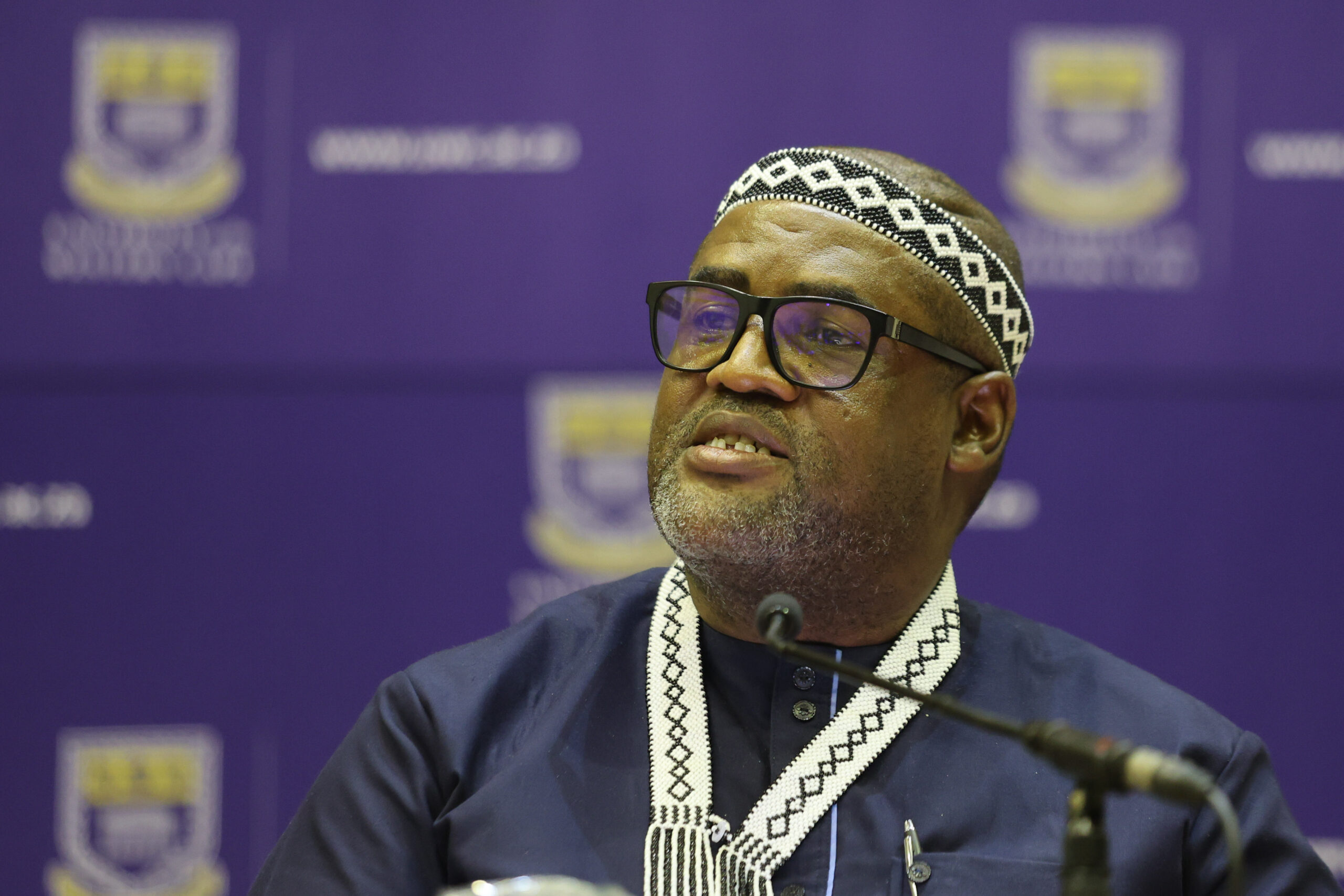
Land Reform and Rural Development Minister Mzwanele Nyhontso has launched a R2 billion programme to give land reform beneficiaries the funding, technical support and market access the state has struggled to provide since 1994. R1.2 billion of that has been allocated for the current financial year.
Nyhontso launched the Integrated Land Reform and Rural Development Support Programme on 26 October at Nywarha Village in the Mbhashe Local Municipality, Eastern Cape. The programme brings funding, technical advice, infrastructure, skills development and market access into a single process. The department says this is meant to end the practice of sending farmers from one institution to another in search of help.
The R1.2 billion will be shared among all nine provinces, each receiving between R100 million and R170 million, in line with its share of landholdings. Separately, the Land Bank has committed R500 million to a blended finance scheme. The statements do not say whether this amount forms part of the R2 billion.
| Indicator | Value |
|---|---|
| Total programme value | R2bn |
| Allocation for current financial year | R1.2bn |
| Allocation per province | R100m–R170m |
| Land Bank blended finance commitment | R500m |
| Farmland restored or redistributed since 1994 | about 19.2m hectares |
| Share of freehold farmland | 24.8% |
| Original redistribution target | 30% |
Women, youth, military veterans and farmworkers will be given priority, and investment will be directed deliberately to communal areas. Eligible beneficiaries include households, communal property associations, commonage farmers, co-operatives, producer groups and restitution communities. The programme draws its mandate from four laws: the Provision of Land and Assistance Act of 1993, the Restitution of Land Rights Act of 1994, the Labour Tenants Act of 1996 and the Extension of Security of Tenure Act of 1997.
Support will include tractors, seed, irrigation and modern technology for smallholders, along with access roads, storage facilities and digital connectivity. Agriculture is the anchor of the programme, but the department also plans to fund community-owned tourism, agro-processing plants and small factories located close to raw materials.
Other development finance institutions are also involved. The Development Bank of Southern Africa will provide transaction advisory services and held a sod-turning event two weeks before the launch. The department is also in talks with the Industrial Development Corporation, other development finance institutions and commercial banks to expand the blended funding pool. The first call for expressions of interest went out in September, and applications for the current production season are being evaluated, along with infrastructure needs assessments.
Nyhontso said land handed over without the means to farm it keeps the inequalities of the past in place, and that the state would stop settling people on land without support. He said dispossession under colonialism and apartheid had taken cattle, labour and economic opportunity as well as land. He also undertook to speed up the assessment of applications and tell applicants of decisions promptly.
The programme addresses a long-standing weakness in land reform. A 2025 report estimated that about 19.2 million hectares, or 24.8% of freehold farmland, have been restored or redistributed through state programmes and private transactions. That is short of the 30% target set after 1994. Productivity on transferred land has been a recurring concern. The Democratic Alliance claimed in 2022 that 75% of farms acquired under the Proactive Land Acquisition Strategy had failed, after the state spent more than R12 billion on acquisitions since 2006. The party blamed weak post-settlement support.
Earlier efforts followed a similar logic. In 2011, the government set aside R1.3 billion for the Recapitalisation and Development Programme, with the aim of making all land reform farms fully productive within three years.
Analysts have linked the poor performance of many land reform farms to a lack of capital rather than a lack of farming skill. The new programme’s mix of grant funding, blended finance and advisory support is designed to fill that gap.