
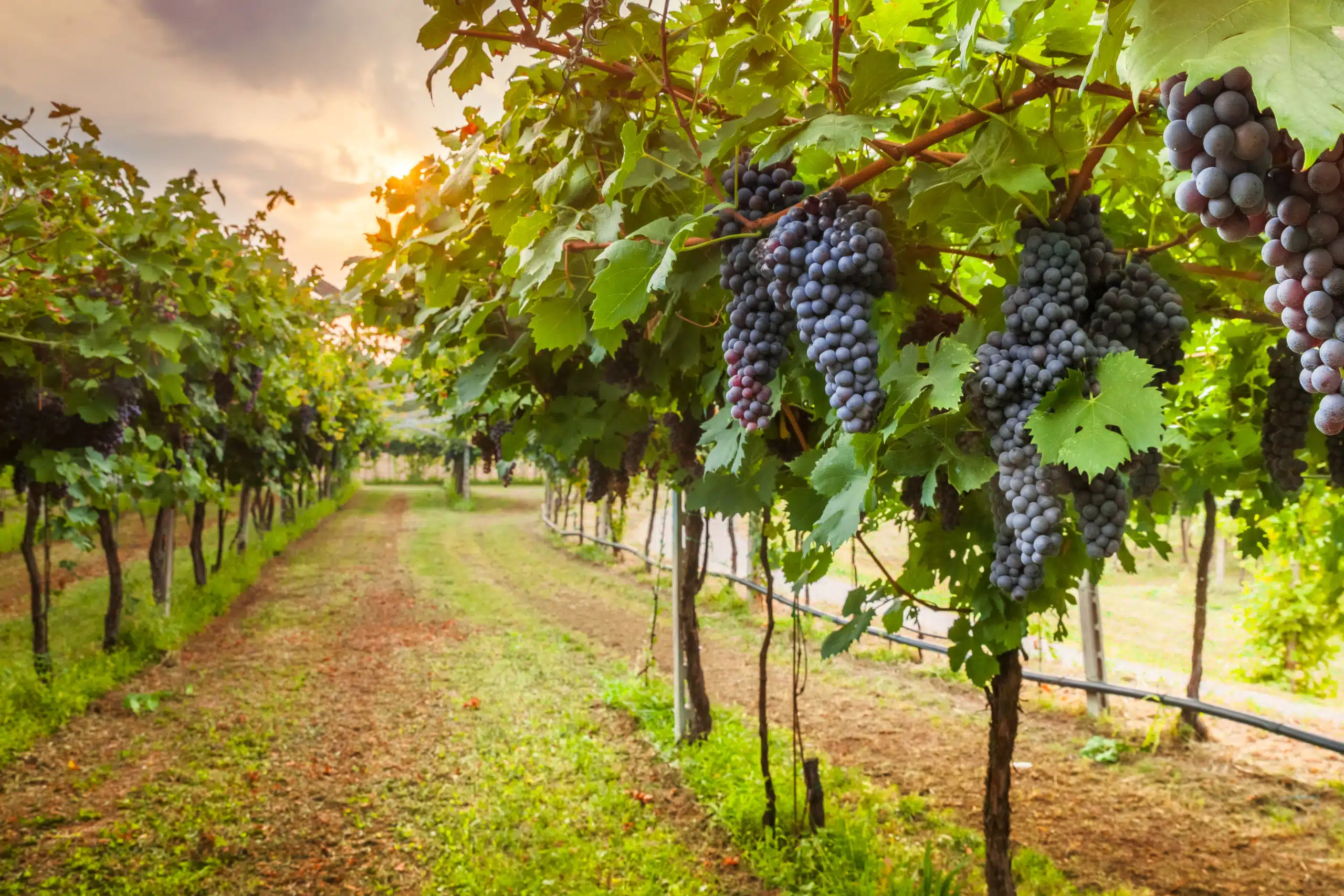
South Africa’s wine grape growers have entered the 2027 season in a strong position, according to industry body South Africa Wine. Healthy vine reserves, generally adequate water and promising fruitfulness point to good production potential.
The early assessment follows a 2026 harvest estimated at 1.37 million tonnes, a moderate increase on 2025 after several smaller vintages. Industry bodies said favourable conditions during flower cluster initiation in 2025, together with strong vegetative growth this season, support the outlook. Crop size will still depend on flowering, fruit set, water and weather over the coming months.
Rain in April and May allowed vines to rebuild their reserves before dormancy. Winter was unusually dry and warm across many regions, but early cold spells gave most areas enough chilling. Warm weather in August brought bud break forward by two to three weeks in several regions. September rain then left several major irrigation dams full or nearly full.
| Indicator | Figure |
|---|---|
| 2026 harvest | 1.37m tonnes |
| 2025 export value | R9.8bn (down 4.7%) |
| 2025 export volume | 264m litres (down 13.8%) |
| Bulk wine exports | 146.4m litres (down almost 20%) |
| Packaged wine exports | 117.6m litres (down 4.6%) |
| Share of wine consumed locally | About 60% |
The season has had setbacks. In May, floods damaged vineyards and infrastructure along parts of the Breede and Olifants rivers, and further flooding hit the Klein Karoo in June. The dry winter has made water management more important in some areas. The early bud break also lengthens the period in which vines are exposed to frost, although no significant frost damage had been reported at the time of the assessment.
Dr Etienne Terblanche, consultation services manager at Vinpro, said vineyards entered the season with good reserves and that bud break and early growth looked encouraging in many regions. He cautioned that the outcome still depends on flowering, fruit set, water and weather.
The positive vineyard outlook contrasts with conditions in the market. South Africa Wine said high wine stocks and softer demand in parts of the local and international markets were putting pressure on sections of the value chain after the larger 2026 crop.
Export data shows the strain. Figures from Wines of South Africa and South Africa Wine show export value fell 4.7% to R9.8 billion in 2025, while volumes dropped 13.8% to 264 million litres. Bulk wine, which typically earns lower margins, fell by almost a fifth.
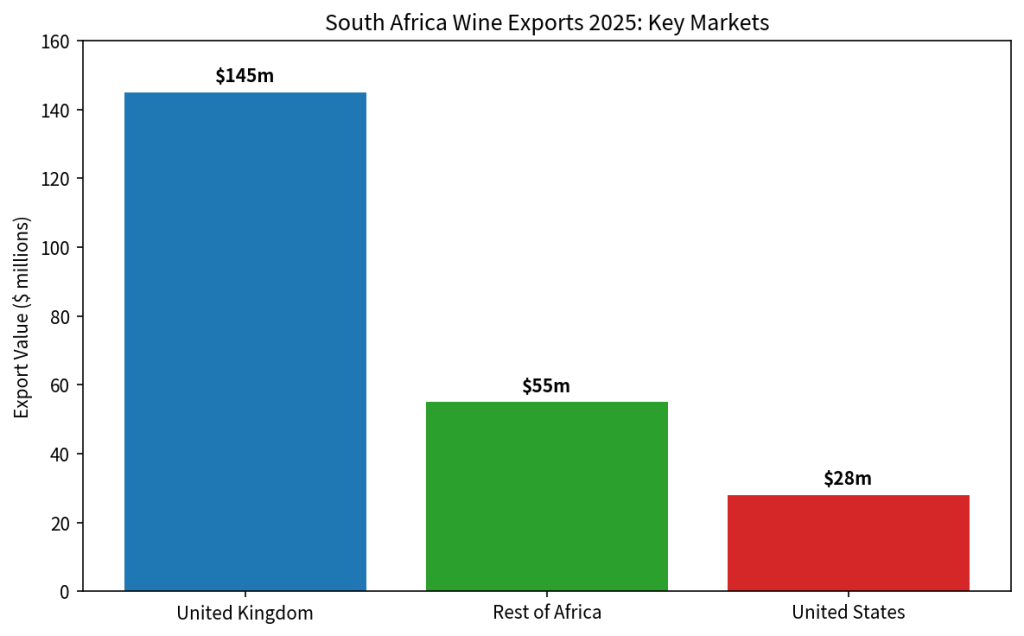
Exports to the United States, the fifth-largest market, declined 28% to $28 million (about R459 million) after US tariffs took effect in August 2025. Sales to the rest of Africa rose 13% to $55 million (about R902 million). The UK remained the largest market, flat at $145 million (about R2.4 billion).
About 60% of South African wine is consumed locally. A 2024 FTI Consulting study cited by the industry estimates that the sector supports about 270,000 direct and indirect jobs.
Rico Basson, chief executive of South Africa Wine, said a successful harvest should not be judged on volume alone. He said the industry needs to focus on value, market development and long-term profitability. Decisions on water, vineyard management and cultivar choice would be critical, he added.