
For millions of South Africans, Rooibos is simply part of the daily ritual – a steaming cup in the morning, a refreshing iced drink on a hot afternoon or an ingredient in a favourite recipe. But behind that seemingly regular cup lies an economic value chain stretching from the Rooibos-growing regions of the Western and Northern Cape to farms, processing facilities, manufacturers, retailers, cafés and businesses across the country.
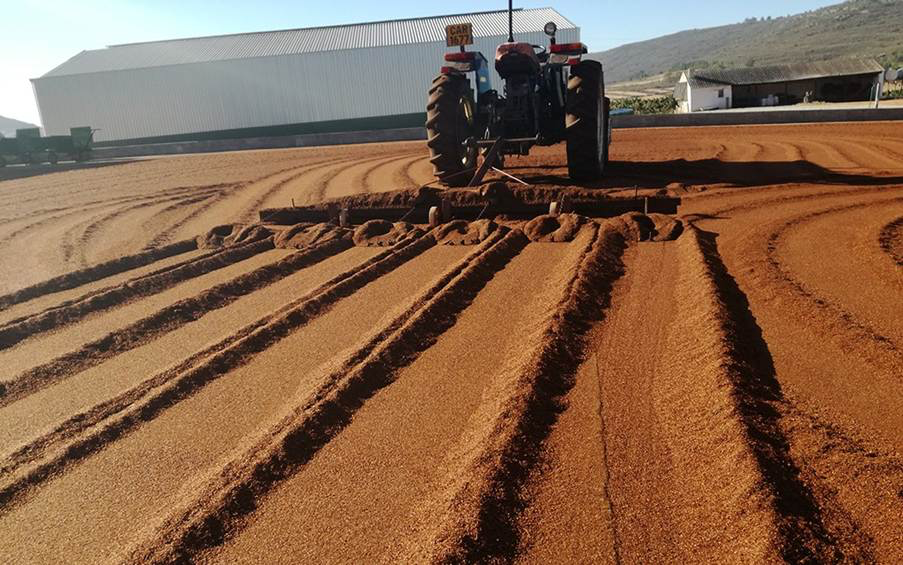
Rooibos production averages around 15 000 tonnes a year – although volumes fluctuate depending largely on plantings, rainfall and other climatic conditions. Despite these fluctuations, demand remains resilient, with total Rooibos sales in 2025 equivalent to more than 10 billion cups – roughly one cup for every person on Earth, with about 2 billion cups to spare.
The industry provides income and employment to approximately 8 000 people, across primary production and upstream activities, such as processing, packaging and retailing.
“The real opportunity now is to unlock more value from Rooibos within South Africa – through innovation, beneficiation and new business opportunities across the value chain,” says Adele du Toit, spokesperson for the South African Rooibos Council (SARC).
From the Cederberg to the world
Rooibos has a distinctive geographical identity. The plant is endemic to South Africa, with the Cederberg region at the heart of its production. Its restricted growing area gives it a provenance few agricultural commodities can claim.
The industry includes approximately 300 commercial farmers and 210 small-scale farmers. Government has also highlighted the role of Rooibos in supporting some 160 small-scale farmers belonging to the Wupperthal Cooperative in the Western Cape and the Heiveld Cooperative in the Northern Cape.
At the other end of the value chain, Rooibos has become an established South African export commodity. In 2025, exports surpassed the 10 000-tonne milestone for the first time, reaching approximately 10 930 tonnes, almost double the 5 900 tonnes exported in 2015. Rooibos is now exported to more than 50 international markets, with Japan accounting for 33% of exports.
From crop to opportunity
The opportunity increasingly lies in looking beyond the traditional cup.
Rooibos is already being used in a growing range of value-added applications, including extracts, functional foods and beverages, cosmetics and personal-care products. This creates opportunities for manufacturers, entrepreneurs and small businesses to develop new products and experiences around the raw material.
For entrepreneurs, that could mean Rooibos-based beverages, desserts and baked goods, while cafés, hospitality businesses, food producers and beauty brands can incorporate Rooibos into their offerings.
“The more ways we find to use Rooibos, the more opportunities there are to create value around it,” says du Toit. “Every new application creates the possibility of a new product, a new business or even a new market, broadening the economic contribution of Rooibos well beyond the farm and the teacup. The more we can transform Rooibos into finished products and experiences here in South Africa, the greater the opportunity to retain more of that value within our own economy.”
A social dividend
Rooibos also has a distinctive economic story because of its connection to Traditional Knowledge.
In 2019, the Rooibos industry entered into a landmark Access and Benefit-Sharing (ABS) agreement with San and Khoi communities, recognised as the Traditional Knowledge-holders associated with Rooibos. It was the world’s first industry-wide benefit-sharing agreement of its kind, creating a precedent for how an entire industry can share the benefits arising from the commercial use of traditional knowledge.
Under the agreement, processors pay a 1.5% levy based on the farm-gate price of Rooibos in recognition of Traditional Knowledge associated with the plant. Between 2019 and 2024, R42.7 million was distributed to San and Khoi councils through the benefit-sharing mechanism.
The arrangement demonstrates how commercial activity around an indigenous resource can generate benefits beyond conventional agricultural income, linking the Rooibos economy to rural development and community benefit.
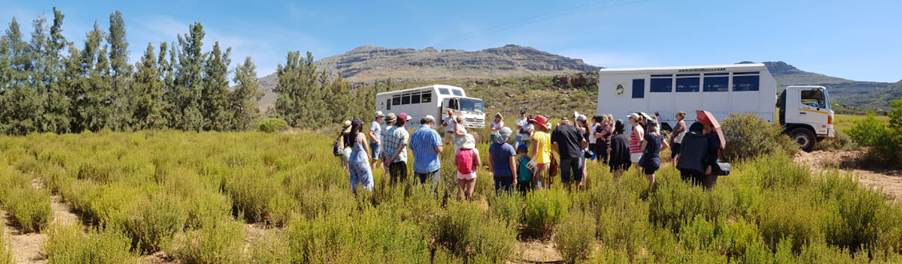
There is also a tourism dimension. The Cederberg’s association with Rooibos provides opportunities for farm visits, tastings, accommodation, restaurants and other Rooibos-related experiences. Rooibos’ EU Protected Designation of Origin further strengthens the link between the product, its geographical origin and the region’s tourism potential.
Unlocking more value
It is this network of connections that makes the Rooibos economy worth looking at differently.
The question is not simply how much Rooibos South Africa produces or exports, but how much economic value is created between the Rooibos plant and the consumer – and where there is scope to create more of it.
“Rooibos has already demonstrated its ability to create economic value well beyond the farm. The challenge now is to build on that foundation in a way that strengthens the industry, supports the communities connected to it and protects the resource on which the entire value chain depends,” says du Toit.