
South Africa currently transfers an estimated R300–R500 billion annually to global oil markets through petrol and diesel imports. For decades, it was simply the cost of running a modern economy. There was no credible alternative. That is changing and the investment case for the infrastructure enabling that change is becoming difficult to ignore. Every spike in fuel prices strengthens the economic argument for producing transport energy locally rather than importing it. Petrol increased by R3.27 per litre in May. June brought a further 143 cents per litre. Diesel saw some temporary relief in June, although part of that reduction was offset by higher slate levy charges. These monthly adjustments may vary, but they all point to the same reality, South Africa remains heavily exposed to global oil markets and has limited control over the cost of the energy that powers its transport system.
That structural exposure is forcing a reassessment in which economic and environmental interests are increasingly pulling in the same direction. Consumer interest in Electric Vehicles (EVs) is accelerating. Industry data shows online searches for EVs have increased, while the range of available models has expanded from a niche luxury category to entry-level, and mid-market models. The sub-R400,000 segment now exists. At the same time, policy measures aimed at expanding local EV manufacturing suggest the market is likely to become deeper and more competitive over time.
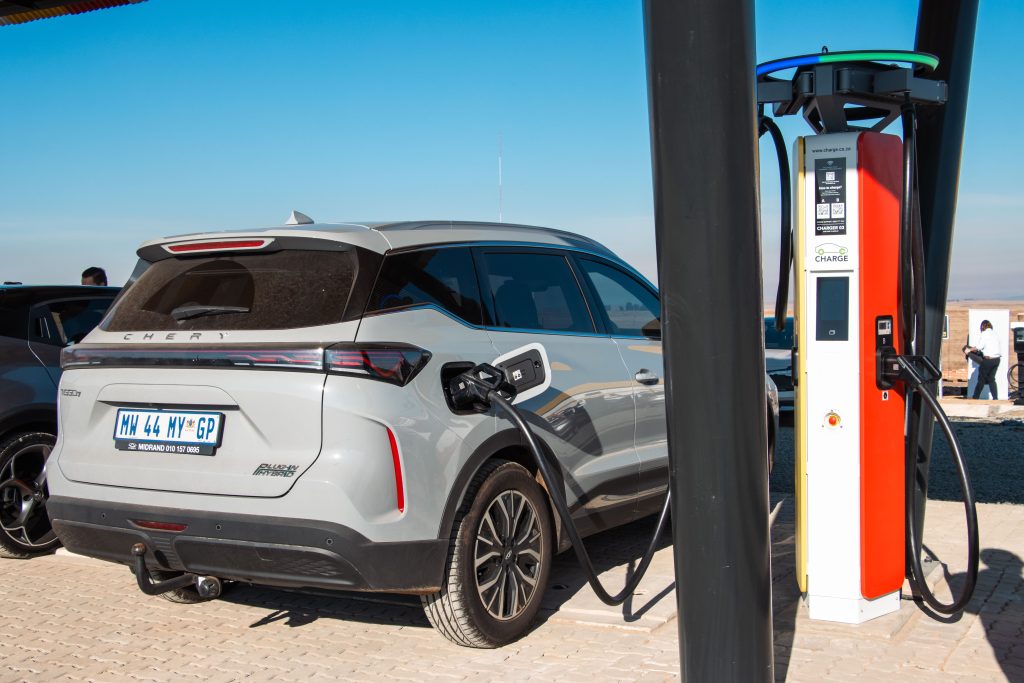
The real shift, however, lies not only in the upfront purchase price but in the cost of running an EV. For individual drivers, a Volvo EX30 case study tracked over two years and 28,744km, charged predominantly at home and work using solar, recorded a total energy cost of under R1,000. A comparable petrol vehicle over the same distance, at R22.40 per litre and 7.5 litres per 100km, would have consumed approximately R48,000 in fuel alone.
For fleet operators, the numbers are more consequential still. Analysis by fleet electrification company, Everlectric shows that electric light commercial vehicles come in around 23% lower in total cost of ownership than diesel equivalents on a financed basis, with electricity costs running at roughly a fifth of comparable diesel spend. This is why major logistics operators including Takealot, Woolworths and Shoprite/Checkers, have already begun integrating electric trucks into their fleets. What began as a sustainability initiative is increasingly being reinforced by hard commercial realities. If cost is becoming less of a barrier, infrastructure remains the key enabler of wider adoption. Range anxiety is a rational response when chargers are sparse. That picture is improving: major urban areas now have chargers within roughly 20km for most EV drivers, and the N1, N2 and N3 have charging capability at intervals broadly consistent with current EV ranges. The more significant development is the scale of infrastructure now being deployed. This month, two solar-powered, off-grid EV and electric truck charging stations launched along the N3, CHARGE Roadside in the Free State and CHARGE Tugela in KwaZulu-Natal, creating the first dedicated electric vehicle charging corridor between South Africa’s two largest economic centres. The project is backed by the Development Bank of South Africa. Even President Ramaphosa noted in Parliament in May that “EVs are the future”.
CHARGE, which developed the N3 stations, is among the operators now building on that corridor logic. The corridor model is structurally different from urban charging. A charging station enables a stop. A corridor enables movement. A site on the N3 does not serve discretionary city driving. It serves the predictable, recurring demand of long-haul logistics operators, commercial fleets and electric trucks running fixed routes and schedules. That demand provides a reliable utilisation base for charging infrastructure and helps underpin the commercial viability of the network from the outset.
Once charging locations are connected across strategic transport corridors, they begin to function as infrastructure rather than standalone sites. The value lies not only in the individual station, but in the certainty that vehicles can move between destinations. This creates the kind of network effects that have historically underpinned the growth of toll roads, fuel distribution systems and telecommunications networks. The N3 strengthens the case for the N1. The N1 strengthens the case for the N2. Each additional site expands route certainty, increases utilisation and enhances the value of the network as a whole.
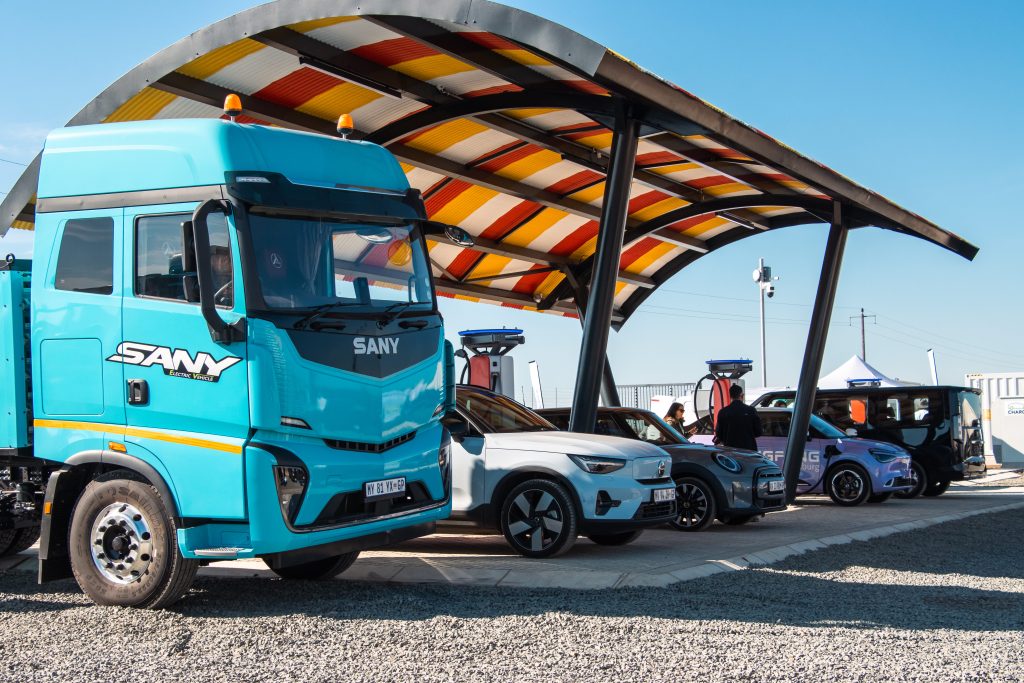
There is another a dimension particularly relevant to South Africa. Off-grid, solar-powered charging infrastructure challenges the conventional assumption that EV networks are electricity-intensive assets dependent on grid capacity and reliability. By generating energy locally, these sites can supply transport energy without placing additional demand on the national grid, while simultaneously improving energy resilience and reducing exposure to rising electricity costs. While similar models exist elsewhere, few countries have the same combination of grid constraints, abundant solar resources and growing demand for transport electrification. As Eskom tariffs continue to rise, the economic case for locally generated transport energy is likely to become increasingly compelling.
The case for building this infrastructure now rest on three realities. South Africa’s exposure to global oil markets is not temporary. The EV market is growing faster than expected, driven by falling vehicle prices, expanding model availability and rising consumer interest. And in infrastructure, timing matters. Secured sites, environmental approvals, proven operational technology and established fleet partnerships create advantages that are difficult to replicate.
South Africa exports hundreds of billions of rands every year to pay for imported fuel. That dependence has long been accepted as an unavoidable cost of mobility. For the first time, there is a credible alternative. The transition will not happen overnight, but it is already underway. Every EV sold, every fleet electrified and every charging corridor completed shifts a little more of that energy spend back into the local economy. The question is no longer whether the transition will happen, but who will build the infrastructure that enables it.
Written by Joubert Roux, Co-Founder and Chair of CHARGE