South Africa’s hospitality sector is in a paradox. Guests are back. Occupancy is recovering and travel demand has returned with real momentum. According to Tourism Minister Patricia de Lille, South Africa welcomed 10.485 million international visitors in 2025, marking a historic record and surpassing pre-pandemic figures. Yet, according to the South African Hoteliers Report, 77% of hoteliers are struggling to recruit and retain staff, while 58% say profitability has either stagnated or declined over the past five years.
These numbers should give every operator in our industry pause. Because if we are seeing demand recover while margins erode and teams remain understaffed, the problem is not the market. The problem is structural and it starts with how we think about talent. The recent opening of The Capital Boardwalk in Gqeberha is part of that journey, because it addresses another growing issue in South Africa, youth unemployment. Growth at this scale also brings something more tangible with it. Each new property creates opportunities, from hiring local teams to building skills within the communities they operate in.
We don’t just have a staffing shortage. We have a skills and mindset gap:
The Federated Hospitality Association of Southern Africa (Fedhasa) put it plainly: the issue is not simply a lack of candidates, but a lack of suitable candidates for a demanding service industry. That distinction matters enormously.
Hospitality is one of the most human-facing industries in existence. It asks people to show up consistently, with warmth, under pressure, for guests who expect excellence every time, regardless of what is happening behind the scenes. That is not a skillset you can teach in a classroom alone, and it is not captured on a CV.
Traditional hospitality training has historically focused on technical competencies: food and beverage service, front desk operations, housekeeping protocols. These are necessary, but they are not sufficient. What the industry actually needs, and what is genuinely scarce, is attitude, adaptability, and a service mindset. The willingness to go beyond the transactional. The ability to read a room. The resilience to maintain standards when things go wrong. These are qualities that can be developed, but they have to be actively cultivated. They do not happen by accident.
Rethinking recruitment: hire for potential, train for skill
One of the most important shifts any hospitality business can make is to stop recruiting purely on paper qualifications and start recruiting for potential. A candidate with a diploma but no genuine passion for service will underperform against a candidate with matric and an instinctive drive to make people feel welcome. The industry has been slow to accept this, partly because qualifications offer a convenient shortcut in high-volume hiring. But shortcuts in recruitment are expensive — they lead to high turnover, inconsistent guest experiences, and the very staffing cycle that so many operators are trapped in today.
At The Capital, we have learned that the question to ask is not only “what do you know?” but “who are you, and what are you capable of becoming?” That reframe changes everything about how you build a team.
Businesses must own the training mandate
There is a tendency in the industry to treat skills development as someone else’s responsibility, government, TVET colleges, industry bodies. These stakeholders have a role to play, and an important one. But operators cannot outsource this.
If you want staff who meet your standard, you have to build that standard into your organisation. Structured onboarding, ongoing coaching, mentorship from senior staff, and a culture that genuinely values growth, these are not luxuries, they are the operating infrastructure of a high-performing hospitality business.
The cost of not investing in training is far higher than the cost of investing in it. Turnover is expensive. Rehiring is expensive. A poor guest experience, one that ends up on TripAdvisor or Google Reviews, is expensive in ways that are very difficult to recover from.
This is precisely the thinking behind The Capital’s Training Academy. We recognised early that we could not simply rely on the external talent pipeline to deliver the calibre of people our guests expect, so we built an internal one.
The Academy is designed to develop people from within, identifying those with the right attitude and investing in giving them the technical and professional skills to grow. It is not just a training programme, it is a career pathway, a retention tool, and a statement of what we believe about people: that potential, when properly supported, is more valuable than credentials alone.
The results speak for themselves. Staff who feel invested in stay longer, perform better, and become ambassadors for the brand. That is the return on investment that matters in this industry.
The South African Hoteliers Report confirms what many of us already know on the ground. The talent crisis is real, it is acute, and it will not resolve itself. But it is also solvable, if the industry is willing to move beyond reactive hiring and toward a more intentional model of talent development.
That means rethinking what we look for in candidates. It means accepting that training is a core business function, not a cost centre. And it means recognising that in a service industry, your people are not just your greatest asset, they are your product.
South Africa has an extraordinary pool of potential. The opportunity is there. What the sector now needs is the commitment to develop it.
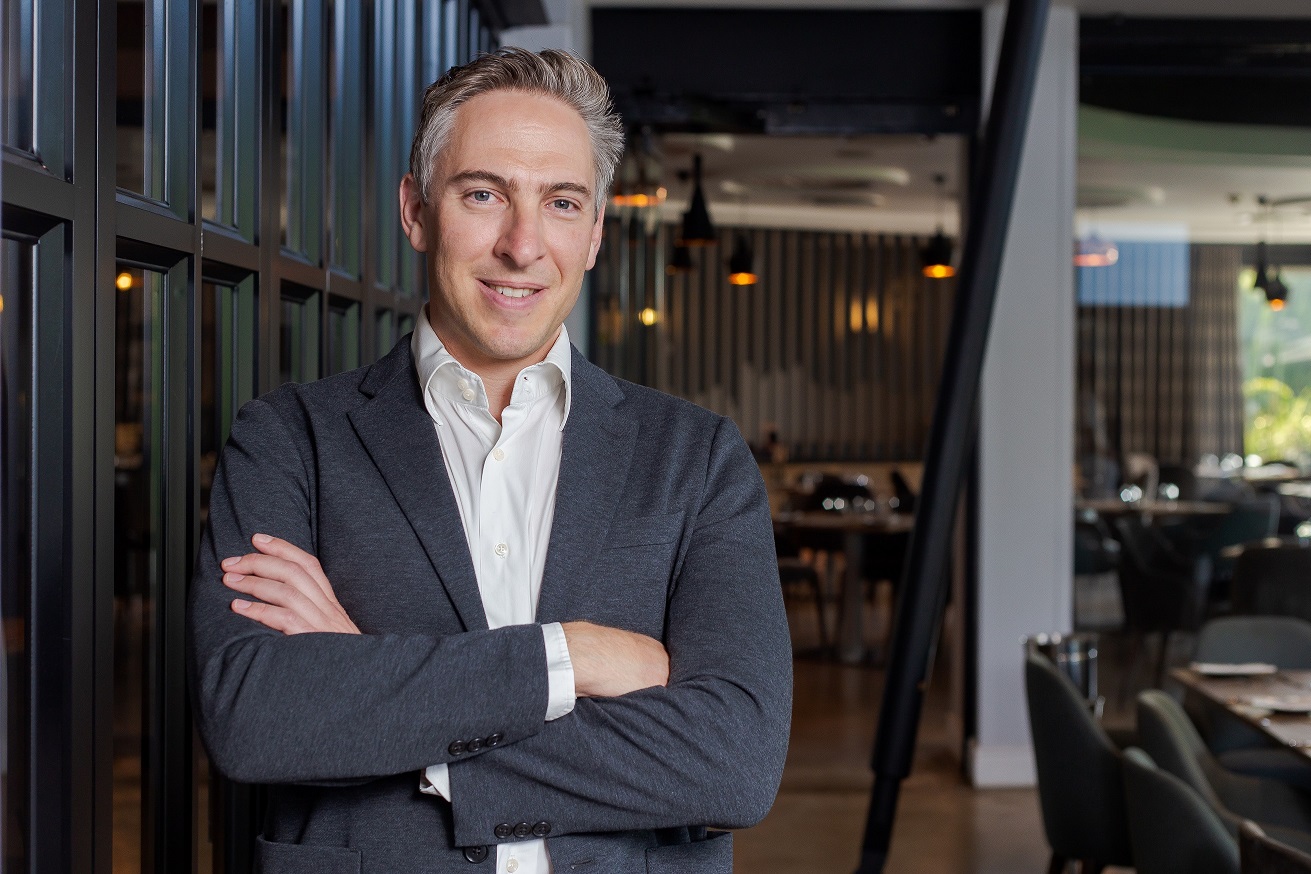
Written by Marc Wachsberger, CEO, The Capital Hotels, Apartments & Resorts