
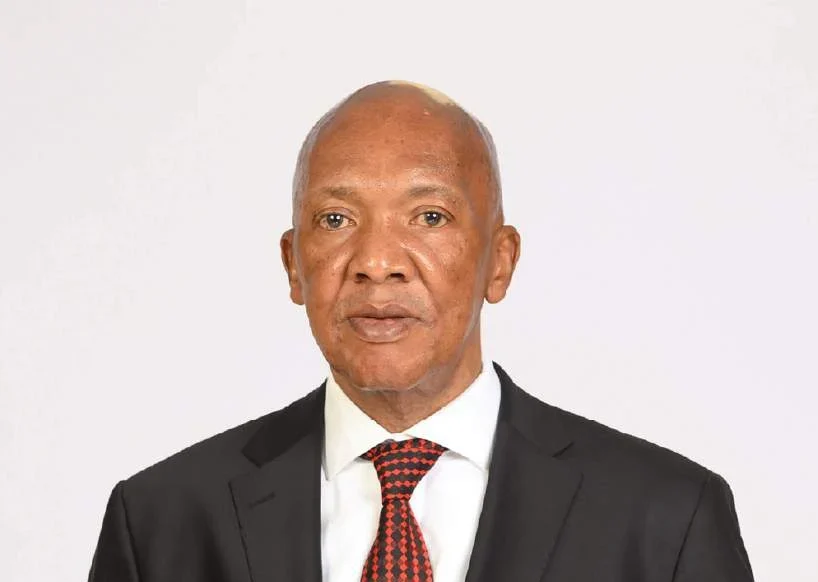
The Gauteng High Court in Pretoria has ruled that the Road Traffic Management Corporation (RTMC) board acted unlawfully when it suspended its chief executive, advocate Makhosini Msibi, setting aside both the suspension and the internal governance document the board had used to justify its decision. The ruling ends a legal standoff that had stretched to nearly eight months.
Msibi was placed on precautionary suspension with full pay on 1 July 2025, following a board meeting on 30 June at which whistleblower allegations of fraud, corruption, and wasteful expenditure were tabled. The initial suspension was for 30 days, extendable to 60 days or longer as required. Judge Jan Swanepoel noted at the time of the ruling that Msibi had by then been on suspension for nearly eight months.
The board had argued it was empowered to act by provisions in a board charter it had adopted, as well as by Msibi’s employment and performance agreements. Msibi challenged this from the outset, arguing that the RTMC’s governing legislation assigns authority over the appointment, suspension, and discipline of the CEO exclusively to the Shareholders Committee — a body comprising the Minister of Transport, the nine provincial Members of the Executive Council responsible for transport, and two representatives from the South African Local Government Association. The court agreed, finding that the board’s powers are strictly limited to those formally delegated to it in writing by the Shareholders Committee, and that no such delegation covering CEO suspension existed.
The board charter itself became a central point of contention. When the board submitted the document as evidence of its authority, Msibi challenged its legitimacy on the same grounds — that the Shareholders Committee had never authorised the board to adopt it. Swanepoel agreed, ruling that the charter was unlawfully adopted. To avoid an immediate governance vacuum, the court suspended the declaration of invalidity for 90 days, giving the Shareholders Committee time to properly delegate authority to the board in accordance with the Act.
The judgment exposes a deeper structural tension within the RTMC. Unlike most state entities, the RTMC operates as a cooperative mechanism between national, provincial, and local spheres of government, with the Shareholders Committee responsible for directing its proper functioning in the public interest.That structure means ordinary corporate governance conventions — where a board routinely exercises disciplinary powers over executives — do not straightforwardly apply.
An investigation by law firm Lawtons Africa, commissioned by the board and focused on several tenders, found no evidence of procurement irregularities, fraud, or corruption. The report identified systematic weaknesses in the RTMC’s bid committees but cleared Msibi personally. The Auditor-General, during the 2024/25 audit cycle, also reviewed the whistleblower allegations and found no evidence of misconduct, ultimately issuing the RTMC with a clean audit.
Msibi, who has led the RTMC since December 2013 and was reappointed in 2018, earned R10.15 million in the 2023/24 financial year, including a performance bonus of R3.9 million that itself drew scrutiny. He has previously linked his suspension to his oversight of an anti-corruption unit targeting corrupt officials and trucking syndicates — work he says generated significant institutional opposition. The whistleblower complaints had been submitted to the Public Protector and copied to the Department of Transport and Parliament’s Standing Committee on Public Accounts, raising the political stakes of the dispute considerably.
The ruling is likely to prompt a review of governance frameworks across similarly structured public entities, where the boundaries between board and shareholder authority have not always been clearly or formally defined.