
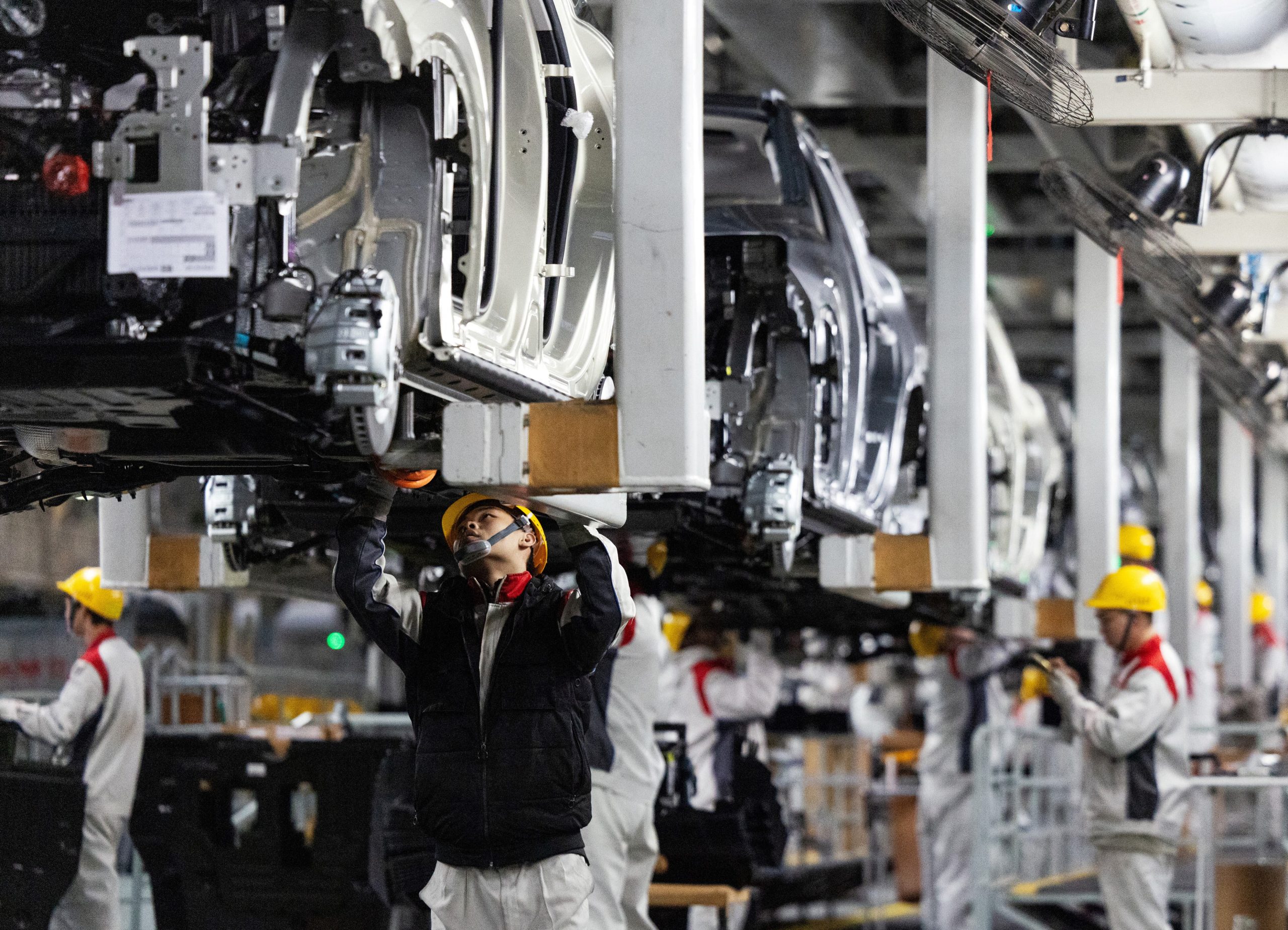
Mercedes-Benz is in talks to share its East London manufacturing plant with Chinese automaker Great Wall Motor (GWM), in a move that could reshape South Africa’s struggling automotive industry. The luxury carmaker and the Chinese firm are exploring co-manufacturing arrangements at the Eastern Cape facility, according to people familiar with the matter who asked not to be identified as the discussions remain private.
The talks come at a precarious moment for the plant. South Africa is currently attempting to negotiate a more favourable trade arrangement with the United States after President Donald Trump imposed a 25% blanket tariff on all automotive imports, a policy that has placed the economics of the East London factory under considerable strain. Mercedes has shipped the C-Class sedan from the facility to the US market since 1997, benefiting from the African Growth and Opportunity Act, which had allowed duty-free vehicle exports to the world’s largest economy. That arrangement is now under threat.
GWM representatives have presented a proposal to senior officials at South Africa’s Department of Trade, Industry and Competition, outlining the company’s interest in producing vehicles at the site. Mercedes is also separately considering using the plant as a global hub for repurposing end-of-life batteries from passenger vehicles. The German automaker spent roughly €600 million modernising the facility in 2022 and currently employs around 2,400 workers there.
The potential deal reflects a broader structural shift in South Africa’s automotive market. Locally produced vehicle sales have dropped from 46% of the overall market in 2018 to 43% by 2023, while Indian and Chinese-sourced vehicle sales rose from 18% to 37% over the same period. Chinese imports alone grew by 645% between 2018 and 2023. Industry body Naamsa noted that Chinese vehicle imports climbed from 11,000 units in 2019 to 39,000 by 2023, with GWM’s Haval brand alone selling more than 1,500 cars a month in the country.
For GWM, local production would address growing demand for its South African offerings. A contract manufacturing arrangement — standard in the industry — would typically see the plant owner produce vehicles on behalf of another brand for a per-unit fee. While Mercedes’ existing production line could accommodate another brand with relative ease, a second manufacturer would need to establish its own body shop for the welding and assembly of vehicle structures.
The strategic logic of the arrangement extends beyond tariff pressure alone. South Africa’s automotive industry has faced mounting pressure from low domestic sales, an import surge, and stagnant local content levels, contributing to the closure of 12 companies and the loss of over 4,000 jobs in the past two years. As reported by Africa Eye, Trade Minister Parks Tau noted that the sector directly employs 115,000 people, with over 80,000 working in component manufacturing — making the preservation of facilities like East London a matter of national economic concern.
A shared factory arrangement could reduce overcapacity, lower operating costs, and protect jobs at a time when established European, American, and Japanese manufacturers are steadily losing ground to cheaper imports. New vehicle sales in South Africa rose 15.7% to 596,818 units in 2025, driven in part by a significant influx of affordable Chinese imports, which simultaneously challenged domestic original equipment manufacturers while satisfying consumer demand. According to Bloomberg, no deal has yet been finalised and alternative structures remain under consideration.