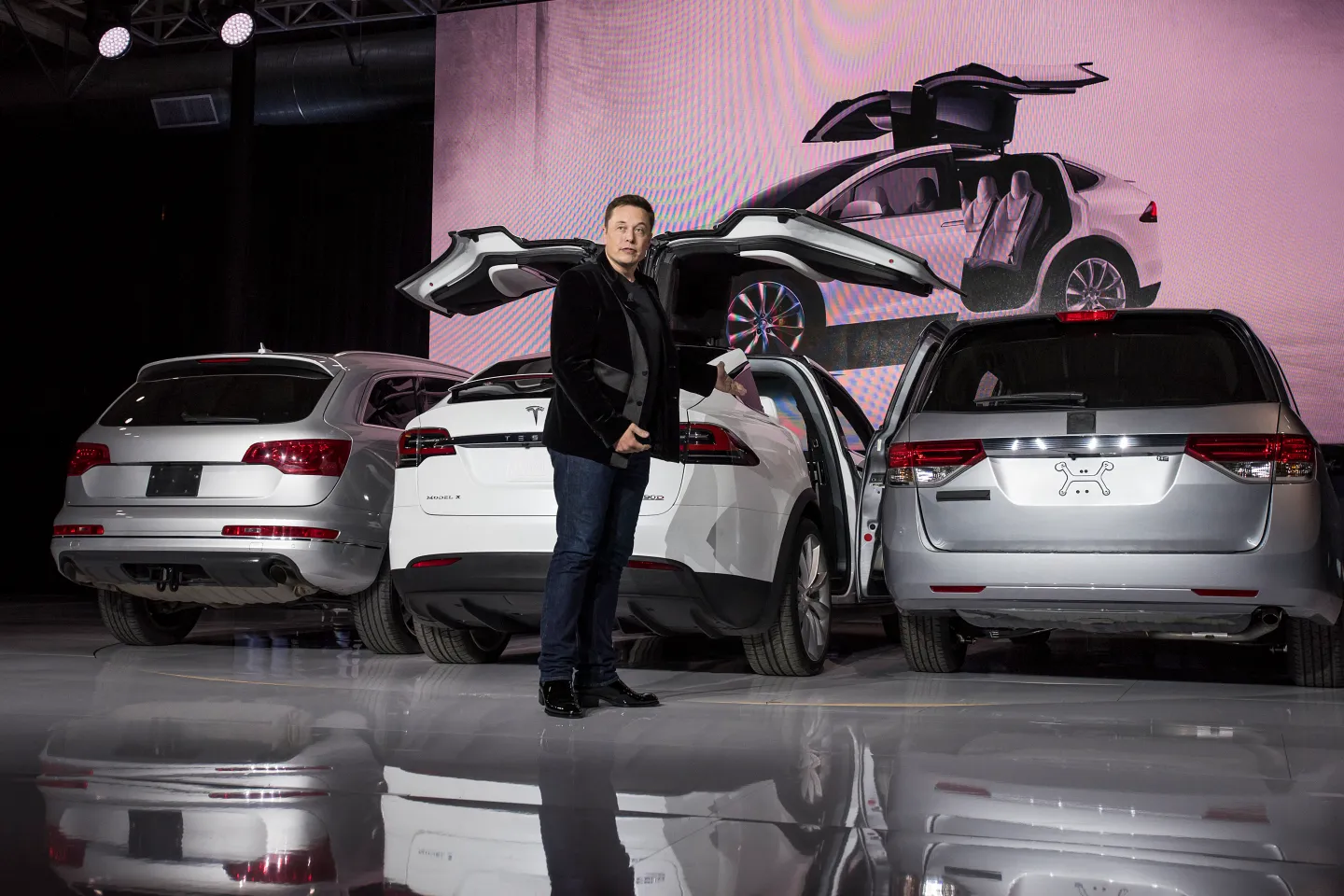
Tesla is preparing to end production of its Model S sedan and Model X SUV as it reorients the business away from electric vehicles and towards artificial intelligence and robotics. According to The Guardian, the decision was confirmed during an investor briefing, where management said manufacturing of the two models would be phased out next quarter and the Fremont plant repurposed to produce Tesla’s Optimus humanoid robot.
The move follows a difficult year for Tesla’s vehicle division, marked by weakening demand and falling revenues. The company’s latest earnings report showed that total automotive revenue declined 11% in 2025, while overall revenue fell by 3%, the first annual contraction in Tesla’s history. Despite this, Tesla exceeded market expectations on profit, reporting earnings per share of $0.50 compared with forecasts of $0.45, and revenue of $24.9bn, slightly above analyst estimates.
Executives described the period as a transition away from a hardware-focused car business towards a “physical AI” company. Investor sentiment was buoyed by expectations that robotics and autonomous systems could become new growth engines, even as deliveries dropped 16% year on year in the fourth quarter, driven largely by a sharp slowdown in Europe.
Tesla’s strategy increasingly centres on Optimus, a general-purpose robot that management believes could open up new markets in manufacturing and services. As reported by Reuters, Tesla plans to begin producing Optimus before the end of 2026, with commercial sales targeted for 2027. The company has also committed $2bn to xAI, the artificial intelligence venture founded by Elon Musk, underscoring the scale of its pivot.
Capital spending is set to rise sharply as the company builds capacity for robotics and autonomous technologies. Tesla’s finance chief said capital expenditure would reach $20bn, significantly higher than analyst expectations. While this has fuelled optimism about future growth, it also highlights the financial risks of investing heavily in technologies that have yet to generate meaningful revenue.
Tesla’s share price has been volatile, rebounding strongly late last year amid investor enthusiasm for AI-related assets and Musk’s claims that robotics could transform global productivity. Shareholders also recently approved a remuneration package that could grant Musk unprecedented rewards if ambitious financial targets are achieved.
However, the shift comes as some of Tesla’s newer vehicle projects struggle. The Cybertruck recorded a 48% drop in sales last year, according to Kelley Blue Book, reflecting both rising competition and changing consumer preferences. Chinese manufacturer BYD has overtaken Tesla as the world’s largest electric vehicle maker after increasing sales by 28% in 2025, benefiting from lower-priced models in key markets.
With production of its oldest premium models ending, Tesla is signalling that its future lies less in selling cars and more in developing AI-driven machines. Whether robotics can compensate for slowing vehicle sales remains uncertain, but the company’s latest decisions suggest that its next phase will be defined by technology bets rather than automotive volumes.