
South Africa’s ambitious £20 billion transmission grid expansion initiative has garnered attention from global heavyweights, including a subsidiary of Indian magnate Gautam Adani’s empire and major Chinese conglomerates. Launched in December 2024, the Independent Transmission Projects (ITP) programme seeks private sector collaboration to erect 14,000 kilometres of new high-voltage lines, addressing chronic bottlenecks that have plagued the nation’s energy supply for years.
As detailed in Bloomberg, this endeavour forms a cornerstone of the country’s just energy transition, aiming to integrate 34 gigawatts of wind power and 25 gigawatts of solar capacity over the next 14 years, thereby alleviating reliance on ageing coal infrastructure amid escalating demand from industrial and urban centres.
The pre-qualification phase drew responses from 17 companies and consortia, coordinated by the Independent Power Producer Office (IPPO). Among the bidders are Adani Power’s Middle East operations, China Southern Power Grid International, State Grid International Development Company, and France’s EDF Power Solutions. South African outfits like SOLA Group and Mulilo Renewable Energy have also signalled intent to participate, blending local expertise with international capital. According to BusinessTech, the evaluation of these submissions is slated for completion by November 2025, paving the way for a competitive request-for-proposals process that prioritises transparency and risk-sharing models where private entities shoulder construction and financing burdens.
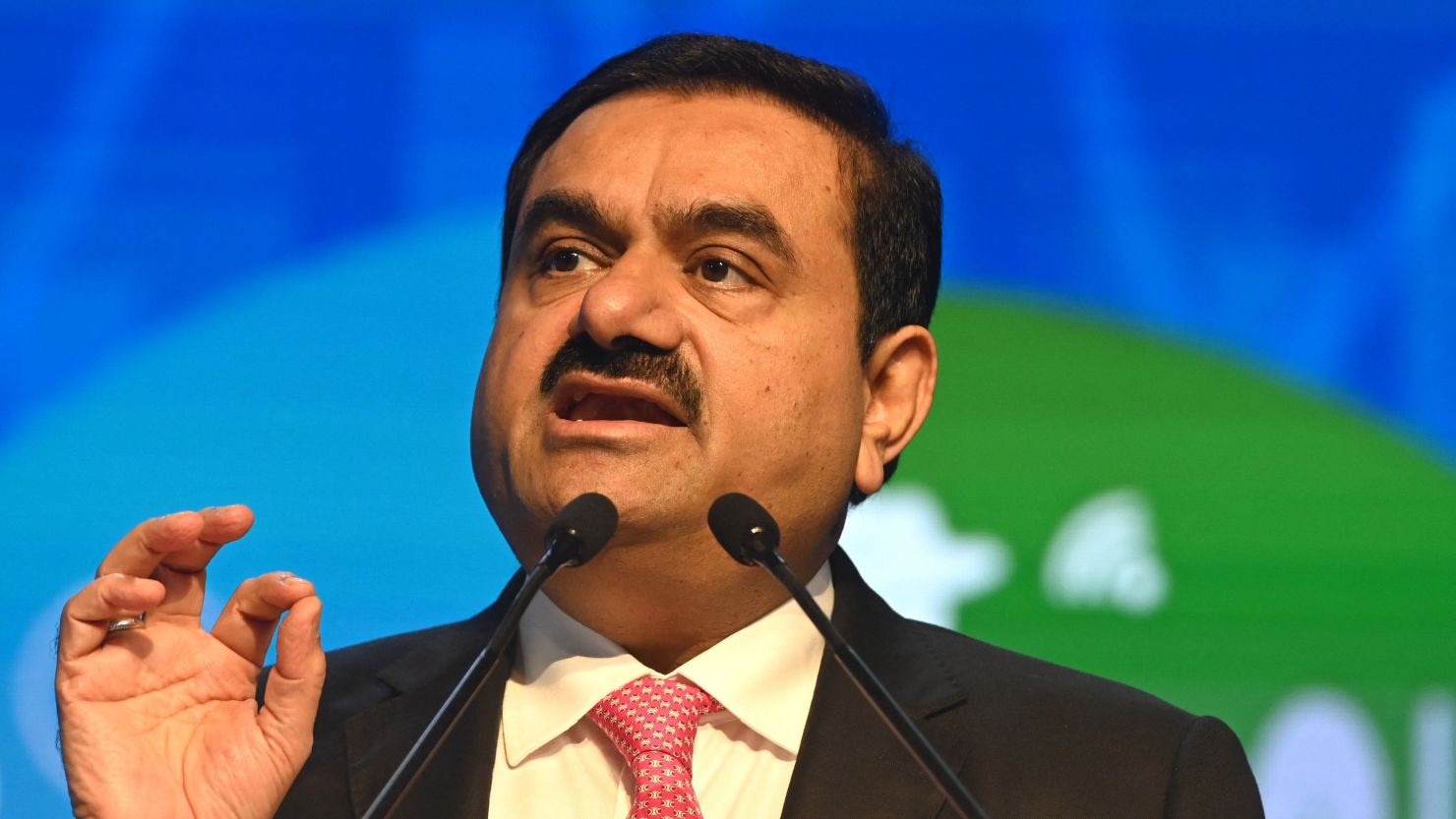
Gautam Adani, founder and chairman of the sprawling Adani Group—a conglomerate spanning ports, mining, and renewables—ranks as the world’s 27th wealthiest individual, with a fortune of $71 billion as per Forbes latest tabulations, trailing only Mukesh Ambani’s $108 billion among Indian billionaires. The group’s energy arms, including Adani Green Energy, Adani Power, and Adani Energy Solutions, boast a portfolio exceeding 15 gigawatts of renewable capacity in India alone, positioning them as frontrunners in global clean energy ventures. Adani’s interest in South Africa echoes its aggressive overseas push, though representatives declined immediate comment, while Chinese counterparts have yet to respond to inquiries, as noted in Energy Connects.
This influx of interest underscores the ITP’s alignment with proven models in emerging markets. The Development Bank of Southern Africa highlights successes in India, Brazil, Peru, and Chile, where private-led projects have mobilised billions in transmission investments under frameworks allowing flexible ownership structures. EDF affirmed its commitment, expressing anticipation for the forthcoming request-for-proposal stage, which will delineate technical, financial, and commercial specifics. Local players SOLA Group and Mulilo confirmed their bids, emphasising their track record in utility-scale solar farms that have already contributed over 2 gigawatts to the grid, per IOL Business Report.
At the programme’s helm is Electricity Minister Kgosientsho Ramokgopa, who in April outlined the inaugural phase: a tender for 1,164 kilometres of 400kV lines across the Northern Cape, North-West, and Gauteng provinces. This pilot, designed to unlock more than 3,000 megawatts of generation, sidesteps potential land acquisition disputes by focusing on pre-identified corridors, minimising delays that have historically stymied infrastructure rollouts. Subsequent phases will scale dramatically, incorporating over 14,500 kilometres of lines and 210 transformers by 2034, at an estimated R440 billion outlay, as projected in the National Transmission Company of South Africa’s (NTCSA) 2025-2034 Development Plan, reported by Pinsent Masons.
The grid upgrade is integral to South Africa’s Integrated Resource Plan, which charts a phased decommissioning of coal plants—responsible for 80% of current output—while diversifying towards gas, nuclear, and renewables to sustain a projected 5% annual economic growth trajectory. Load-shedding episodes, which cost the economy R300 billion in 2024 alone according to Stats SA, have underscored the urgency, with the TDP forecasting a need for 56 gigawatts of new capacity integration. A global market sounding exercise from December 2024 to February 2025 elicited over 130 responses from developers, financiers, and equipment suppliers, signalling robust investor appetite amid the G20’s emphasis on African energy connectivity during South Africa’s 2025 presidency, as per SAnews.
To catalyse participation, the government is rolling out financial safeguards, including credit guarantees by July 2026, primarily backed by commercial lenders. A R10 billion Credit Guarantee Vehicle (CGV), functioning as private sector insurance, will debut for transmission initiatives before broadening to water and transport projects, as announced by Deputy Finance Minister David Masondo in August. Incorporated as a regulated non-life insurer, the CGV aims to de-risk investments, drawing on lessons from Eskom’s strained balance sheet. The ministerial determination gazetted in March 2025 designates the Department of Electricity and Energy as procurer and NTCSA as buyer under long-term transmission service agreements, fostering a competitive yet regulated environment, according to Development Bank of Southern Africa.
Challenges loom, including skill shortages from years of underinvestment—engineers have migrated abroad—and the imperative to localise manufacturing for transformers and cabling to curb costs and create jobs. Yet, the ITP’s structure, blending public oversight with private innovation, positions South Africa to emulate India’s Adani-led transmission boom, where over 185,000 kilometres of lines span 13 states, as cited in OECD Economic Surveys: South Africa 2025. With renewables poised to eclipse coal by 2030, this programme not only promises energy security but also a greener industrial renaissance, drawing global capital to Africa’s most electrified economy.