
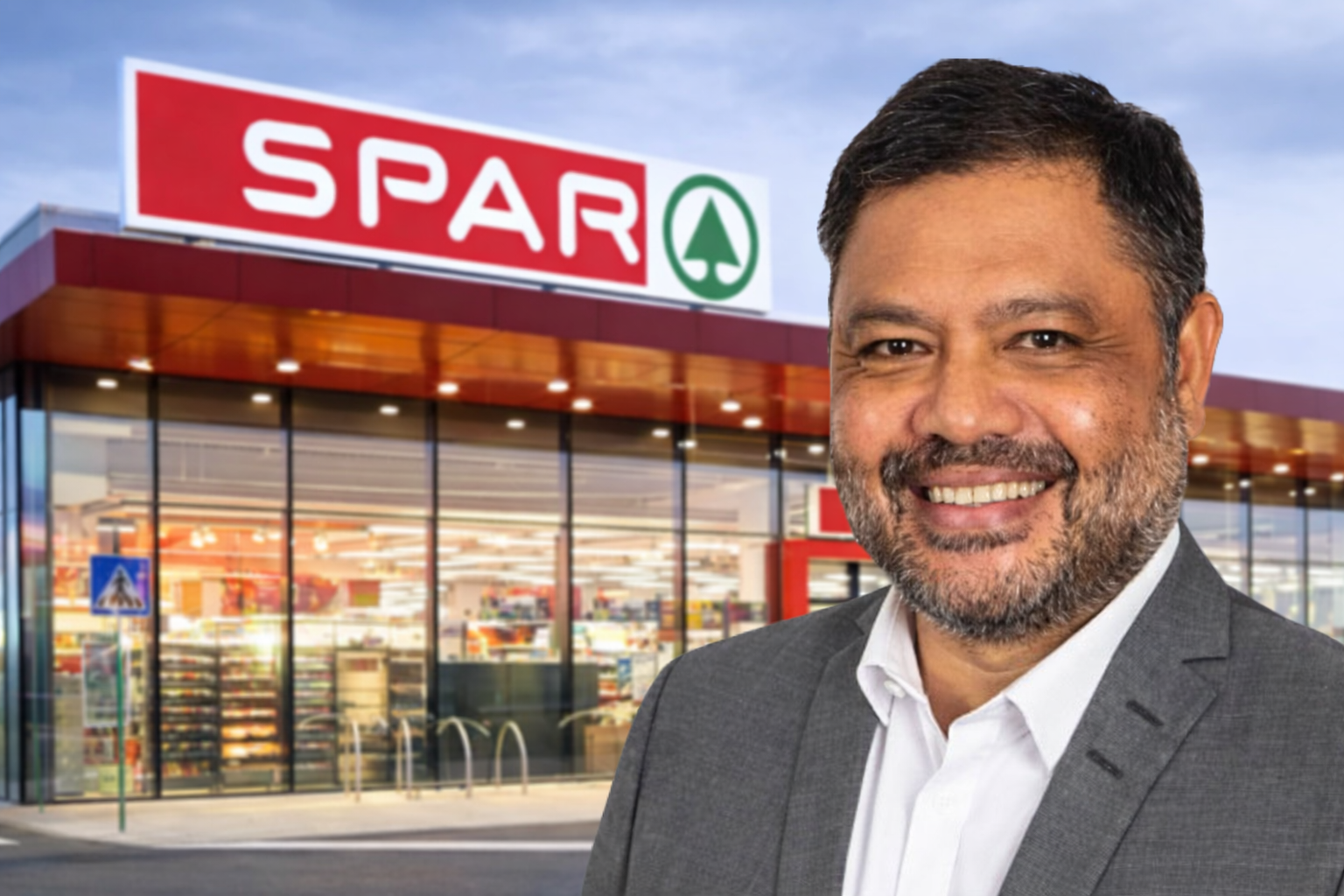
Spar has announced a voluntary severance programme that could result in an unspecified number of job losses, as the retail group attempts to bring its cost base under control following years of operational setbacks. The announcement comes weeks after new group CEO Reeza Isaacs took the helm, inheriting a business under sustained financial and reputational pressure.
The group said the severance programme forms part of a broader reset intended to align costs with current trading conditions and position the business for sustainable growth. It specified that the restructuring would not affect its network of independent retailers or the services provided to them. The group’s share price has fallen more than 30% since the start of 2026, reducing its market capitalisation to approximately R12.7 billion — a sharp decline from a peak valuation of around R43.7 billion some eight years ago.
Much of the damage traces back to the failed implementation of SAP S/4HANA at Spar’s KwaZulu-Natal distribution centre in early 2023. The unsuccessful launch of the ERP system at the KZN distribution centre severely impacted trading performance, causing an estimated R1.6 billion in lost group turnover and approximately R720 million in lost profit for the region. The fallout has continued to compound — industry estimates put the broader cost of the SAP failure at roughly R1.6 billion in lost turnover and R720 million in lost profit by September 2023 alone, and the group is now facing a R168.7 million lawsuit from major franchisee the Giannacopoulos family, which alleges the failed rollout caused severe supply chain breakdowns, empty shelves, and heavy customer losses across its 46 stores.
READ – From CFO to CEO: the Man Who Must Fix Spar
Wholesale turnover from continuing operations grew just 2.1% year on year for the 18 weeks to 30 January 2026, with Southern Africa managing only 0.9% growth. Gross profit margins in Southern Africa declined, attributed to an unfavourable sales mix, targeted Black Friday promotions, and continued investment in loyalty and margin recovery in KwaZulu-Natal. The group has warned that operating margin performance will remain under pressure in the first half of the 2026 financial year, with recovery expected to be gradual and skewed towards the second half as cost-realignment measures take effect.
Leadership instability has compounded the operational picture. Isaacs, previously the group’s CFO, assumed the CEO role this month following the resignation of Angelo Swartz, who departed just 28 months into the job. Swartz is the fourth CEO in five years, with his departure following the retirement of Brett Botten in 2023, who had served less than two years in the role, and the resignation of Spar South Africa CEO Max Oliva, who later became CEO of McDonald’s South Africa. COO Megan Pydigadu stepped into the CFO position vacated by Isaacs.
Shareholder discontent has been building. At the group’s recent AGM, 61% of shareholders voted against the executive pay policy and its implementation. The Institute of Directors South Africa, as reported by Tech Financials, welcomed the shareholder pushback, framing it as a sign that investors are actively engaging with governance concerns. A remuneration committee forum member at the Institute identified the likely source of the objections as a lump-sum payment of R9.5 million made to outgoing CFO Mark Godfrey, who retired after three decades with the group at the end of December 2024. The payment was not provided for under the existing remuneration policy, and no rationale for it was included in the remuneration report. No performance bonus was paid to Godfrey, not even on a pro-rata basis.
Isaacs will present the group’s interim results on 10 June. The task ahead is considerable: stabilise costs, rebuild wholesale volumes, manage the ongoing SAP litigation, and restore investor confidence — all within a South African consumer environment where shoppers are trading down and competition among food retailers remains intense.
BEFORE YOU GO – SPAR Boss Exits as CFO Takes Charge