
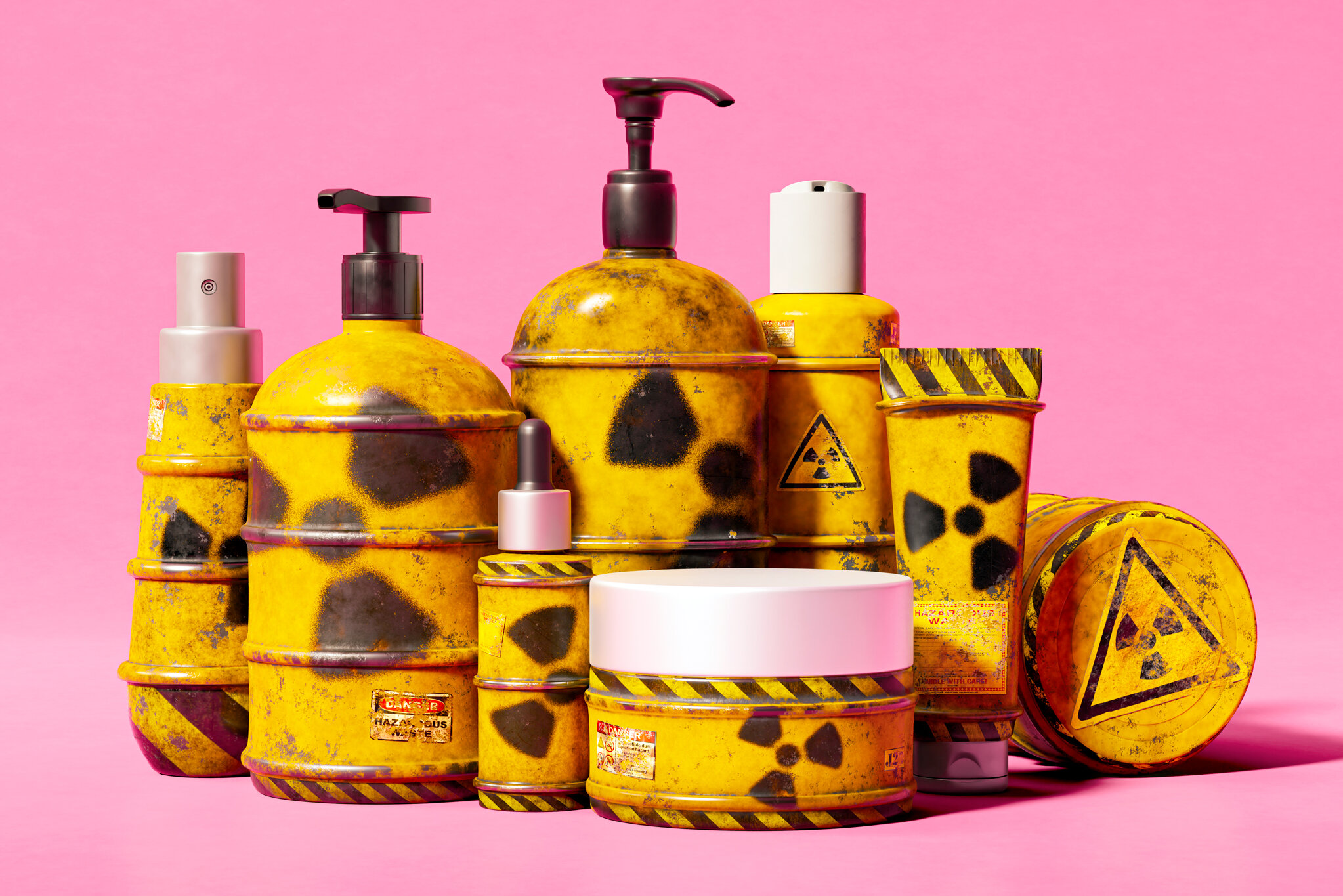
Nigeria has approved its first national policy on cosmetics safety and health after nearly two decades of stalled attempts. The policy was launched at the Sixty sixth National Council on Health in Calabar. It establishes a clear system to regulate how cosmetic products are manufactured, imported, sold, used and disposed of.
The new policy supports major government priorities. It aligns with the National Strategic Health Development Plan II, the National Chemical Safety Policy and the National Environmental Health Action Plan. It also advances the Nigeria Health Sector Renewal Investment Initiative and strengthens the country’s commitments under the International Health Regulations and the Minamata
Convention on Mercury.
By improving regulation and surveillance, the policy strengthens health security, protects consumers and supports economic diversification. It also responds to state level priorities, since implementation will take place across all thirty six states and the Federal Capital Territory.
Everyday products, real health risks
Cosmetics are part of daily life for millions of Nigerians, but many people do not know what is inside the products they use.
Amina Yusuf, a shop attendant in Tarauni local government area, Kano State, said she developed skin irritation after using a product sold as a “natural toning oil”.
“I thought it was safe because it was called organic,” Yusuf said. “But my skin became sensitive, and small cuts took longer to heal.” A health worker later explained that the product likely contained harmful chemicals.
In Kura local government area, community members described how some traders repackage creams without labels. One resident said a neighbour developed rashes after using a mixture bought at a weekly market. “People buy what they can afford,” she said.
“Most of us do not have access to formally regulated shops.”
In Sabon Gari market, Kano State, an expectant mother, Gloria Okafor, learned during an antenatal visit that a cream she used for stretch marks might contain heavy metals. “I was careful with food and medicine during pregnancy,” Okafor said. “I never imagined body cream could be a risk.”
These experiences reflect wider challenges: limited consumer awareness, informal distribution systems and economic pressures that make unregulated products common.
The scale of the problem
Recent national and global assessments highlight both the scale and the safety concerns within Nigeria’s cosmetics sector.
Nigeria’s cosmetics industry has grown into a dynamic and increasingly sophisticated sector, with a market valuation exceeding US$ 7.8 billion¹. Globally, the cosmetics market is valued at over US$ 429.2 billion², presenting both economic opportunity and regulatory challenges, particularly in low and middle income countries (LMICs) such as Nigeria. Since 2022, Nigeria has registered close to 9 000 cosmetic products that meet national regulatory requirements under the oversight of the National Agency for Food and Drug Administration and Control³, reflecting strengthened compliance efforts.
However, toxicological evidence remains concerning. Globally, over 100 known carcinogens and at least 15 endocrine disrupting chemicals have been identified in cosmetic formulations². In Nigeria, a study conducted in Anambra State found lead contamination in 62% of tested cosmetic products, with concentrations ranging from 0.10 to 42.12 mg/kg⁴ (exceeding the World Health Organization permissible limit of 10 mg/kg). Additional investigations in Ibadan and Lagos confirmed cadmium, lead and nickel levels above international safety limits in personal care products⁵⁻⁶.
These findings underscore the urgent need for strengthened surveillance, consumer awareness and enforcement to protect public health.
Why regulation matters
Studies in Nigeria have found high levels of lead, cadmium and other harmful substances in some cosmetic products. These chemicals can cause kidney problems, skin damage and complications during pregnancy.
Market surveillance efforts in Kurmi market, Kano Municipal local government area, reveal widespread mislabelling and repackaging practices. According to National Agency for Food and Drug Administration and Control officer Audu Tanimu, “Some products are intentionally labelled to avoid suspicion, but laboratory testing shows restricted substances. Enforcement efforts are ongoing, yet informal supply chains continue to complicate traceability.”
Turn the vision to reality
After years of Nigeria’s vision to develop a cosmetic policy, World Health Organization (WHO) worked with the Federal Ministry of Health and Social Welfare, the National Agency for Food and Drug Administration and Control, the Nigeria Economic Summit Group, state governments, Resolve to Save Lives (RTSL), civil society and industry groups in 2025 to turn this into reality. It provided technical guidance, reviewed evidence, supported meetings with partners and helped strengthen surveillance and reporting systems. This support built on years of collaboration to improve chemical safety and International Health Regulations core capacities.
This work was supported by funding from the Foreign, Commonwealth and Development Office (FCDO) and RTSL.
What will change
The new policy introduces three main areas of action:
• Regulatory oversight and governance — A unified national system will ensure all cosmetic products meet safety and quality standards and improve coordination across agencies.
• Cosmetics vigilance and health intelligence — A national early warning system will help detect harmful products faster and support quicker public health responses.
• Strengthening the cosmetics value chain — The policy supports safer manufacturing and responsible trade. It also aligns with African Continental Free Trade Area opportunities, helping local industries grow while protecting workers and consumers.
These changes are expected to reduce exposure to harmful chemicals, lower the number of cosmetic related health complications and improve consumer confidence.
A collective effort
Implementation will begin across all states and the Federal Capital Territory. The Federal Ministry of Health and Social Welfare, the National Agency for Food and Drug Administration and Control, the Nigeria Economic Summit Group, state governments, civil society and private sector actors will lead the rollout. WHO and Resolve to Save Lives will continue supporting government efforts to strengthen surveillance, raise awareness and promote safer markets.
This milestone reflects the combined efforts of government, regulators, communities and partners working toward a shared goal: protecting Nigerians from harmful exposures and strengthening national health security.
A call to action
• Political and financial commitment from government counterparts at all levels to prioritise implementation of the policy.
• Consumers should choose labelled and registered cosmetic products to safeguard their health.
• Industry actors should follow national safety standards.
• Health workers play a critical role in identifying cosmetic related health effects early and responding appropriately.
• Everyone should help raise awareness about the health effects of cosmetics and protect communities from preventable harm.