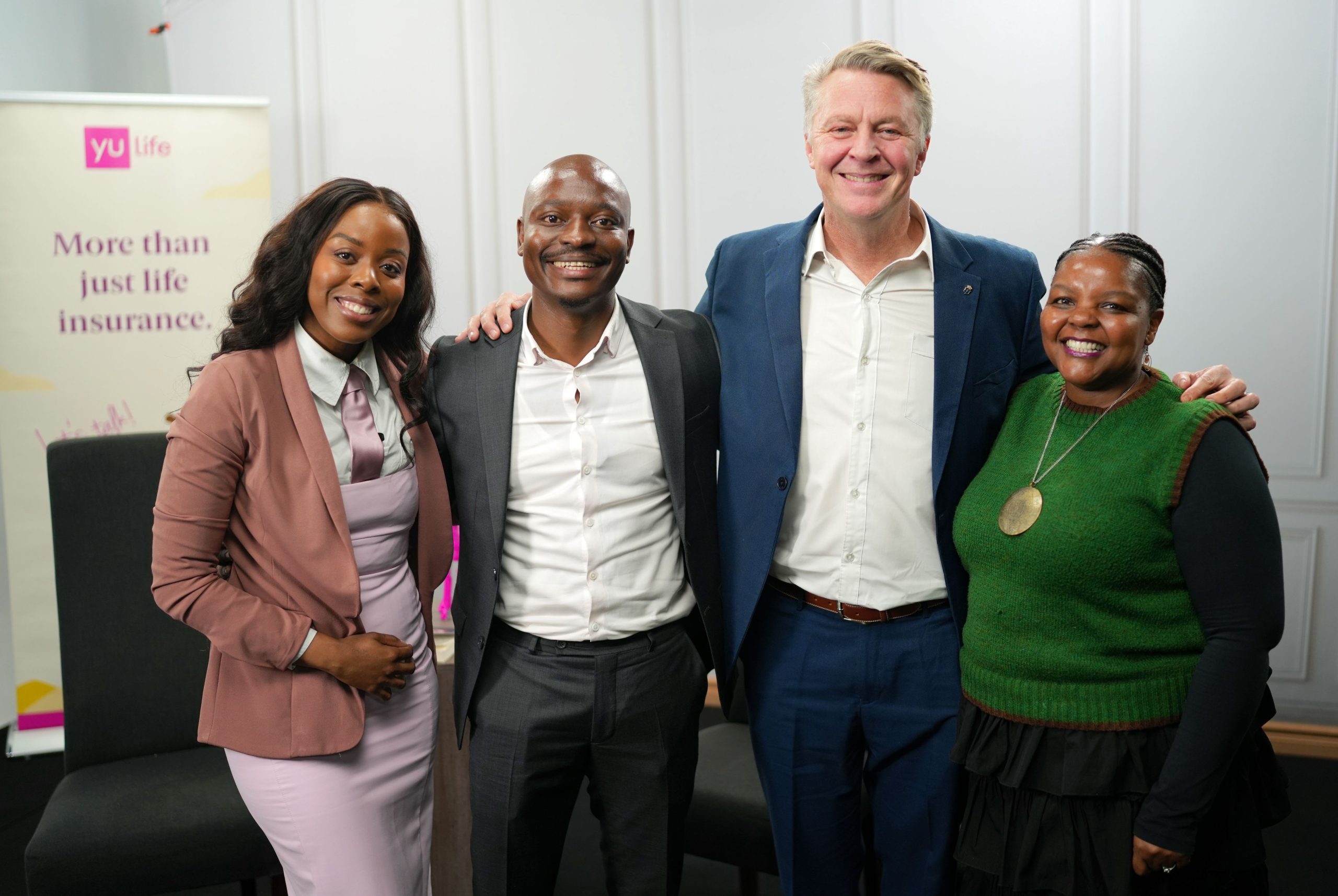
South African organisations are navigating one of the most significant workplace shifts in a generation. Artificial Intelligence (AI) is actively reshaping how businesses operate, make decisions, and support their people. The scale of this change was highlighted when YuLife brought together a panel of AI and human capital leaders for its recent webinar, AI & The South African Workforce: Adapt, Leapfrog, Live Better. Speaking throughout the event, AI advocates Johan Steyn and Vukosi Sambo as well as Khaya Mkhize, Human Capital business unit head at WesBank and moderator Tshepi Mabulana, discussed how the organisations that will succeed are those that approach AI adoption with both urgency and intentionality.
“AI is going to create significant shifts in the way we work going forward. While that can be understandably concerning for some, it will also bring a lot of opportunity with it,” explained Steyn.
According to PwC’s Africa Workforce Hopes and Fears Survey 2025, 64% of employees across Africa report using AI at work in the past year, compared to 54% globally. More encouragingly, 76% of African workers believe AI improves the quality of their work, and 72% expect productivity gains over the next three years. Among South African executives, 91% report that AI has already boosted both quality and productivity within their organisations. The scale of adoption, however, is outpacing the structures meant to govern it. Business use of generative AI in South Africa grew from 45% in 2024 to 67% in 2025, yet only 11% of companies had a formal usage policy in 2024, a figure that edged to just 15% a year later. Meanwhile, employees’ unofficial AI use, known as shadow AI, rose from 23% to 32% over the same period.
YuLife sees this governance gap reflected in the questions HR leaders are asking every day. Rather than questioning whether AI should be adopted, organisations are increasingly focused on how to introduce it responsibly, set clear guardrails, and ensure employees are equipped to use it safely and effectively.
“At YuLife, we see AI as a catalyst for building healthier, more resilient organisations, not simply more productive ones. The technology itself isn’t the differentiator; leadership is. Organisations that succeed will be those that combine AI innovation with clear governance, open communication and a genuine commitment to employee wellbeing. When people trust how AI is being introduced, they’re far more likely to embrace it and unlock its full potential,” says Tal Gilbert, YuLife CEO.
“Throughout human history, there have always been technologies that come in and disrupt the way we do things. From the printing press to the internet, change has been an integral part of how the world moves forward. I think it’s the same with AI. The amount of shadow AI use suggests that it is something that organisations still need to grapple with,” explained Sambo
Integrating AI responsibly: the human factors
As adoption accelerates,it’s the quality of that adoption that matters. “As AI becomes more integrated into daily work, organisations must proactively navigate critical issues such as bias, psychological safety, employee wellbeing, trust and burnout to ensure technology benefits everyone,” says Khaya Mkhize, business unit human capital head at WesBank.
Three dimensions of responsible integration stand out. AI systems require ongoing human oversight. Without it, outputs can be inconsistent or inaccurate, a risk that is amplified when employees use unofficial platforms without organisational guardrails. Fact-checking should be standard practice.
Another important pillar of AI adoption is psychological safety. Employees need to feel secure enough to raise concerns about AI integration, including fears about job displacement without penalty. This is a precondition for effective adoption. Organisations that foster this culture help employees experience AI as something that supports their work rather than threatens it.
Finally,how AI tools are implemented matters as much as which tools are chosen. When employees don’t understand what a system does or how decisions are being made, uncertainty grows. A productivity tool misread as a surveillance mechanism can erode trust in ways that are difficult to reverse. Transparency is a leadership responsibility.
What responsible adoption looks like in practice
The evidence that AI delivers tangible returns is already available locally. SPAR South Africa’s rollout of Microsoft 365 Copilot saw 67% of employees actively adopt the tool, collectively saving 715 hours of working time, the equivalent of 89 full working days. 93% of users reported increased productivity, and 88% said they were able to complete tasks faster.
AI is also generating new roles: AI trainers, prompt engineers, automation specialists, while also enhancing existing ones through real-time language translation, automated meeting summaries, and remote collaboration tools that reduce geographic and linguistic barriers. The concern that AI eliminates work wholesale misses the fuller picture: it restructures it, and organisations that invest in reskilling stand to gain the most.
South African workers are adopting AI faster than the global average and seeing real results. But adoption without governance, and speed without strategy, can become a liability just as quickly. The organisations positioned to lead are those that move with intention, equipping their people with skills, building the structures that ensure responsible use, and treating AI not as a disruption to manage but as an opportunity to shape.
AI is already transforming the workplace. The question is who will lead that transformation, and whether that leadership will be human enough to bring everyone along. Ultimately, the measure of successful AI integration will not be found in productivity dashboards alone. It will be found in whether employees feel supported, motivated and well in the organisations they work for. As AI takes on more of the routine, leaders have a genuine opportunity to redirect that time and energy toward the things that sustain people and businesses over the long term.