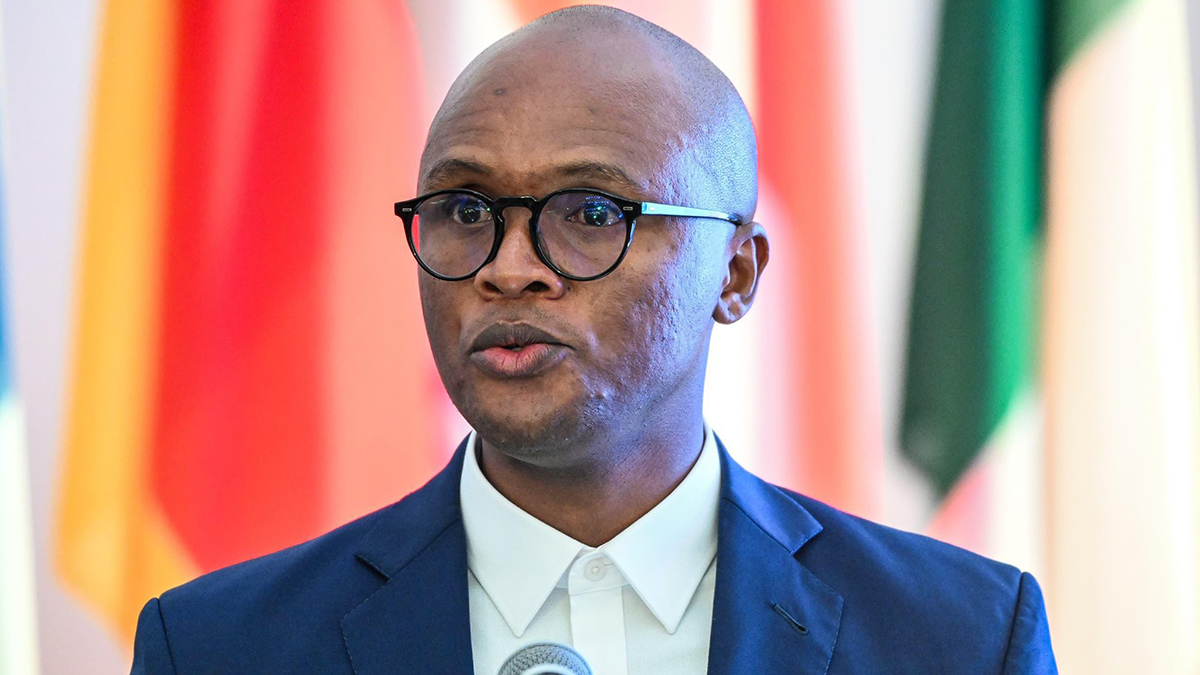
Communications and digital technologies minister Solly Malatsi has formally requested time before Parliament’s portfolio committee to explain the circumstances that led to the withdrawal of South Africa’s draft National Artificial Intelligence Policy, following the discovery of fictitious sources in its reference list.
The minister officially informed the Parliamentary Portfolio Committee on Communications and Digital Technologies of his decision to withdraw the policy on 28 April. He has asked for an audience with the committee once an internal investigation has been completed and a corrective plan has been finalised.
The department said this communication was sent directly to the oversight committee’s chair in advance of a public notice from the ANC Study Group on Communications and Digital Technologies, which had called for the minister to appear before the oversight committee at the earliest opportunity.
The controversy erupted over the weekend when News24 reported that the draft National AI Policy, which had been presented for public comment, contained fictitious sources among its 67 references. Several academic journals cited in the document were found to be completely fabricated. Malatsi confirmed the findings on Sunday following internal questioning about the policy’s reference list, prompting his decision to withdraw the document on the grounds that its integrity and credibility had been compromised.
The ANC Study Group on Communications and Digital Technologies responded on 28 April by demanding that Malatsi immediately appear before the portfolio committee to account for the withdrawn policy. In a statement signed by ANC MP Shaik Subrathie, who serves as whip of the study group, the party also called for a review of the officials responsible for drafting and quality assurance of the document, as well as an update on whether consequence management measures had been initiated.
In response, the ministry shared correspondence dated 28 April sent to portfolio committee chairperson ANC MP Khusela Sangoni-Diko, in which Malatsi explained that the discovery of fictitious references was the reason for the withdrawal. He added that he had instructed the director-general to conduct a full investigation into the circumstances that led to what he described as an unacceptable occurrence.
The minister emphasised the importance of holding department officials to the highest ethical and professional standards and assured the committee that the department planned to implement appropriate consequence management for those found to have failed in their duties.
Malatsi said he believed it would be in the public interest for the department to account to the portfolio committee and Parliament, providing a transparent explanation of the investigation’s outcomes and the next steps for the draft National AI Policy. He therefore requested an audience with the committee once the investigation and corrective plan had been finalised.
The Department of Communications and Digital Technologies is responsible for leading South Africa’s digital transformation through policy and regulatory oversight. With artificial intelligence increasingly penetrating nearly every industry, policymakers globally have focused on ensuring AI is created responsibly and ethically from the outset to protect citizens, businesses and governments from potential risks.
Earlier this month, Cabinet approved the publication of the draft South Africa AI Policy for public comment, marking a critical step toward implementing a national AI framework. The draft was published on 10 April, opening a 60-day public consultation period with written input invited by 10 June. The policy had been expected to be implemented in the 2027/28 financial year. That timeline is now in doubt, as the withdrawal and subsequent investigation are likely to delay the process.
Observers have noted that South Africa risks falling further behind other African nations, such as Mauritius and Rwanda, which have already published or implemented national AI strategies. According to a 2025 report by the Oxford Insights Government AI Readiness Index, South Africa ranks 6th in Africa, trailing countries with more mature policy frameworks. The incident has also raised broader questions about quality assurance mechanisms within the department.
Industry bodies, including the Institute of Information Technology Professionals South Africa, have called for an independent review of the policy drafting process, arguing that the use of fictitious references points to systemic failures in research and validation protocols. The minister has not yet confirmed a date for his appearance before the committee, but the ANC Study Group has indicated it expects the hearing to take place shortly after the investigation concludes.