

South Africa’s healthcare system is defined by a paradox of world-class clinical expertise operating within severe capacity constraints. Nowhere is this tension more visible than in public-sector operating theatres, where shortages of specialists, frozen training posts, and rising patient demand have created persistent bottlenecks. Yet from within these constraints a new kind of solution is emerging, one that combines digital coordination with a broader shift from personality-driven workarounds to system-driven resilience.
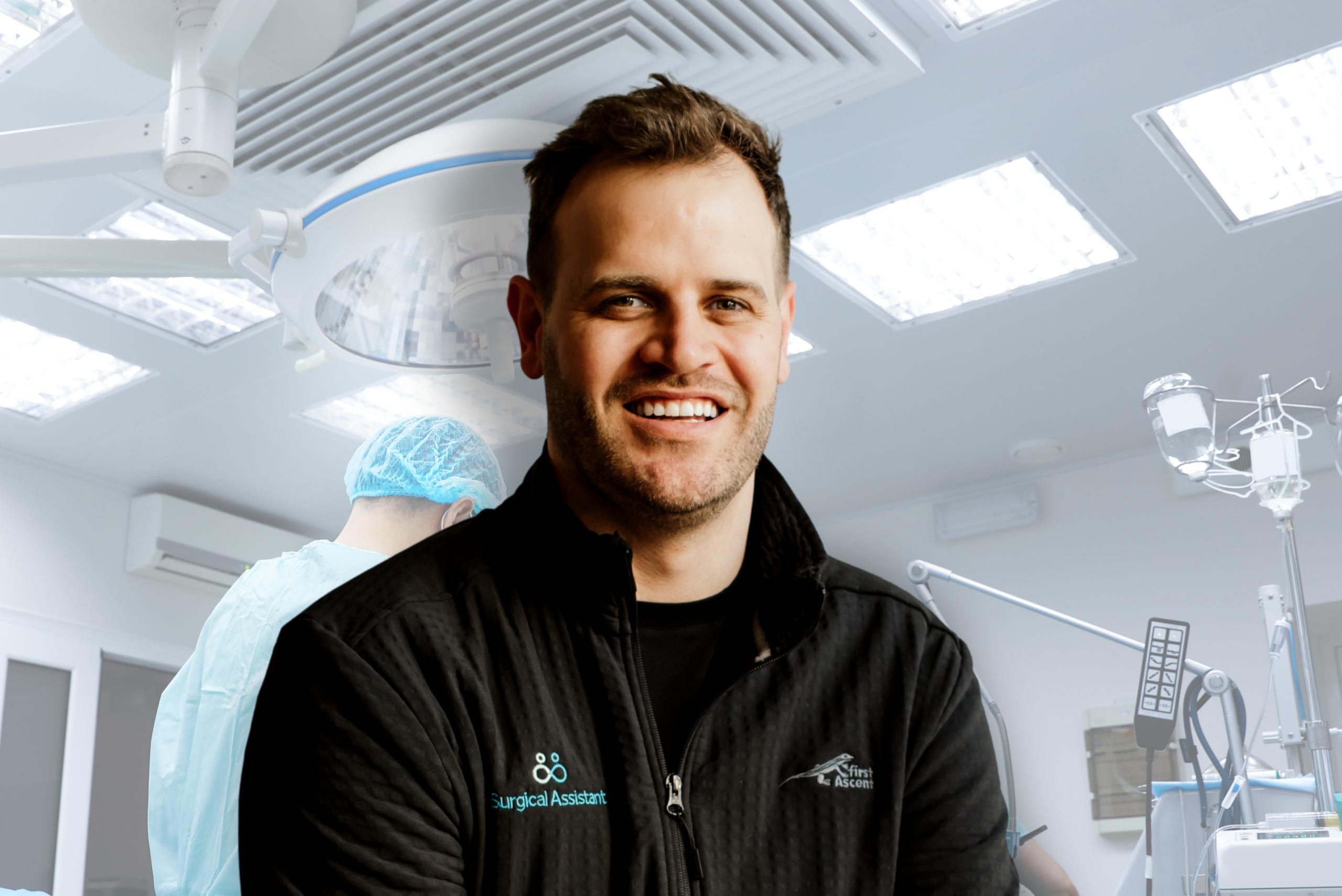
For decades, South African clinicians have improvised under pressure. Necessity has produced innovations ranging from low-cost asthma spacers made from plastic bottles to locally developed referral technologies that reduce treatment delays. The latest example is The Surgical Assistant, a home-grown digital platform designed to match surgeons with vetted assistants in real time, ensuring the right skills are available in theatre when needed.
“The platform addresses a structural imbalance. Policy data indicates that the public health sector has roughly one specialist for every 14 285 people, compared with about one for every 1 449 in private healthcare. This disparity translates into longer waiting times, constrained access, and mounting pressure on clinicians. Fiscal limits have further restricted the creation of specialist training posts, slowing the pipeline of new doctors and leaving some qualified practitioners waiting years for opportunities to specialise”, says Dr Le Roux Viljoen, CEO & Founder: The Surgical Assistant.
“It was within this environment that we identified that surgeons needed assistance to operate efficiently, while qualified doctors struggled to gain surgical exposure. What began as informal spreadsheets and messaging groups evolved into a formal application integrated into hospital workflows, particularly in private facilities where cancelled procedures carry significant financial and clinical consequences”, says Dr Viljoen.
The Surgical Assistant does not produce new specialists but improves how existing skills are deployed. By coordinating availability, credentials, and scheduling, it reduces delays and cancellations, allowing more procedures to be completed with the same workforce. In high-pressure environments, marginal efficiency gains can have outsized effects such as shorter waiting lists, more predictable theatre schedules, and better utilisation of scarce expertise.
What makes the initiative noteworthy is not only the technology but the ecosystem forming around it. A training academy linked to the platform offers continuing professional development for junior doctors, while a non-profit arm funds and mentor’s practitioners seeking clinical experience in public hospitals. Together, these elements aim to expand capacity while strengthening career pathways – a reminder that workforce optimisation can complement workforce expansion. Yet the deeper lesson extends beyond healthcare. South Africa faces not only a capacity crisis but a continuity challenge across many sectors.
“Organisations – including healthcare initiatives – often depend heavily on a single founder or central figure who holds relationships, operational knowledge, and decision-making authority. When that individual exits, institutional knowledge can disappear with them, jeopardising otherwise viable enterprises”, says Dr Viljoen, “This vulnerability reflects the conditions under which many organisations are built. In survival mode, revenue generation and cash-flow management take precedence over formal governance structures and documented processes,” says Dr Viljoen.
Over time, the founder becomes the operating system of the organisation: efficient while present, fragile in their absence. The shift from personality-driven models to a system-driven institutions is therefore critical. Dr Viljoen notes that where organisations invest in governance frameworks, leadership development, and digitised processes, continuity prospects improve markedly.
In economic terms, this matters because small and medium-sized enterprises including health-related ventures are major employment engines. When viable organisations dissolve instead of transitioning leadership, the consequences ripple outward through job losses, weakened supply chains, and lost institutional knowledge. One emerging response is Entrepreneurship-Through-Acquisition, which reframes succession as an opportunity rather than a failure point. Instead of closing when founders step away, organisations can be transferred to younger operators capable of modernising systems and scaling operations. In constrained economies, preserving existing enterprises may be as important as creating new ones.
“In healthcare, this continuity mindset is particularly relevant. Digital platforms such as telemedicine services, medicine-distribution logistics tools, and workforce-coordination systems are increasingly used to extend the reach of limited resources. The Surgical Assistant fits squarely within this trend of a micro-level intervention addressing operating-room bottlenecks while signalling a broader move toward system-based problem-solving,” says Dr Viljoen.
Fiscal austerity has undeniably strained South Africa’s public health system, but it has also catalysed collaboration between private innovators, professional networks, and social-impact funding. When large-scale reforms move slowly, incremental efficiency gains can still improve outcomes. In operating theatres, that can mean more procedures performed, fewer cancellations, and shorter waits for patients whose conditions cannot afford delay. The lesson is that technology solutions grounded in frontline experience, designed to outlast any single individual, can stabilise systems while longer-term reforms take shape.
“South Africa’s healthcare challenges remain but our history shows that innovation often emerges from the same pressures that create the crisis. When austerity narrows options, ingenuity expands them – not only through new tools, but through institutions built to endure beyond the people who founded them,” concludes Dr Viljoen.