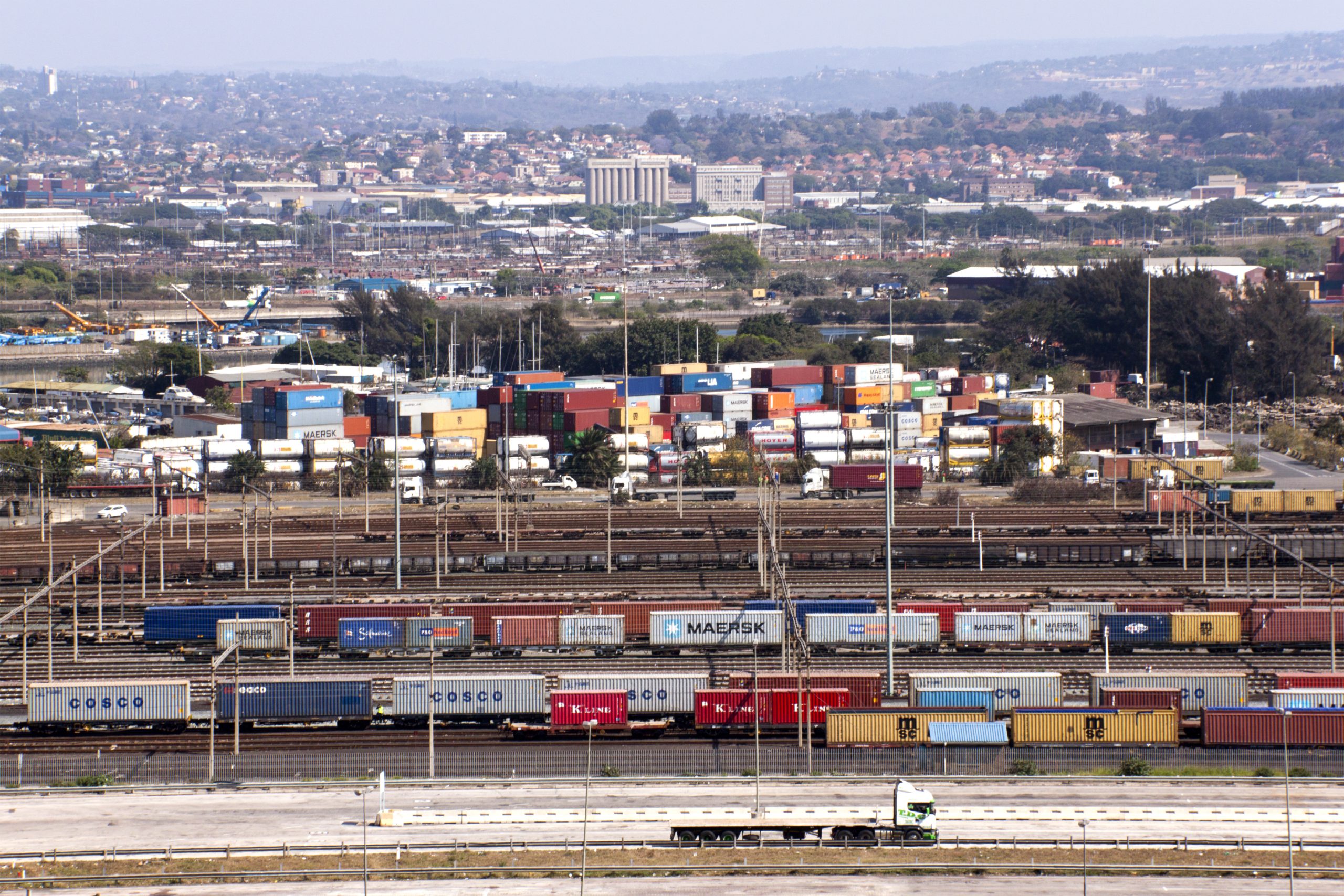
South Africa’s freight system has been under significant strain in recent years, with slow-moving goods placing increased pressure on road networks, transporters, and the broader economy. The newly signed Rail Access Agreements (RAA) by the Transnet Rail Infrastructure Manager (TRIM) creates an opportunity to improve network efficiency, ease pressure on the roads, and restore greater reliability to the movement of cargo across South Africa, provided the supporting infrastructure is in place.
The selection of 11 private train operating companies across 41 routes and six major corridors under the RAA marks the beginning of broader private sector participation in the freight rail network. With the first private locomotives expected on the tracks in the second half of 2026, the country will soon see whether open access can help rebuild rail capacity and ease pressures that have been heavily affecting exporters, producers, businesses, and communities.
Rail depends on the fixed-asset backbone that carries goods from production points into corridors, through terminals, and on to market. The first private operators are expected to add 24 million tonnes of freight capacity to the network, but that volume will place immediate pressure on the infrastructure around the line itself, from the facilities that load and secure freight to the connections that move it cleanly into ports, industrial zones, agricultural belts, and regional markets. To ensure this transition happens with the least friction possible, the country needs the structures that allow rail access to become reliable freight movement.
Driving rail development with private capital
South Africa’s next infrastructure challenge is to draw in the additional private investment needed to make the rail backbone investable at scale. However, private capital needs a more compelling case than broad economic impact, and investors need to see how each asset will earn, how it will be used, how performance will be measured, and how repayment will be protected over a long operating life.
That means de-risking the project inside its own structure by proving current demand, showing credible future demand, and building an operating model that gives investors confidence that the asset will keep earning after construction.
Infrastructure developers have a direct role to play. Public-sector reform has opened the door for private operation, but the surrounding assets will need commercial discipline if they are to attract long-term funding. The opportunity now is to use private-sector development capacity to support the state’s logistics agenda through projects that are practical, measurable, and financially sustainable.
This can be accomplished by taking rail-linked infrastructure to market as disciplined long-term assets rather than as broad development concepts. An intermodal terminal or logistics hub becomes easier to fund when freight volumes are already visible, the operating model is clear, and repayment is protected through use over time. That approach gives private capital a stronger basis for participation and gives South Africa a more credible route to building the rail backbone at the scale the economy now requires.
Establishing the model for unlocking funding
To attract the investment needed to help the public sector meet its target of lifting annual freight rail volumes to 250 million tonnes by 2029, a stable and repeatable and bankable infrastructure-finance model must be introduced.
GIC has already demonstrated, through work across large-scale development programmes, that public initiatives and resources, support by private capital and expertise, can drive infrastructure development when the commercial logic is disciplined and the long-term return is credible. This experience has shown that investors respond to projects built around real demand, clear operating models, and repayment structures that can hold over time. The same approach can now be applied to the rail backbone as South Africa looks to fund the infrastructure that will carry open access beyond its first phase.
That scale of follow-through would allow capacity to be built ahead of demand instead of only reacting once the next bottleneck has already formed. Corridors could then be strengthened in a way that matches rising freight volumes, giving operators greater confidence to commit equipment and plan for continuous use. That is how rail begins to offer the consistency the economy needs as a working system that can carry growth over time.
South Africa will only begin experiencing the impact of this agreement when freight starts moving with enough consistency to ease the strain that logistics constraints have placed on the economy. A rail system capable of carrying more of that load reliably would give the country greater efficiency, fewer delays, and improved confidence in the systems that support trade.
Written by Roelof van den Berg, CEO of Gap Infrastructure Corporation (GIC)