
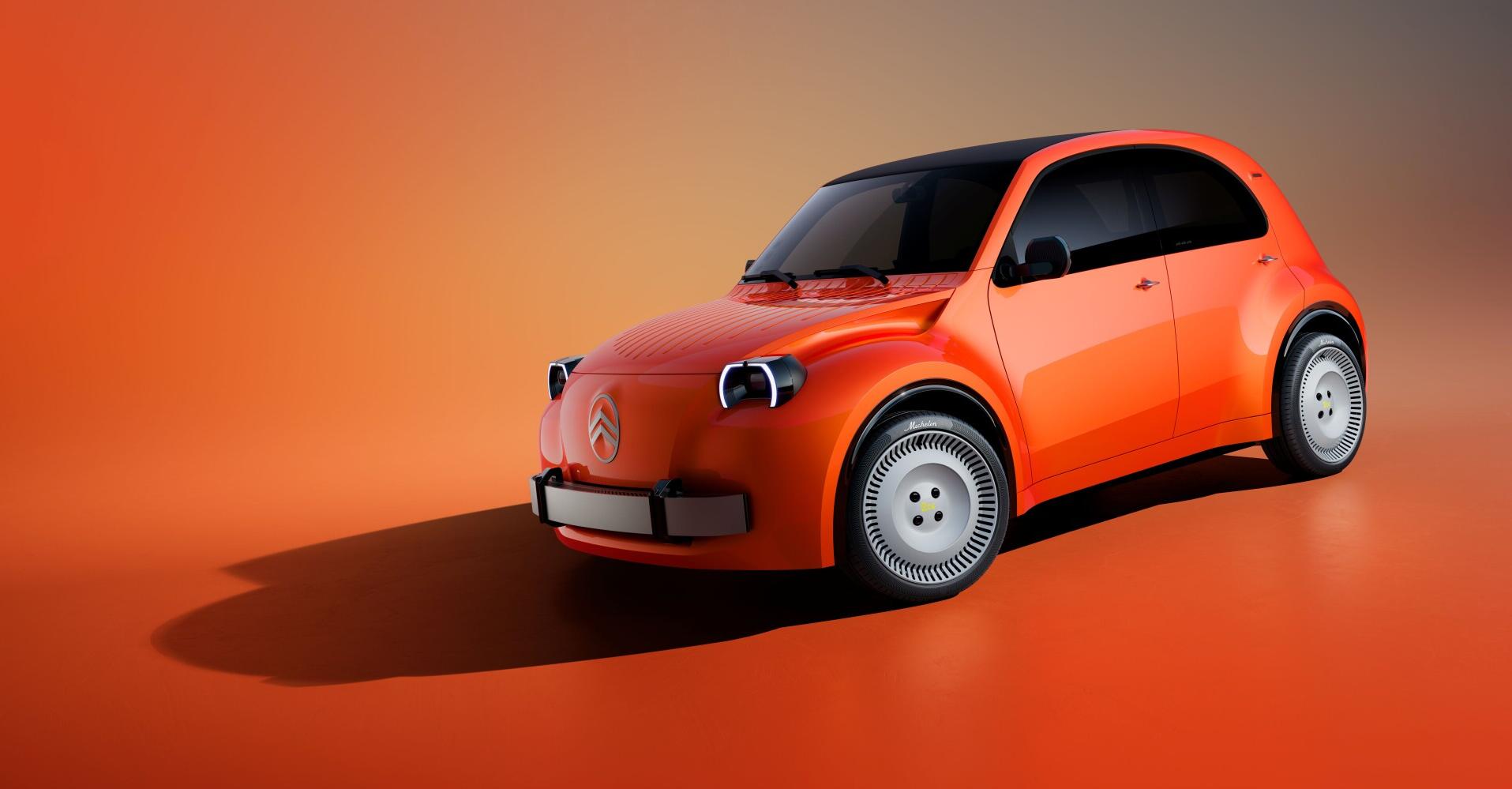
Citroën has unveiled an electric 2 CV Concept at the 2026 Paris Motor Show. It previews a small, low-cost production model that the Stellantis brand plans to add to its range by 2028, at a target starting price of about €15,000 (R277,200).
The concept returns to the show where the original 2 CV was unveiled on 7 October 1948. It arrives as European carmakers try to compete with Chinese rivals on price. A record 20 Chinese brands are exhibiting in Paris this year, double the number in 2024, and they make up about a third of the roughly 60 manufacturers present.
Citroën plans to build the model in Europe and position it between its Ami electric quadricycle and the C3. The car is designed to fit the European Union’s proposed E-car category for small, affordable electric vehicles. That category targets prices of €15,000 to €20,000 (R277,200 to R369,600) and would ease some safety-equipment requirements for urban models. The proposal also includes a made-in-Europe criterion.
| Citroën 2 CV: then and now | Figure |
|---|---|
| Original 2 CV unveiled | Paris Motor Show, 7 October 1948 |
| Original production | 1949 to 1990 |
| Total units built | 5,114,969, including 1,246,335 vans |
| 2 CV Concept length | 3.76m |
| Target weight | About one tonne |
| Target starting price | About €15,000 (R277,200) |
| Production model due | By 2028 |
| Renault Twingo electric (Germany) | From €19,990 (R369,400); 3.79m; 262km range |
Chief executive Xavier Chardon said the aim was to reinvent what made the original successful, namely simplicity, accessibility and freedom, not to copy its shape. Citroën describes the concept as running counter to a market where cars keep getting larger, heavier and more expensive.
At 3.76m, the concept is shorter than the original. Citroën is aiming for a weight of about one tonne, which allows a smaller and cheaper battery with enough range for everyday use and lower running costs. The company has not yet published battery size, range or power figures. Several design choices are aimed at cheaper production and repair. The bumpers are separate from the bodywork and can be replaced on their own, and the bodywork uses simple surfaces with direct air intakes beneath the windscreen.
The exterior keeps the original’s silhouette. It has round headlamps set apart from the body, a black tailgate that runs down to the bumper, 18-inch steel wheels and a fabric sunroof. Inside, the traditional dashboard has been replaced by a single cylinder that holds a one-spoke steering wheel, a single control lever, a head-up display and an 8-inch square touchscreen. A detachable radio doubles as a portable speaker, and a removable basket takes the place of the centre console.
Tyre maker Michelin is a technical partner. It has supplied a digital-twin system that monitors tyre condition and adjusts the car’s behaviour to road conditions.
The concept carries several nods to the original: tartan seat fabric, door bins shaped to hold eggs, and a horn sound modelled on the 2 CV’s. Pedals marked with a tortoise and a rabbit stand for braking and accelerating. Numbers on the windscreen mark the original’s launch in 1948, the end of production in 1990 and the concept’s unveiling in 2026.
The original was built from 1949 until 27 July 1990, when the last car left the plant in Mangualde, Portugal. More than 5.1 million were produced, and demand was so strong in its early years that buyers waited up to six years for delivery.
The new model will enter a segment that is filling up. Renault’s electric Twingo, built in Slovenia, starts at €19,990 (R369,400) in Germany. It is 3.79m long and has a range of up to 262km. Citroën’s target price would undercut it by about €5,000 (R92,400).