
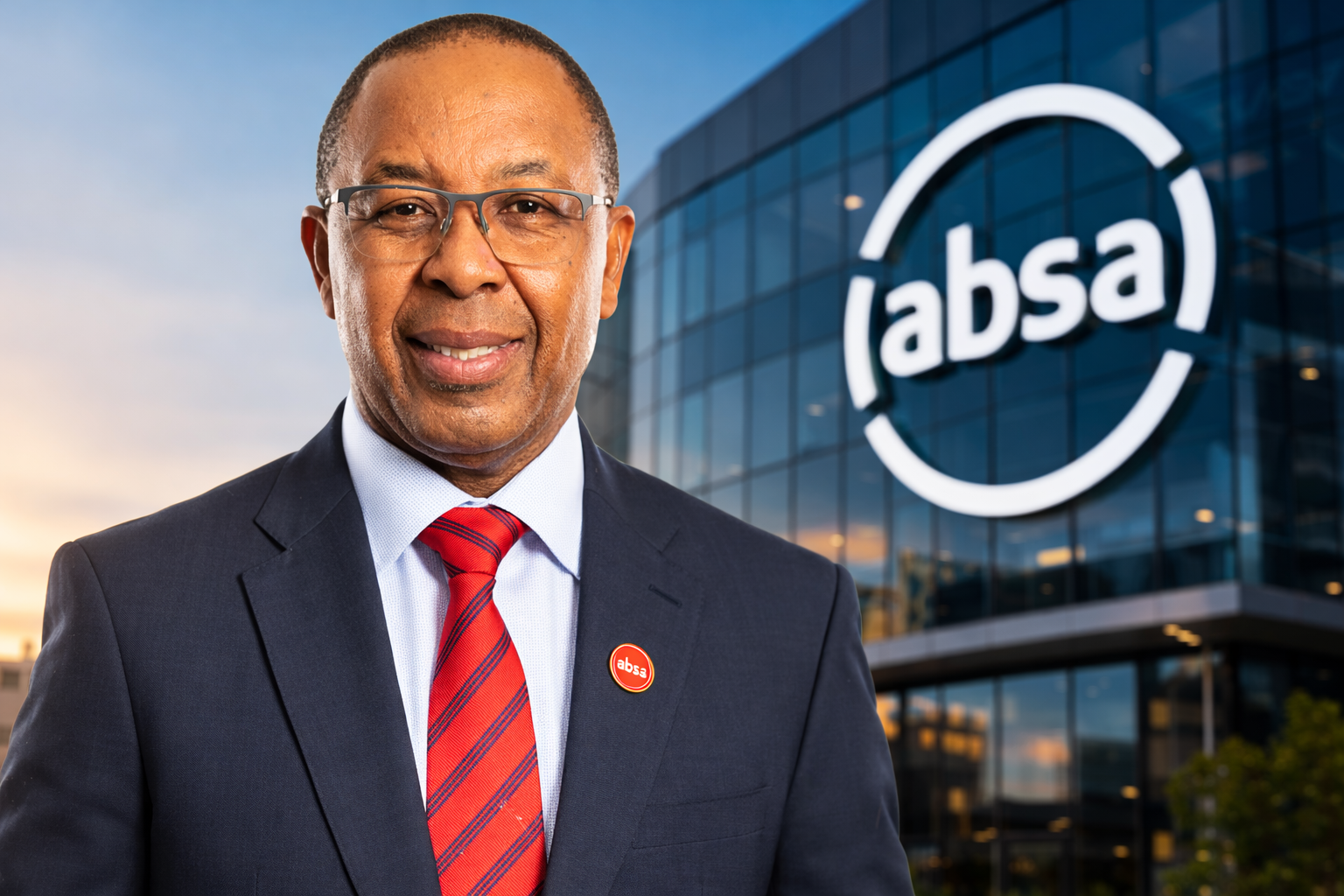
There is a quiet but expensive arms race playing out at the top of South Africa’s banking sector, and Kenny Fihla’s R148m pay package for six and a half months of work is simply the latest — and most visible — evidence of it. When Absa Group lured Fihla away from Standard Bank in mid-2025, it did not just hire a new chief executive. It also agreed to compensate him for R98.5m worth of incentive awards he forfeited by walking out of his previous employer’s door.
The buyout comprised a R20.7m cash component and a share-based award valued at R77.7m, both made in respect of unvested incentives Fihla left behind at Standard Bank, where he had spent nearly two decades rising to deputy group CEO and chief executive of South African operations. His total awarded remuneration from 17 June 2025 — including fixed pay, short-term incentives and a long-term incentive award — came to R148m. For context, his total remuneration at Standard Bank for the full 2024 year was R67.3m.
The practice is neither new nor unique to Absa. It reflects a structural reality in South Africa’s banking market: the pool of executives considered capable of running a major financial institution is exceptionally small, the competition for that talent is intense, and the deferred incentive structures banks use to retain their best people have become, paradoxically, the very mechanism that makes poaching so expensive. When an executive leaves before their awards vest, someone has to make them whole — and that someone is invariably the hiring institution.
According to the South African Reserve Bank’s most recent banking supervision report, South Africa’s five largest banks — Absa, Standard Bank, FirstRand, Nedbank and Investec — collectively control over 90% of the country’s total banking assets. That concentration means that executive movement almost always involves a direct transfer between direct competitors, raising the financial and reputational stakes of every senior appointment. There is no neutral ground, and no executive arrives without a price tag attached to their departure.
The precedents are well established. When Jason Quinn joined Nedbank as chief executive in May 2024, the bank granted him an on-appointment award of R62.7m in long-term incentives plus a further R9.2m deferred short-term incentive — all in respect of awards forfeited at his previous employer, which was Absa, where he had served as chief financial officer. The irony of Nedbank compensating Quinn for leaving the very institution that Fihla would later join is not lost on those tracking the sector’s leadership churn. As reported by the Sunday Times Business Times, South Africa’s major banks have cycled through a disproportionate number of chief executives in the past decade relative to their global peers, a pattern that has made buyout awards a near-standard feature of senior recruitment rather than an exceptional one.
The MTN Group offers a parallel from outside banking. In 2017, the telecoms giant granted cash-settled share-based incentives to three incoming executives simultaneously — Rob Shuter as chief executive, Ralph Mupita as chief financial officer, and Jens Schulte-Bockum as chief operating officer — all in lieu of unvested equity they surrendered on leaving their previous employers. Shuter arrived from Vodafone; Mupita from Old Mutual.
What the Fihla package also reveals is the compounding cost of executive instability at Absa specifically. His predecessor, Arrie Rautenbach, departed in October 2024 after a tenure marked by persistent pressure from the board and shareholders. Rautenbach received R8.4m for 2024 with no incentive awards, having ceased to be an executive director before year-end, and carried unvested awards with a face value of R87.1m into his exit. Charles Russon, who served as interim chief executive between Rautenbach’s departure and Fihla’s arrival, was awarded R39m in remuneration for 2025 before transitioning to lead the bank’s Africa Regions business. In total, Absa’s two executive directors received R180m in remuneration for 2025, with its seven prescribed officers awarded a further R175m.
The broader question the numbers raise is whether these buyout structures are functioning as intended. Deferred incentive schemes were originally designed to align executive behaviour with long-term shareholder value — to ensure that leaders had skin in the game long after the decisions that shaped outcomes were made. When those awards are routinely bought out at face value by a competitor the moment a better offer arrives, the retention mechanism collapses into little more than a transfer fee, with shareholders at both ends of the transaction bearing the cost.