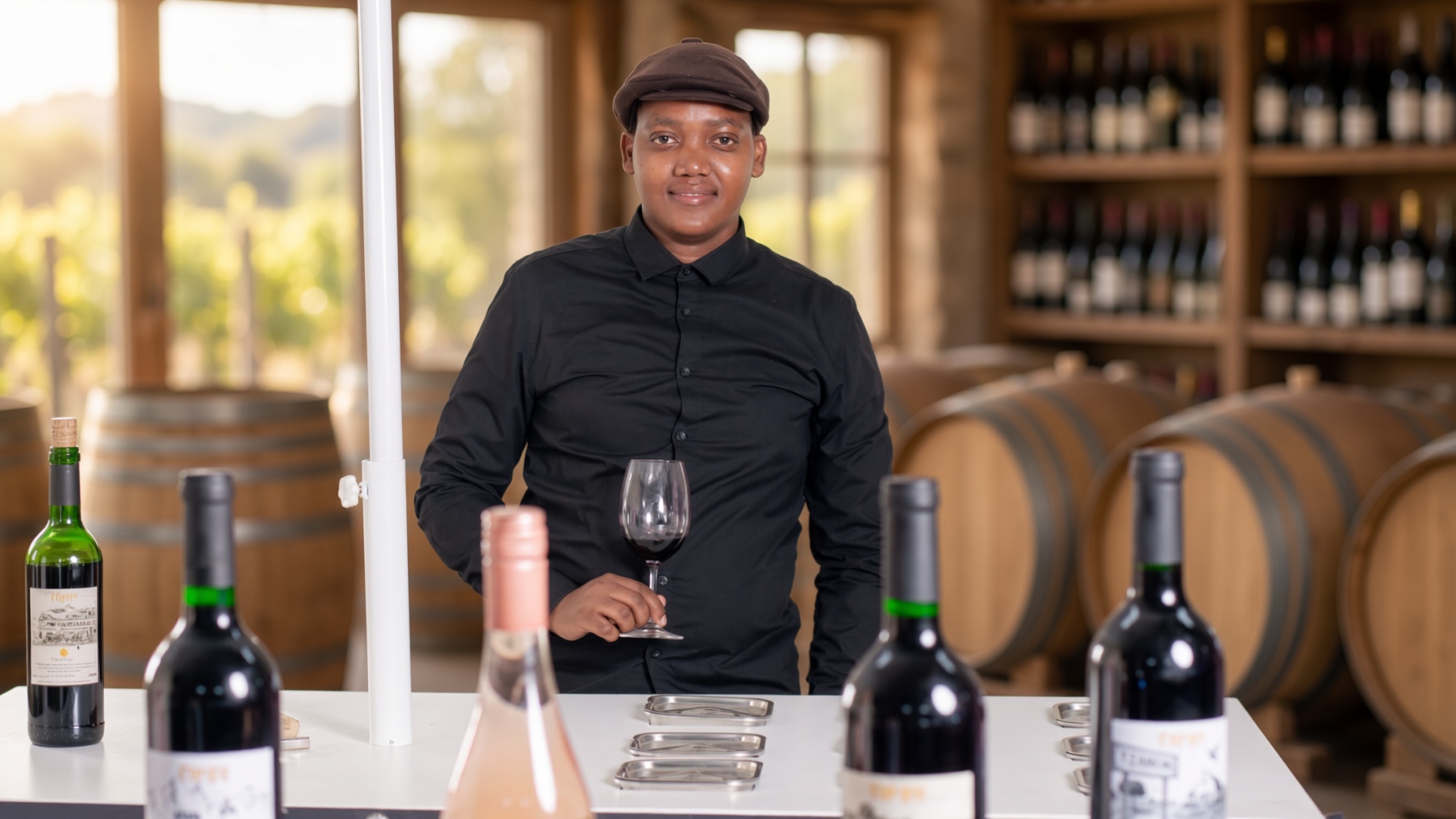
For too long, wine has been presented through a predominantly European lens, from the language and traditions surrounding it to the rules that often determine how it should be enjoyed. But as a new generation of African entrepreneurs and consumers enter the wine space, there is an opportunity to redefine what wine culture can look like through an African lens.
Rethabile Kgatlhane, Founder of Tipsy Twenties Winery, is part of this emerging conversation, advocating for a wine experience that feels more relatable, inclusive and connected to African culture and identity.
For Kgatlhane, wine should not feel intimidating or require people to understand a long list of rules before they can enjoy it.
“There are so many rules around wine — how you’re supposed to drink it, what you’re supposed to taste, what glass you should use — and sometimes it feels like you need to know everything before you can simply enjoy a bottle,” he says.
His vision is to make wine feel younger and more accessible without taking away from its quality or culture.
Creating an African Wine Experience
For Kgatlhane, an authentic African wine experience begins with something deeply familiar: food and community.
A table filled with braai meat, pap and chakalaka, oxtail or mogodu, accompanied by music, friends and family, can provide a more natural introduction to wine than a traditional lesson filled with technical terminology.
“Just experience it, enjoy it and have a conversation about it,” Kgatlhane says, challenging the idea that wine appreciation needs to be overly complicated.
This perspective highlights the potential for African food, music, fashion and social gatherings to shape a distinctive wine lifestyle — one where wine becomes part of everyday African experiences rather than something that exists outside them.
Making Space for the Next Generation
Kgatlhane believes young African wine drinkers are often underestimated. They are curious, exposed to different cultures and increasingly willing to explore new experiences, yet can sometimes be viewed through outdated assumptions about what they want from wine.
The opportunity, he argues, is not to simplify wine for young consumers, but to make them feel welcome within the conversation.
“Young Africans don’t necessarily want wine to be dumbed down for us. We just want to feel like there’s a place for us in the conversation.”
That sense of representation extends beyond consumption. Greater representation in wine ownership, entrepreneurship and storytelling can help future generations see the industry as a space in which they can participate, create and build.
Through Tipsy Twenties Winery, Kgatlhane is contributing to a broader shift towards a wine culture where African identity is not an afterthought, but part of the experience.
Ultimately, the conversation is about more than wine. It is about reclaiming space, celebrating African identity and creating a culture where young Africans can enjoy wine with African flavour, African confidence and African pride.