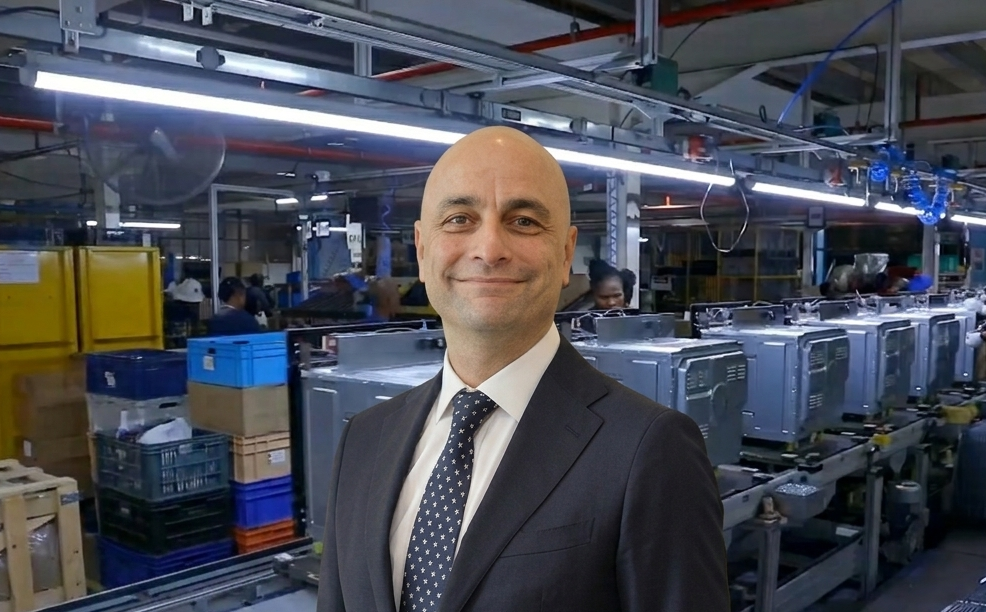
South Africa’s search for sustainable economic growth often centres on investment and job creation. According to Burak Bilgisel, Regional Managing Director of DEFY, both depend on the country’s ability to manufacture products locally and develop the industrial capability needed to serve African and international markets.
South Africa’s economy grew by 0.5% in the first quarter of 2026, while manufacturing contracted by 0.8%. According to Statistics South Africa, it was the only industry to decline during the quarter. The official unemployment rate stood at 32.7%.
For Bilgisel, these figures expose a gap in South Africa’s economic approach. Manufacturing creates employment across a wide range of skills levels and generates activity throughout the value chain. Its contribution reaches component suppliers, logistics networks and the communities surrounding production facilities.
“Every Rand invested in manufacturing has an impact beyond the factory,” he says. “It supports livelihoods while developing the skills and production knowledge a country needs to grow.”
When manufacturing capacity weakens, South Africa loses output along with experience accumulated through years of production. Once factories close and skilled employees leave the sector, rebuilding that knowledge takes time.
Confidence drives industrial growth
Manufacturing requires long-term investment in facilities, equipment and production lines. These commitments may take years to deliver a return, which means manufacturers need confidence in the environment in which they operate.
“Confidence drives growth,” says Bilgisel. “Manufacturers need policy certainty and infrastructure that allows them to operate consistently. When those conditions are in place, companies can invest in capacity and develop local supply chains.”
Energy security and functioning logistics networks directly affect the viability of local production. Localisation policy also needs to recognise the difference between importing finished products, assembling imported components and developing genuine industrial capability.
Localisation creates lasting economic value when suppliers gain the opportunity to strengthen their processes and meet international production standards. This allows South African businesses to participate in established manufacturing networks while building expertise that can serve other customers and industries.
The scale and time horizon involved can be seen in DEFY’s experience. Nearly R2.3 billion has been invested in its South African operations since 2011, supporting local production and the network of businesses connected to it. The importance of this investment lies in the capability it sustains over time, rather than the figure alone.
Global innovation must solve local problems
South Africa’s manufacturing opportunity lies in combining knowledge of African markets with international research, technology and production expertise.
This approach allows manufacturers to develop products around the realities faced by local consumers. In the appliance sector, these include energy constraints, rising electricity costs and limited access to conventional power in some communities.
DEFY’s Solar Off-Grid range, supported by the Department of Trade, Industry and Competition, grew from this need. As part of the initiative, the company has invested in the Umlazi community by providing Solar Off-Grid products to households, SMEs and preschools, helping them maintain daily operations and build self-reliance. The project shows how global research capability can be applied locally to address the practical effects of unreliable electricity while supporting greater economic participation.
Manufacturing products within the markets they are intended to serve also creates a direct connection between consumer needs and product development. Local insight can shape design decisions and help ensure that imported technologies are adapted to the conditions in which they will be used.
Automation, artificial intelligence and data-led production will influence the sector’s ability to compete. These technologies can help factories manage energy use, improve quality and limit waste. Their value depends on employees who understand the production environment and can apply the technology to operational problems.
“A factory can invest in advanced equipment, but the investment cannot deliver its full value without people who can operate and maintain it,” says Bilgisel. “Technology and skills have to develop together.”
Partnerships between manufacturers and TVET colleges can help connect classroom learning with the realities of factory operations. Workplace programmes also give young people practical experience and a route into technical careers while helping manufacturers develop the capabilities their operations require.
Without this connection between education and industry, manufacturers may struggle to fill technical roles while young people remain excluded from industrial careers.
Local capacity creates export opportunity
The African Continental Free Trade Area gives South African manufacturers access to a significant regional market. Trade access can only generate economic value if the country has products to sell and the capacity to supply them consistently.
A strong domestic manufacturing base develops the production knowledge and supplier capability required to serve markets across the continent. This makes investment in local industry central to South Africa’s export ambitions.
Government and industry have connected responsibilities in building this capacity. Government must provide policy certainty and infrastructure that supports production. Manufacturers need to invest in facilities, suppliers and people. Education providers must remain close enough to industry to understand how technical roles are changing.
The choices made now will determine whether South Africa enters the next era of industrial growth as a producer or primarily as a consumer of goods manufactured elsewhere.
“The countries that successfully combine industrial policy, private-sector investment and skills development will lead the next era of manufacturing growth,” says Bilgisel. “South Africa must decide whether it intends to be one of them.”
By Burak Bilgisel, Regional Managing Director, DEFY