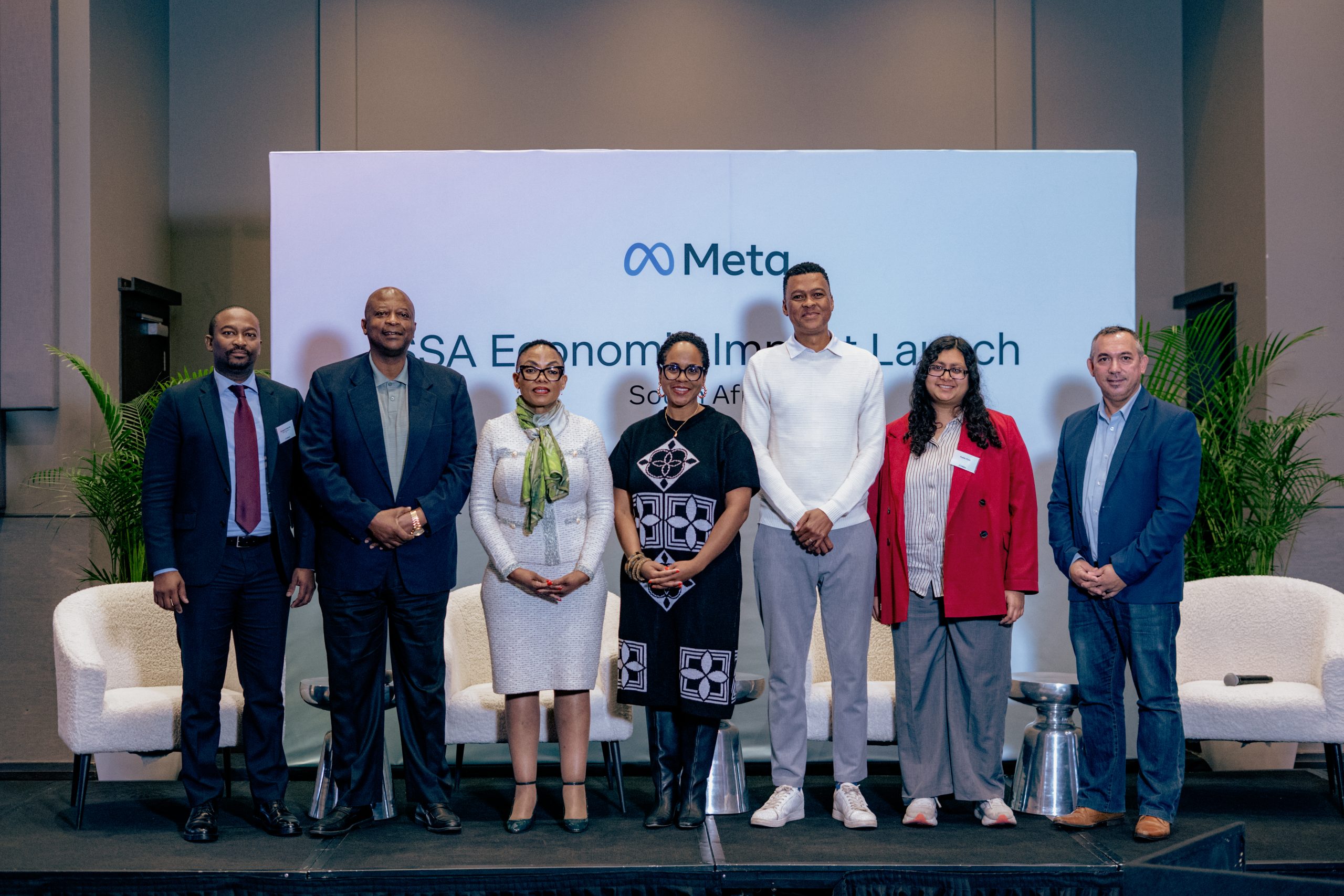
South Africa’s R495 billion digital economy could grow to R874.5 billion by 2035, according to new independent research that finds Meta’s platforms are contributing an estimated R16.5 billion in annual economic value today, with AI set to add a further R528 billion to GDP over the next decade.
The “Meta’s Impact in South Africa” report, conducted by independent research firm Public First, finds that 910,000 South African SMEs used Meta’s apps — Facebook, Instagram, WhatsApp, Messenger, Meta AI, and Threads — to start and grow their businesses in 2025, contributing R47.9 billion to GDP, with instant messaging across Meta’s apps saving them an estimated R21.5 billion by making communication faster and cheaper.
SMEs are building digital businesses from township to city
For South African small businesses, Meta’s platforms have become core business infrastructure — bridging the divide between large corporations, a vibrant SME sector, and the informal economy. 90% of online businesses on Meta say the platforms have opened up new markets for them, while 81% of online adults say the platforms have helped them feel part of their community.
From spaza shops in Soweto to design studios in Cape Town, these are not passive users — they are business owners who have made Meta’s platforms central to their survival and growth. Across South Africa’s townships, informal traders are using WhatsApp Business to manage orders, coordinate with suppliers, and reach customers beyond their immediate streets — representing a pattern of where digital tools help informal businesses operate with the efficiency of formal ones.
Balkissa Ide Siddo, Director of Public Policy, Sub-Saharan Africa at Meta, said: “What stands out about South Africa is how our platforms are bridging the gap between the formal and informal economy. When a township trader can use WhatsApp Business to manage orders with the same efficiency as a retailer in Sandton, that is real economic inclusion in action. This research confirms what we see every day: 910,000 South African SMEs are not just using our platforms, they are building livelihoods on them. And with the 2Africa cable now landed across three provinces and open-source AI tools like LLaMA available to any South African developer at no cost, the infrastructure for the next phase of growth is already here. Our commitment is to keep investing in the tools and open technology that help South African businesses compete on their own terms.”
Infrastructure powering the next phase of growth
Meta’s investment in connectivity is helping lay the foundation for South Africa’s digital future. The 2Africa submarine cable, backed by substantial Meta investment, has landed in the Western Cape, Eastern Cape and Kwazulu-Natal provinces and is set to accelerate digital growth. By 2035, it could increase South Africa’s GDP by R62.7 billion annually and bring 660,000 additional people online.
94% of online adults in South Africa say that accessing reliable internet is now significantly easier than it was a decade ago — evidence of substantial progress, though extending affordable access beyond major cities remains essential for the next phase of growth.
Open-source AI: South Africa’s next growth frontier
The research highlights the transformative potential of open-source AI for South Africa’s economy and innovation ecosystem:
● AI could add R528 billion to South Africa’s GDP by 2035 with the right combination of investment, infrastructure and innovation.
● 73% of online South Africans believe AI developed within Sub-Saharan Africa will be important for the continent’s economic growth.
● 69% of online business leaders say they would definitely adopt open-source AI tools if they were accessible.
Meta’s open-source AI models and developer tools — including LLaMA, and No Language Left Behind, are helping South Africans build solutions for local industries, languages and communities without prohibitive licensing costs. Foondamate, a South African company built on Meta’s LLaMA models, has created an AI study assistant accessed by over 3 million learners directly on WhatsApp and Messenger — solving South African educational challenges, made possible because advanced AI technology was freely available.
Alison Neyle, Director at Public First, said: “South Africa’s digital transformation is creating new opportunities for businesses, creators and consumers alike. The findings show that Meta’s platforms are helping South African firms grow across formal and informal sectors, supporting entrepreneurship and strengthening participation in one of the world’s most rapidly expanding digital economies. With the right combination of infrastructure, platform access and open-source AI, the upside for South Africa is significant.”
The full report is available at https://metassa.publicfirst.co/