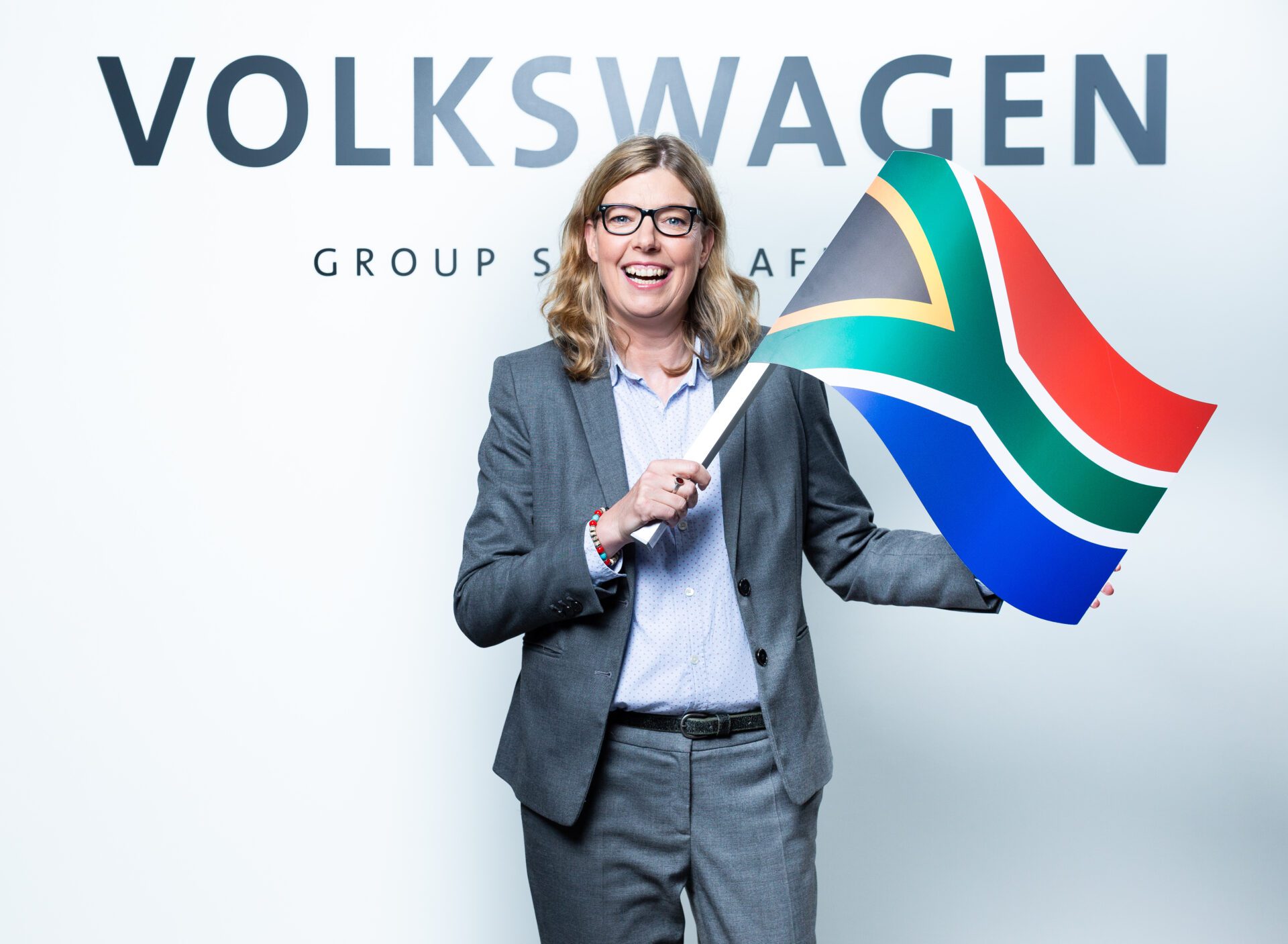
Martina Biene, chair and managing director of Volkswagen Group Africa, has confirmed that the company has intentionally chosen not to automate certain functions, despite having the capability to do so. According to Business Day, this decision aims to preserve jobs in South Africa, where the company employs around 4,000 people.
Biene noted that, compared to their German plant, the South African operation relies more on manual labour. She explained that this choice was made to protect employment, stating, “We could have already automated much more than we have done.” While acknowledging that automation could improve efficiency, she emphasised the importance of balancing profitability with social responsibility.
The company is embracing artificial intelligence (AI) for its beneficial applications, but Biene does not foresee AI replacing manufacturing jobs in the near future. Volkswagen has been present in South Africa since 1946 and recently announced a R4 billion investment to build a small SUV at its Kariega plant, alongside the popular Polo and Polo Vivo models.
The Polo brand has proven successful in both local and export markets, being South Africa’s most exported vehicle in 2024 and accounting for 88% of vehicle exports through the port of Gqeberha. Biene highlighted the challenges of securing investments in South Africa, noting that competition is not just from other local manufacturers but also from 110 Volkswagen plants globally.
She expressed concerns about the increasing competition from vehicles produced in India and China, which have begun to erode South Africa’s historical advantages in the automotive sector. Harry Kellan, CEO of FNB, echoed this sentiment, pointing out that Chinese brands are rapidly entering the market with advanced technologies and competitive pricing.
Biene is cautious about tariff wars, advocating instead for government recognition of local manufacturers’ contributions. She pointed out that Volkswagen’s workforce, along with that of its suppliers, totals around 54,000 people. Despite significant investment of R13.4 billion in South Africa over the past 11 years, Biene feels that the focus on job creation often overlooks the need to protect existing employment in a challenging business environment.
She reiterated the importance of valuing local manufacturers and their ongoing contributions, stating, “We are not saying this to protect us from imports, but rather to acknowledge the things local manufacturers are doing.”