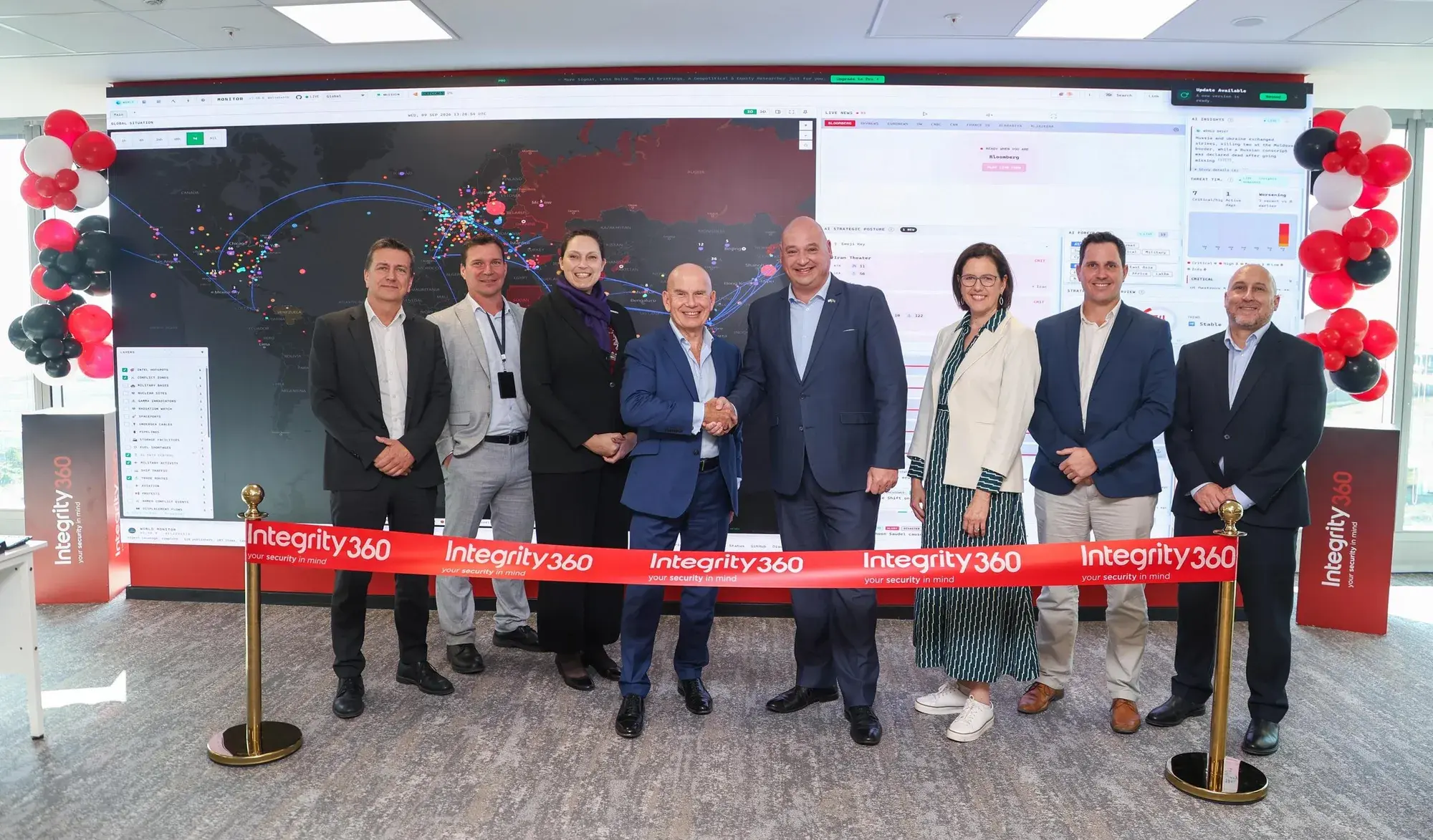
Cybersecurity group Integrity360 has opened a R55 million hub in Cape Town, describing it as the largest Security Operations Centre in its global network of 16 locations. The facility is expected to create around 100 jobs over the coming years and will provide round-the-clock security monitoring and incident response for clients across Africa and internationally.
Alongside standard monitoring and incident response, the hub will offer cyber resilience services, guidance on safely implementing AI systems, defences against AI-driven attacks, and management of machine and AI identities, positioning Cape Town as a frontline site for both conventional cyber threats and the newer risks introduced by AI adoption.
Chief executive and chairman Ian Brown said placing the group’s biggest security operations centre in Cape Town was a deliberate statement about how seriously the company rates the skills and market there, while regional chief technology officer Martin Potgieter said giving local talent world-class opportunities at home was the clearest way to retain it, rather than losing skilled staff to emigration.
| Integrity360 SOC | Investment | Jobs | Opened |
|---|---|---|---|
| Dublin, Ireland | €8m (R149m) | 200 (group-wide) | 2023 |
| Cape Town, South Africa | R55m | ~100 | 2026 |
Integrity360 built its South African presence through acquisition before committing to this hub, buying Cape Town-based Grove Group in 2024, a deal that added roughly 600 customers across 51 countries and lifted group revenue to about €130 million (R2.43 billion), followed by the purchase of local firm Nclose in 2025. The company has continued expanding by acquisition elsewhere too, most recently entering the North American market through its purchase of Canadian firm Advantus360.
It is worth noting that Cape Town is not the first Integrity360 site to carry the “biggest SOC in the group” description. A €8 million Dublin facility, opened in 2023 and credited with creating 200 jobs across the wider organisation, held that title at the time, alongside comparable hubs in Sofia, Stockholm and Naples. Cape Town’s rise to the top spot three years later, on a smaller rand-denominated outlay, says more about how far the group has scaled in the interim than about any step back for Dublin, which remains part of the same four-hub network.
The investment lands in a South African cybersecurity market that research firm Mordor Intelligence values at around $0.33 billion (R5.34 billion) in 2026, projected to grow to roughly $0.59 billion (R9.55 billion) by 2031 at a compound annual rate of about 12.7%. That growth is being driven by tighter breach-reporting requirements under the Cybercrimes Act, a continuing shift to cloud-based and zero-trust security architectures, hyperscale data centre expansion in Johannesburg and Cape Town, and a persistent skills shortage that is pushing more companies toward managed security providers of exactly the kind Integrity360 sells.
Cape Town city official James Vos welcomed the investment as evidence of international confidence in the city’s technology talent and infrastructure, framing it as part of the city’s broader economic development strategy. The move fits a pattern increasingly visible in Cape Town’s tech sector, where global firms, in cybersecurity and beyond, are choosing to build fully-fledged regional hubs rather than thin local sales offices, a distinction that matters for how many skilled jobs the investment actually creates on the ground rather than simply routing existing work through a local entity.