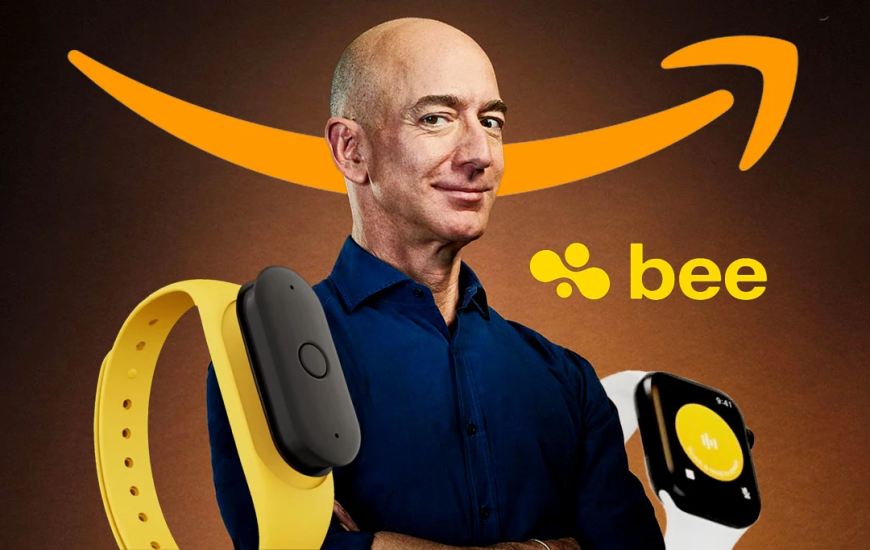
Amazon has acquired the AI wearables startup Bee, as confirmed by Bee co-founder Maria de Lourdes Zollo in a LinkedIn post. Although Amazon has confirmed the acquisition to TechCrunch, the deal has not yet officially closed.
Bee, which raised $7 million last year, produces a Fitbit-like bracelet priced at $49.99, accompanied by a $19-per-month subscription, along with an Apple Watch app. The device records everything it hears unless manually muted, aiming to assist users by creating reminders and to-do lists through conversation analysis.
Zollo previously expressed the company’s vision of creating a “cloud phone,” which would allow the personal Bee device to access user accounts and notifications, facilitating reminders and message sending. Bee positions itself as a personal, ambient intelligence that serves as a trusted companion, helping users navigate their daily lives.
Despite competition from other companies like Rabbit and Humane AI, Bee’s affordable price point makes it accessible to consumers hesitant to invest heavily in AI wearables. An Amazon spokesperson confirmed that Bee employees have received offers to join the company.
This acquisition marks Amazon’s foray into wearable AI technology, expanding beyond its existing voice-controlled products like the Echo speakers. Other tech giants, including OpenAI and Meta, are also exploring AI hardware and smart glasses, respectively.
However, the technology comes with privacy concerns, as the devices record ambient conversations. Bee claims to allow users to delete their data at any time and states that audio recordings are not stored or used for AI training. The app retains information that the AI learns about the user to function effectively as an assistant.
Bee has previously indicated its commitment to recording only the voices of individuals who have given verbal consent and plans to introduce features that define boundaries for recording based on topic and location. The company aims to implement on-device AI processing, which typically involves fewer privacy risks compared to cloud processing.
It remains uncertain how Bee’s privacy policies may change under Amazon, which has faced scrutiny over its handling of user data. In the past, Amazon shared footage from Ring security cameras with law enforcement without user consent, raising concerns about data privacy and security.