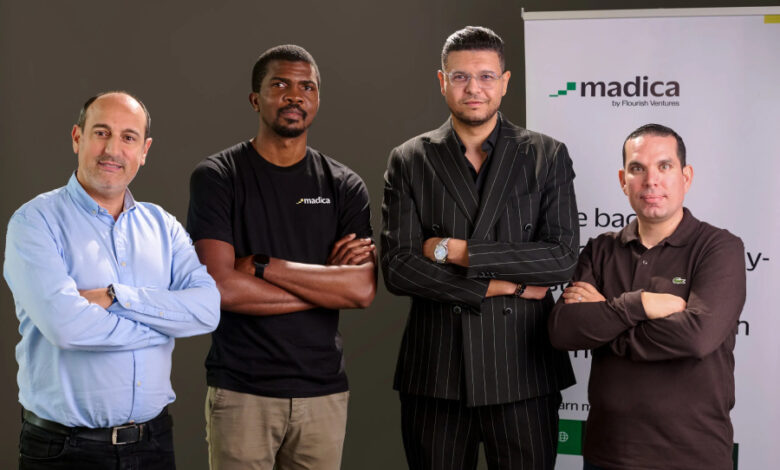
Madica, the structured pre-seed investment programme affiliated with Flourish Ventures, has released a 75-page fundraising guidebook aimed at helping early-stage African founders navigate their first capital raise.
The guide, titled Zero to Funded: A Founder’s Guide to Pre-Seed Fundraising in Africa, draws on real perspectives from investors, venture capitalists and ecosystem leaders across North, West, East and Southern Africa. The resource is designed specifically for founders who lack access to deep networks, accelerators or prior fundraising experience.
Since its launch in 2022, Madica has positioned itself as a programme for underrepresented and underfunded mission-driven founders across the continent. The sector-agnostic platform provides capital and company-building support, and the new guidebook forms part of a broader effort to democratise access to fundraising knowledge.
The guide covers several core areas, including how to decide whether to raise venture capital at all, common myths that derail early investor conversations, and strategies for balancing local market realities with global investor expectations while managing Africa’s perceived risk profile. Practical toolkits, templates and checklists are included for founders to adapt to their own fundraising journeys.
The guide challenges several assumptions that have historically shaped founder education. According to a detailed analysis by , most fundraising literature has been written for Silicon Valley, assuming deep networks, warm introductions to top-tier accelerators and markets where user monetisation is reasonably predictable.
That gap between global advice and African reality, the guide argues, has quietly derailed a generation of early-stage founders. The guide opens by debunking several persistent myths, including the belief that venture capital amounts to free money, that capital should precede product validation, and that a high valuation signals a strong startup. Investors quoted in the guide note that founders often arrive with no clear view of exit paths, little grasp of cap table mechanics and no sense of the pressure associated with returning capital to funds.
The guide also provides regional fundraising data to ground its advice. Between 2019 and 2025, East African startups closed 213 pre-seed rounds worth an estimated $84.51 million, with activity peaking in 2021 and 2022 before contracting sharply to just 17 rounds raising $6.7 million by 2025. Kenya accounts for more than two-thirds of both deals and capital in the region. West Africa saw 475 pre-seed deals worth $219.43 million over the same period, making it the largest sub-region for early-stage capital, though the data is skewed heavily by a small number of outsized rounds in Nigeria’s fintech sector. Southern Africa raised $45.78 million across 118 deals, with South Africa generating the overwhelming majority of that activity, supported by a deeper domestic capital base that produces consistently larger average cheque sizes.
A significant section of the guide addresses whether founders should raise venture capital at all. The guide makes the case that most businesses should not pursue VC funding, noting that only around 0.05% of startups globally ever raise venture money. VC is designed for companies with business models capable of generating at least $100 million in annual revenue within a decade, operating in markets large enough to support exponential scaling with a credible exit path.
For businesses that generate early revenue and grow at a steady sustainable pace, bootstrapping preserves ownership, rewards discipline and builds capital efficiency that may itself attract investors later. The guide also covers non-dilutive capital through grants and competitions, cautioning that grants come with compliance requirements and administrative overhead that can strain lean early-stage teams.
The release of the guidebook coincides with a period of intensified activity for Madica. The programme recently deployed $600,000 into three early-stage startups: Kilimo Fresh in Tanzania, Hakimu in Kenya and Biovana in Nigeria. Each startup received up to $200,000 alongside an 18-month programme that includes mentorship, executive coaching and fully funded immersion trips to global technology hubs.
The investments target sectors often overlooked by mainstream venture capital, including tech-enabled agricultural supply chains, AI-driven legal infrastructure and African health data harmonisation for pharmaceutical research. Madica has now backed 13 to 14 startups since its launch, with cumulative deployment of approximately $2.6 million and a stated goal of maintaining a portfolio with more than 50% of leadership roles held by women.