
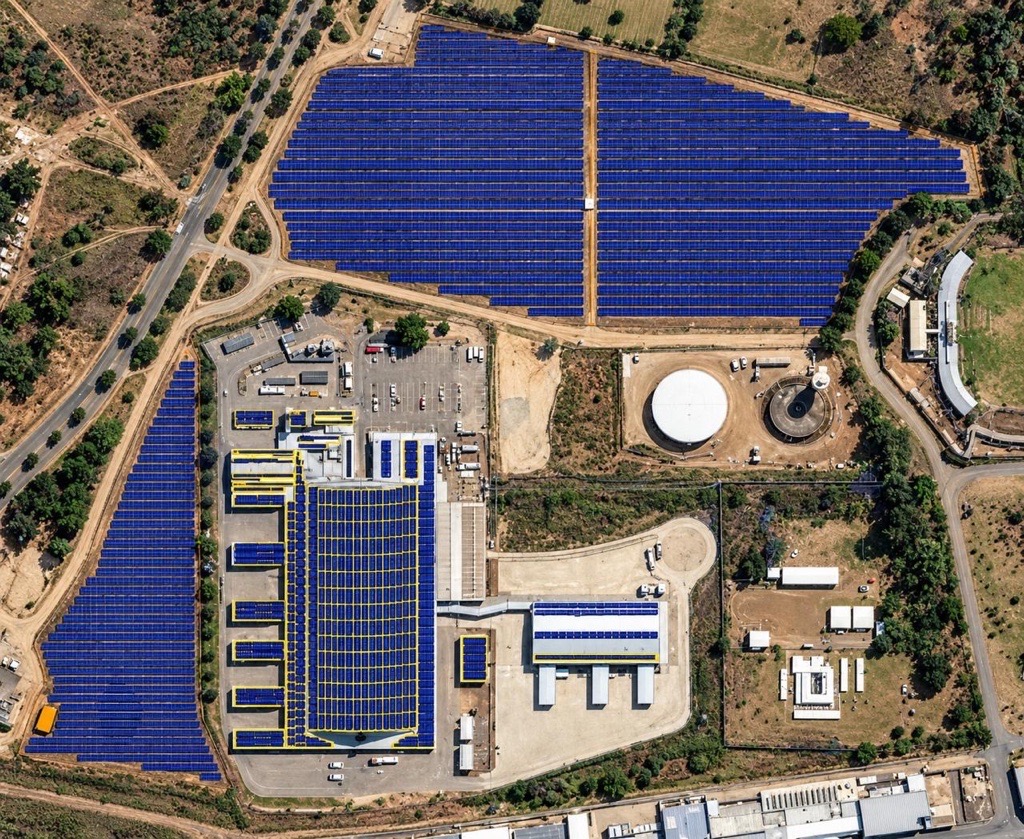
BluEnergy, the energy arm of JSE-listed Blu Label Unlimited, has started building a R360 million solar plant at the Springs Fresh Produce Market. It is working with the City of Ekurhuleni and development partner IBS Crafts. The 25.6 megawatt-peak (MWp) project will cover the market’s roof and the unused land around it, and will sell all its electricity to the City under a 20-year power purchase agreement.
Minister of Electricity and Energy Dr Kgosientsho Ramokgopa and Ekurhuleni Executive Mayor Alderman Nkosindiphile Xhakaza led the sod-turning ceremony on 22 October 2026. The ceremony marked the start of construction under the Ekurhuleni Independent Power Producer Programme, the City’s wider plan to bring private generators into its energy mix.
Once running, the plant is expected to produce about 40 gigawatt-hours (GWh) of electricity a year. That is roughly what 6,000 average households use annually, and it should avoid about 36,000 tonnes of carbon dioxide emissions each year. The plant will connect to the Springs Bulk Substation, giving the municipal network its own local source of renewable power.
| Project at a glance | Detail |
|---|---|
| Capital investment | About R360 million (funded by the IPP) |
| Installed capacity | 25.6 MWp |
| Expected annual output | About 40 GWh |
| Households equivalent | About 6,000 |
| Carbon dioxide avoided | About 36,000 tonnes a year |
| Offtake term | 20 years, City of Ekurhuleni |
| Construction jobs | More than 100 |
| Implied cost per MWp | About R14.1 million |
The most important part of the deal is how it is paid for. The independent power producer carries the full R360 million capital cost, so the City pays nothing upfront and simply buys the electricity over the life of the agreement. Most South African metros are struggling with ageing infrastructure, large Eskom debts and little room in their budgets. This structure lets a municipality add new generation capacity without borrowing or diverting money from other services.
BluEnergy chief executive Aaron Suckerman called the project a flagship for the company and a model for municipal energy partnerships across the country. He said the deal works because each party gets what it needs. The City gets a long-term electricity supply, private investors fund the infrastructure, and the Springs community gains jobs and a more varied energy mix. He added that municipalities need both extra supply and delivery models that investors can back, while private capital needs credible projects with dependable commercial terms.
For Blu Label, the project is about joining up the group’s businesses. Co-CEO Mark Levy pointed out that the group’s Cigicell business already runs prepaid electricity vending and revenue collection systems in more than 95 municipalities across all nine provinces. BluEnergy builds on that by adding power generation and energy trading. The logic is that a business that already collects municipal electricity revenue is well placed to supply the electricity too, because steady collections help fund new supply, and new supply helps the municipality serve its customers better.
The project follows the multi-year energy trading licence that the National Energy Regulator of South Africa granted to BluEnergy Trading earlier this year. Blu Label has said it wants to move its energy platform from development into commercial execution, and Springs is the first concrete sign of that shift. More than 100 construction jobs are expected, followed by permanent operations and maintenance roles over the plant’s lifetime.
For Ekurhuleni, the plant diversifies where the City buys its electricity, reduces its reliance on a single supplier and makes it more resilient to future supply shortages. At 25.6 MWp, the project is small compared with the City’s total demand, but it is an important test case. If the no-upfront-capital model works in Springs, other cash-strapped metros could follow, and private players with existing municipal relationships, like Blu Label, could gain an advantage in a market that is opening up quickly.