

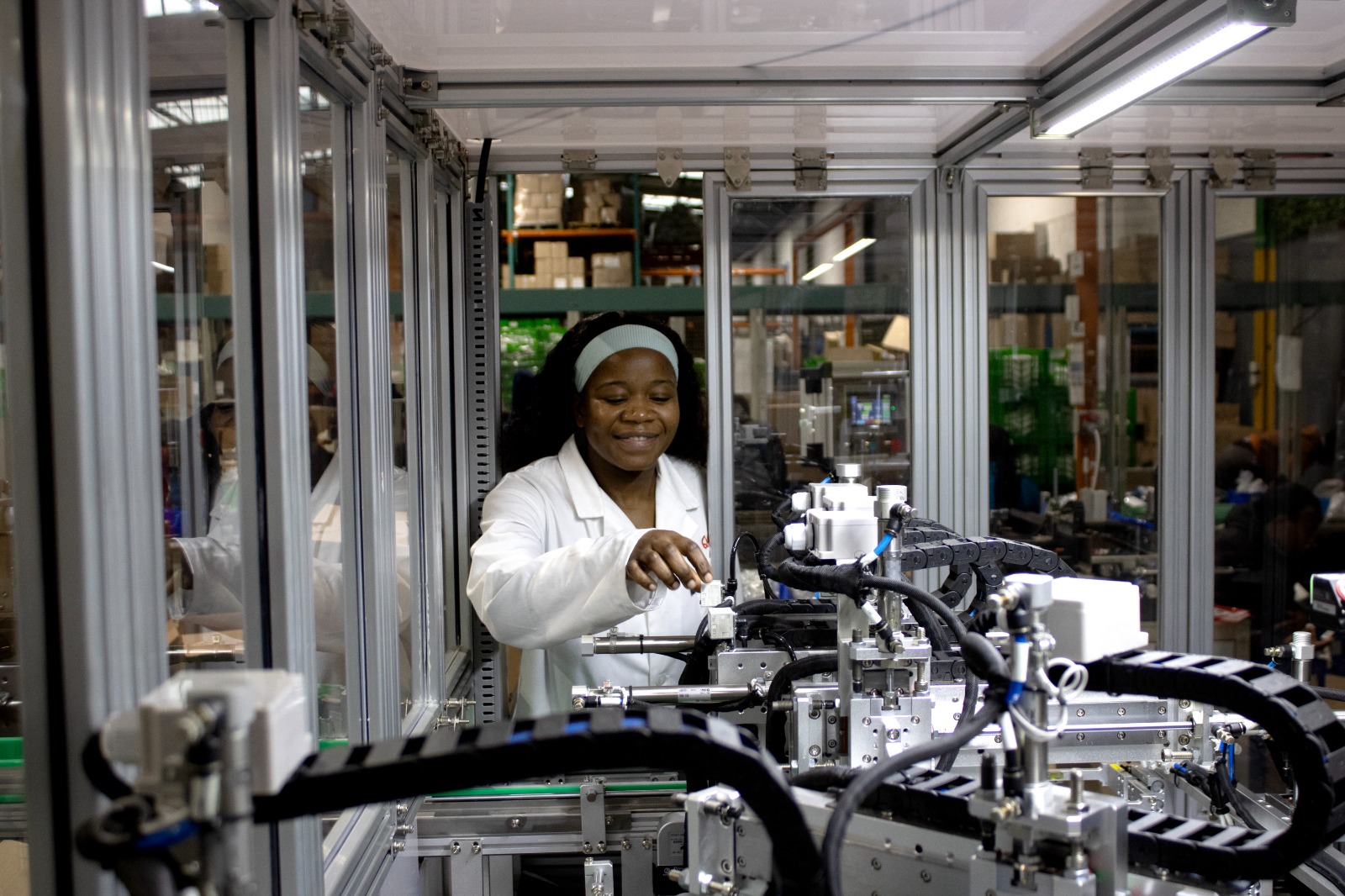
While the global conversation around artificial intelligence has been dominated by fears of job displacement, a third-generation South African manufacturer is demonstrating that technology can be deployed with a social conscience.
Lesco, a Johannesburg-based producer of electrical and consumer products, has launched semi-robotic production lines that will increase output by between four and ten times depending on the line, while ring-fencing every permanent role and every position held by a differently abled employee. The company sources 45% of its workforce from differently abled organisations, support groups, schools and vulnerable communities across South Africa.
The company currently supplies some of the largest retailers in the country, including Clicks, Build It, Builders, Makro, Buco, Mica Hardware, Cashbuild, Game, Chamberlains and Leroy Merlin, and also manufactures products for Balwin Properties. Group CEO Jonathan Shapiro says these retailers deserve recognition for sourcing products purposefully, noting that by doing so they are promoting job creation in a critical sector.
The World Economic Forum has projected that automation could displace 92 million roles globally by 2027. Lesco’s model runs counter to that trend. The company made a deliberate decision to implement a semi-robotic system rather than full automation, aiming to show that businesses can innovate for global competitiveness without sacrificing social responsibilities. The new production line is designed to double Lesco’s manufacturing capacity from five million to ten million units annually.
The family business, which began in Shapiro’s father’s garage, currently employs over 300 people. Shapiro says the investment in AI and automation is also intended to send a message to young people from South Africa’s differently abled community that disability is not a barrier to engaging with advanced technologies. Lesco has partnered with Glen Oaks Academy in Kensington for several years, placing students in a work readiness programme, and in 2026 those students will be exposed to the new automation environment for the first time.
Lesco’s commitment to its workforce extends beyond the production floor. All supervisors undergo sign language training to ensure seamless communication with deaf employees. By June 2026, the factory will introduce an on-site occupational therapist and a dedicated social worker to support differently abled staff. A new partnership with a major NPO will also create an additional 40 jobs for members of South Africa’s differently abled community.
Eustace Mashimbye, CEO of Proudly South African, of which Lesco is a member, says the company has struck a balance that many manufacturers fail to achieve — incorporating cutting-edge technology in the production process while sustaining human capital. He adds that Lesco’s choice to manufacture locally allows it to maintain control over quality while supporting other entities in the South African supply chain. As the only manufacturer in the country capable of producing these products on home soil, Lesco supports economic sovereignty, generates employment and facilitates skills development.
Lesco holds SABS, ISO-9001 and SMETA accreditations, reflecting its approach to ethical audits and workplace safety. Shapiro says the company’s story is a challenge to the global manufacturing sector — that progress does not have to come at the cost of the vulnerable, and that the most powerful component in any electrical product is the person who made it.