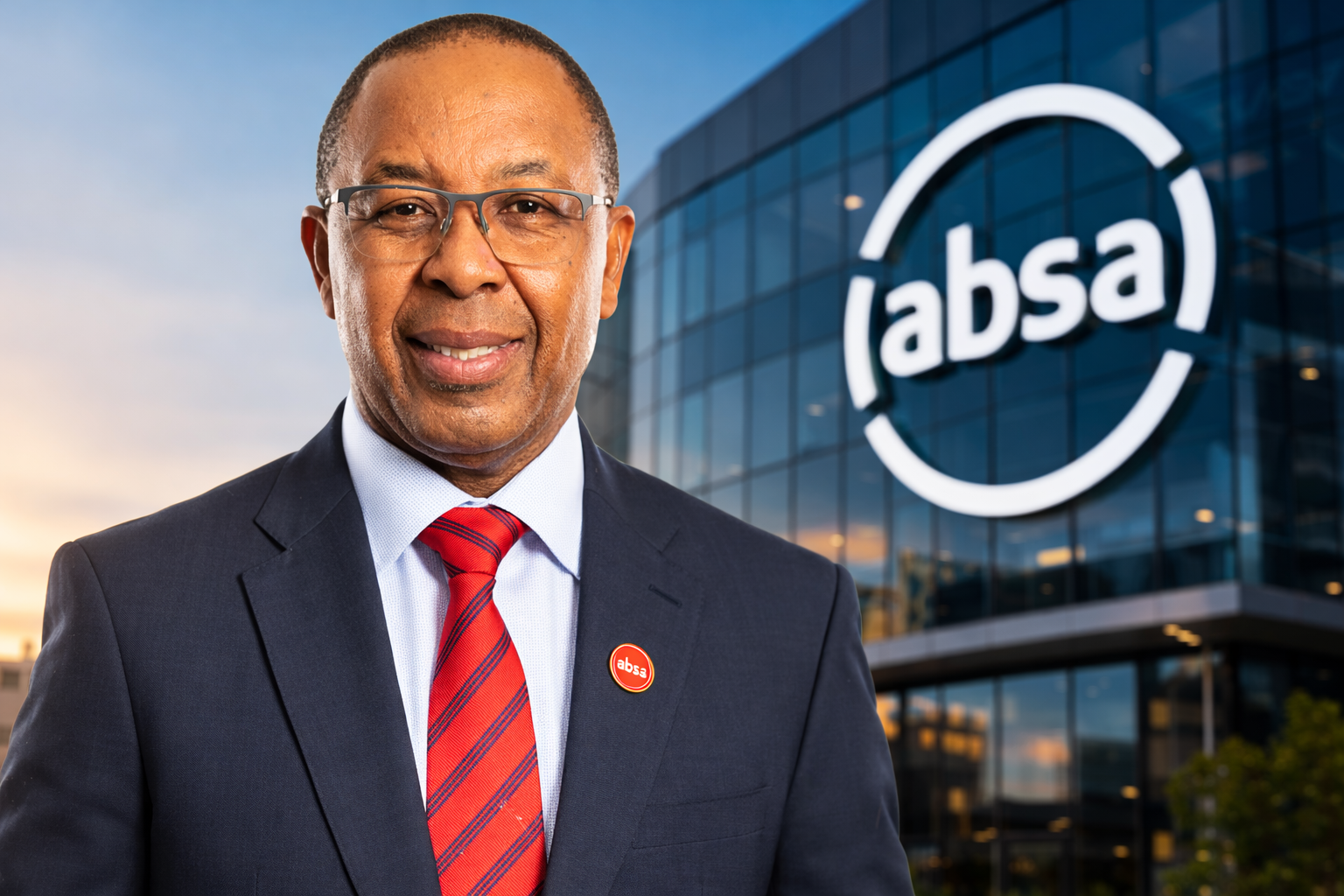
Absa Group chief executive Kenny Fihla has formally assumed the chairmanship of the Banking Association South Africa (BASA), succeeding Mary Vilakazi of FirstRand. The appointment, effective from Friday, places Fihla at the helm of the industry body representing a sector that dominates the domestic financial landscape.
The BASA chairmanship is traditionally determined through an internal voting process by its board of directors, a structure composed of the country’s most senior banking executives. Fihla had previously served as deputy to Vilakazi on the board. The leadership transition underscores the continued hegemony of South Africa’s largest financial institutions over the association’s strategic direction.
The South African banking sector remains highly concentrated. According to recent market analysis, the country’s six largest banks control approximately 93 per cent of the industry’s multitrillion-rand asset base. This dominance has persisted despite the emergence of several new digital and challenger banks over the past decade.
| Bank | Estimated Market Share of Sector Assets |
| Standard Bank | 25% |
| FirstRand | 22% |
| Absa | 20% |
| Nedbank | 16% |
| Investec | 7% |
| Capitec | 3% |
Source: Industry estimates and Moody’s sector analysis. The top four banks collectively account for 83 per cent of industry assets, valued at more than R7 trillion.
The banking association role is the latest in a series of high-profile industry appointments for Fihla. He was recently named to the board of Business Leadership South Africa (BLSA), an influential corporate lobby group chaired by Discovery founder Adrian Gore . This dual representation highlights his growing influence within the broader South African business community.
Fihla’s elevation within BASA comes nearly a year into his tenure as Absa Group CEO, a period characterised by a strategic pivot towards pan-African expansion. Under his leadership, the bank has aggressively pursued growth outside its domestic market, with its corporate and investment banking division positioned as a central driver of this continental strategy. Recent financial disclosures indicate that Absa’s Africa Regions operations delivered robust earnings growth in the 2025 financial year, supporting the group’s broader revenue expansion.
The strategic clarity introduced by Fihla has been publicly acknowledged by Absa’s leadership. Ahead of the company’s annual general meeting in June, group chair René van Wyk noted that Fihla’s appointment brought renewed cohesion to the executive team. The refreshed strategy focuses on customer-centricity, operational efficiency, and long-term competitiveness, positioning the bank to capitalise on regional growth opportunities while defending its domestic market share.
In a statement regarding the BASA appointment, Absa noted that the role aligns with the sector’s collective responsibility to maintain a stable and inclusive financial system, providing a platform for constructive industry engagement and reinforcing the bank’s commitment to shaping the future of South African banking.
References
[1] Major banks analysis – March 2026. PwC South Africa. Available at: