
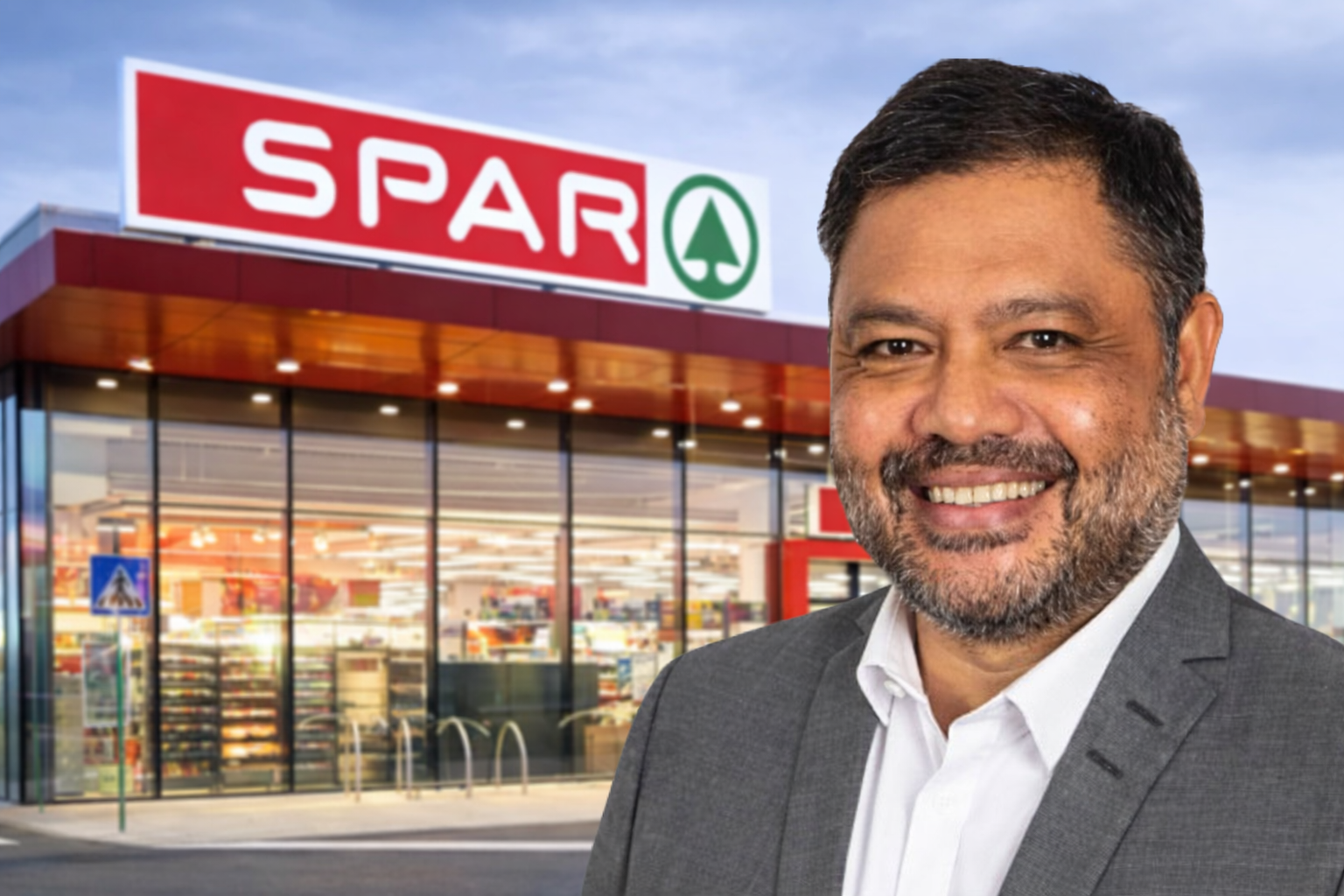
Reeza Isaacs stepped into the chief executive role at the Spar Group on 1 March 2026 with a clear and immediate brief: accelerate a turnaround that his predecessor could not complete before the pressure of the job became personal. Isaacs, who served as the group’s chief financial officer before being elevated to the top position, addressed shareholders for the first time at the group’s annual general meeting in Umhlanga, KwaZulu-Natal, outlining a strategy centred on margin recovery, retailer alignment and disciplined execution in the group’s Southern African core.
The context in which Isaacs takes charge is demanding. The Spar Group’s share price has fallen more than 40% over the past three years, with the stock trading at around R66.49 on the day of the AGM — compared with R181.94 in November 2021, leaving the company valued at approximately R16 billion. The resignation of Angelo Swartz, who stepped down on 28 February 2026 after 19 years with the group and roughly 16 months as CEO, triggered an immediate share price decline, reflecting investor anxiety about leadership continuity and execution risk. Swartz publicly attributed his departure to the personal toll of five years of sustained strategic reset, making it one of the rare CEO exits in South African corporate history where candour replaced the customary public-relations formula.
Isaacs inherits a business that is structurally stronger but commercially pressured. The group operates approximately 4,400 stores across nine countries and generates annual revenue of around R140 billion. Over the past two years, debt has been reduced by more than half through a combination of international divestments — including exits from Poland and Switzerland — and tighter capital allocation. The divestment of the group’s South-West England operations is described as well advanced. Lenders remain supportive, and the balance sheet is in materially better shape than it was at the height of the group’s difficulties.
READ – SPAR Boss Exits as CFO Takes Charge
The operational picture is more complicated. Wholesale turnover from continuing operations grew a modest 2.1% year-on-year in the 18 weeks to 30 January 2026, while gross profit margins in South Africa declined due to competitive pricing pressure, low food inflation and heavy promotional activity. Isaacs has indicated that the group will refine its promotional approach and tighten commercial discipline to ensure that revenue growth converts more consistently into profitability. His immediate focus, he has stated, is direct engagement with the Spar Guild’s leadership structures — the representative body for the group’s independent retailer network — to restore momentum and improve alignment between the group and its franchise base.
That franchise relationship is under stress on more than one front. The group is facing a R168.7 million lawsuit from the Giannacopoulos family, which owns 46 Spar, SuperSpar and Tops stores, over a botched SAP enterprise resource planning implementation at the group’s KwaZulu-Natal distribution centre in early 2023. Estimates put the cost of that failed rollout at approximately R1.6 billion in lost turnover and R720 million in lost profit by September 2023. Spar has since separated its finance and distribution SAP systems to reduce further execution risk, but the litigation remains unresolved and adds to the pressure on incoming leadership.
Chairman Mike Bosman has framed the next phase as one of consolidation rather than transformation, with the gains from five years of portfolio simplification and balance sheet repair now requiring operational embedding. All resolutions at the AGM were passed, with the exception of two non-binding advisory votes on remuneration, which will require further shareholder consultation — a signal that governance matters are not entirely resolved. Interim results, at which Isaacs is expected to provide greater detail on margin initiatives and operational progress, are scheduled for release on or about 10 June 2026.
READ – Spar Acquires Aptekor Group