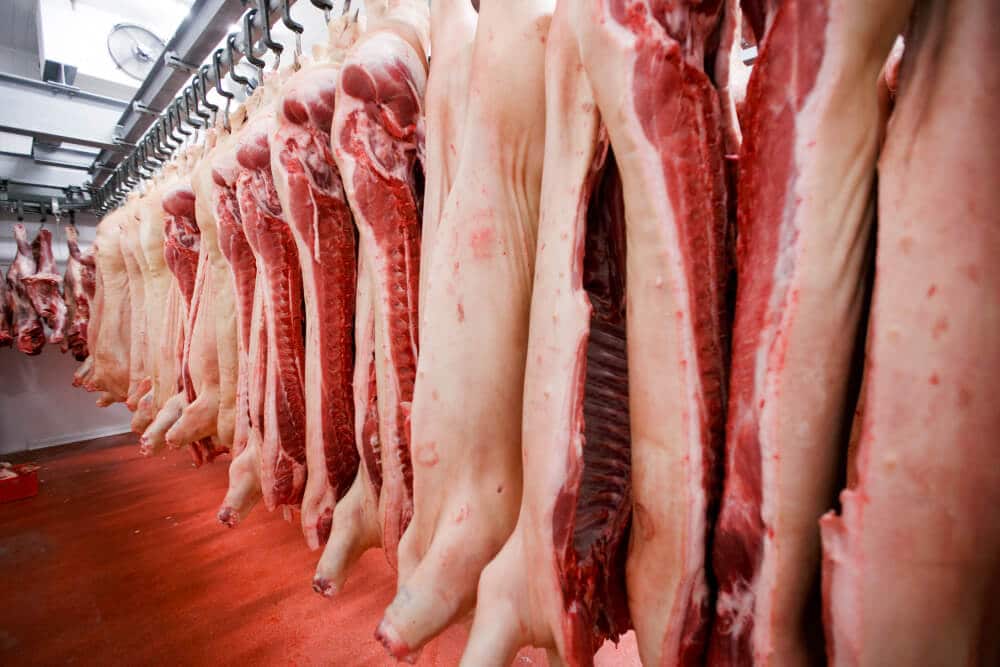
South African consumers face further increases in pork prices as African swine fever (ASF) and foot-and-mouth disease (FMD) outbreaks tighten supply across the formal market. The South African Pork Producers’ Organisation (Sappo) has alerted the trade to outbreaks affecting commercial piggeries in the Free State, North West, KwaZulu-Natal and north-east of Pretoria.
Industry estimates indicate that South Africa slaughters about 72,000 pigs a week across formal and informal sectors. Roughly 7,000 pigs have been lost in the formal market due to the combined impact of ASF and FMD. Market participants say even a 2% contraction in supply can trigger price increases of around 10%, reflecting the pork sector’s sensitivity to short-term shortages.
Wholesale pork prices have already risen from approximately R32 per kilogram to R40 in recent weeks, with further adjustments expected as reduced throughput filters through processors and retailers. Producers note that earlier surplus stock had cushioned the market, but that buffer has now been exhausted, exposing underlying supply-demand pressures.
The outbreaks come as South Africa’s broader livestock industry remains under strain. Repeated disease flare-ups have disrupted beef and livestock trade, exposing weaknesses in veterinary capacity and biosecurity enforcement. While ASF and FMD do not pose risks to human health, their economic consequences can be significant, particularly in tightly balanced protein markets.
Sappo has reiterated that pork entering formal retail channels remains safe for consumption under veterinary inspection and the Meat Safety Act framework. The organisation is working with producers and state veterinary authorities to contain outbreaks and stabilise supply.
Agricultural economists warn that protein inflation can feed into broader food price pressures. Data from Statistics South Africa show that meat products are a key component of the consumer food basket, meaning sustained price increases could weigh on household budgets already strained by inflation and slow income growth.
Producers unaffected by outbreaks are also exposed to market-wide price shifts, as national supply dynamics determine wholesale benchmarks. With biosecurity controls under heightened scrutiny, industry stakeholders are focused on limiting further animal losses while managing price volatility in the months ahead.