

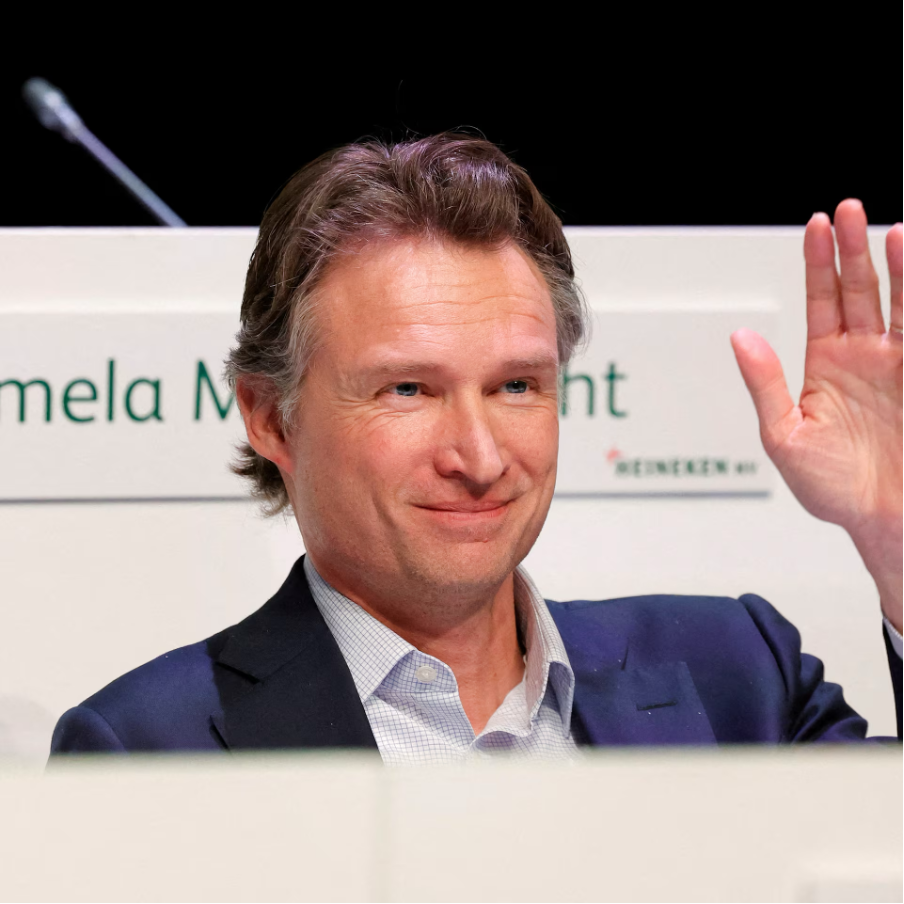
Heineken’s chief executive, Dolf van den Brink, has resigned after nearly six years in the position, a move that comes just months after the Dutch brewer unveiled its long-term strategy amid persistent sales pressures and investor dissatisfaction. As reported by Reuters, the announcement caught the market by surprise, with van den Brink set to depart on 31 May and remain available as an advisor for eight months thereafter. The board has initiated a search for a successor to guide the company through its next phase, emphasising the need for fresh leadership to execute ambitions extending to 2030.
Van den Brink assumed the role in June 2020, during the height of the Covid-19 pandemic, and navigated a series of disruptions that included soaring cost inflation and declining beer volumes across key markets. According to Financial Times, these factors eroded profit margins and contributed to underperformance in share value, with the company slipping behind rivals in cost efficiency and returns to shareholders. Global beer consumption trends compounded these issues, as brewers contended with economic volatility that restrained consumer spending on discretionary items like alcohol.
Heineken’s shares dropped by about 2 percent in early trading following the news, though they later recovered some ground, reflecting mixed investor sentiment on the leadership change. The firm’s market capitalisation has hovered around levels that undervalue its portfolio of brands, including Heineken lager, Tiger, and Amstel, despite efforts to streamline operations. Industry data indicates that major beer companies have seen their 12-month forward price-to-earnings ratios decline significantly over the past five years, underscoring broader valuation challenges in the sector.
In October, Heineken outlined its EverGreen 2030 plan, which prioritises resource allocation to 17 core markets, enhanced premiumisation of products, and annual gross savings targets ranging from 465 million to 580 million US dollars. This strategy aims to counteract volume declines, with the company forecasting a modest drop in overall sales volumes for 2025 after a 3.8 percent fall in the third quarter. Organic revenue growth stood at 1.3 percent for the first nine months of that year, driven partly by licensed beer volumes rising nearly 20 percent, though core beer sales lagged in regions like Europe and North America.
Van den Brink’s exit aligns with a wave of chief executive departures at consumer goods firms, where high living costs have strained household budgets and dampened demand for non-essential products. Brewers in particular have faced repeated setbacks, from adverse weather impacting outdoor consumption to political instability in emerging economies. The global beer market, valued at approximately 882 billion US dollars in 2025, is projected to expand to 1,169 billion by 2032 at a compound annual growth rate of 4.1 percent, fuelled by rising demand for craft and premium variants amid shifting preferences.
Heineken has encountered specific hurdles under van den Brink’s stewardship, including market disruptions in Nigeria and Vietnam, as well as a 2025 pricing dispute with European retailers that led to temporary delistings of its products. Wall Street Journal highlights emerging threats such as new competitors in the low-alcohol segment, the potential impact of weight-loss medications on overall food and drink sales, and evolving attitudes among younger consumers who increasingly favour moderation or alternatives to traditional beer. These factors cloud the outlook for sustained recovery in volumes.
Despite these obstacles, van den Brink oversaw notable expansions, including acquisitions in India through United Breweries, South Africa via Distell, and a recent 3.2 billion US dollar deal for FIFCO’s beverage and retail operations in Central America. Major restructuring initiatives, affecting around 600 jobs as the Amsterdam headquarters refocuses, have also positioned the company for efficiency gains. Investors recognise the challenging environment but express hope that new leadership will accelerate progress toward the 2030 goals, delivering stronger sales, profits, and cost controls in a volatile landscape.